This essay, written by author, artist, and filmmaker Inna Rogatchi, is the second of two parts and was originally published in The Times of Israel. Part I can be found here.
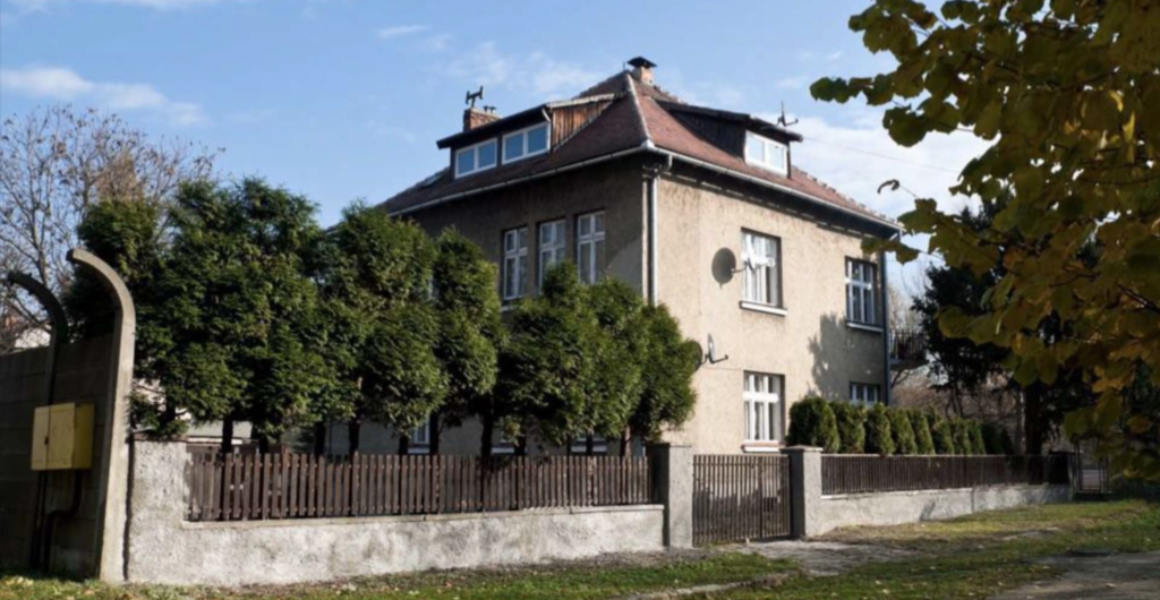
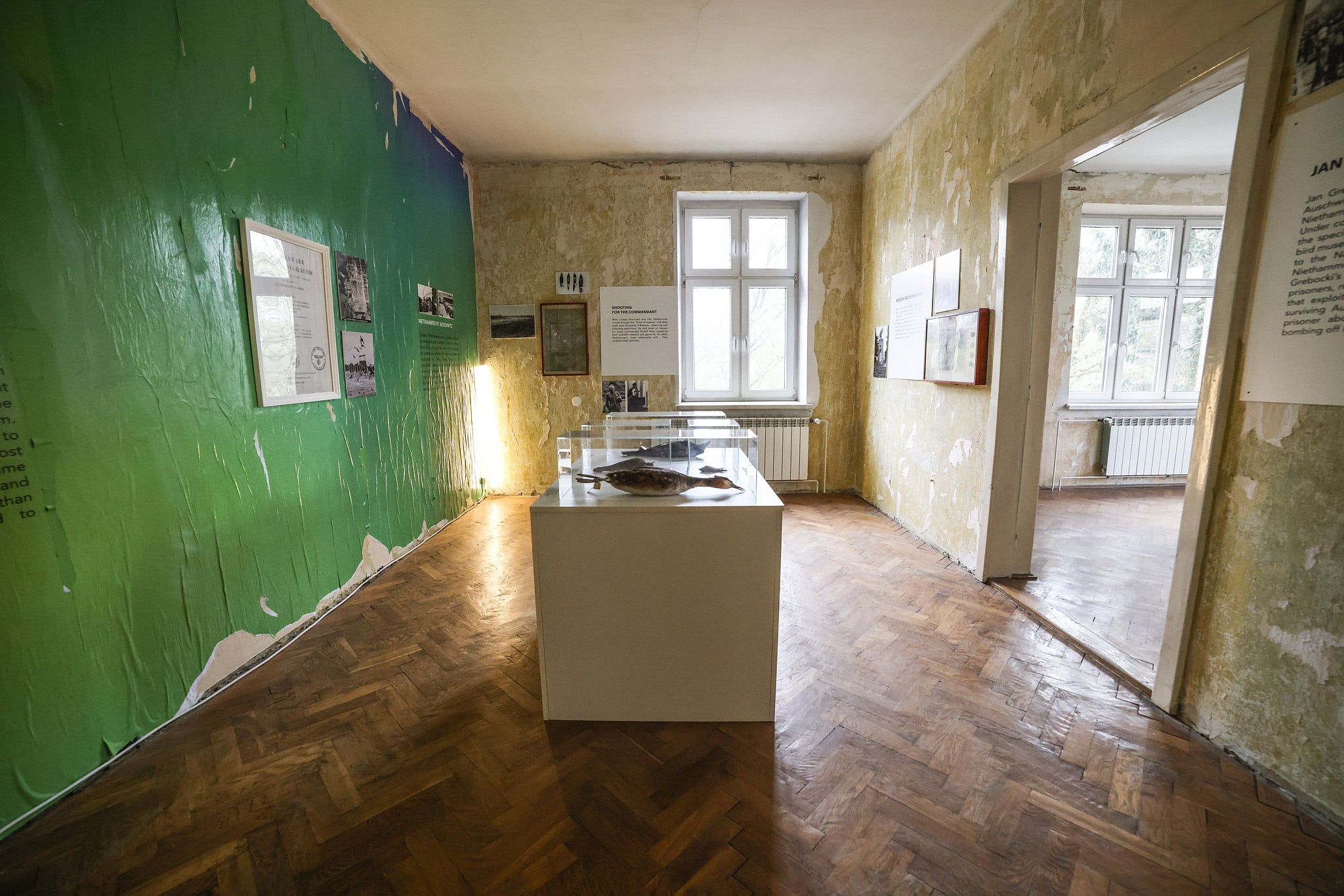
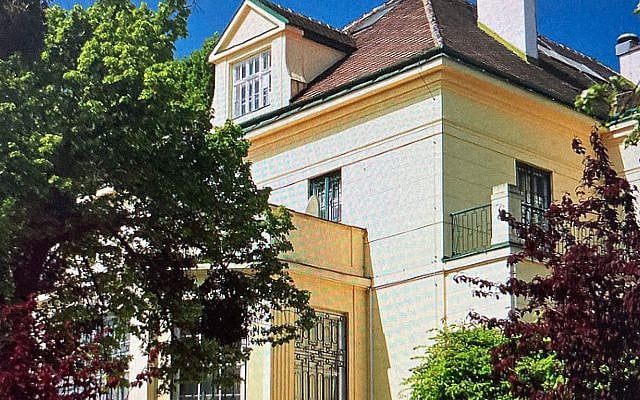
Thought-provoking and unusual exhibition The Birdman of Auschwitz: Science and Faltered Conscience has been opened at House 88 in Oswenziem, Poland, in a direct proximity to Auschwitz camp. The exhibition which evokes fundamental questions that has become acutely relevant today again, is located at the house in which Rudolf Höss’ family was happily thriving during his years as the Auschwitz Commandant, and even during his absence there. Since 2025, the house has become a site-specific awareness and education point of ARCHER Project that fights antisemitism and terrorism.
The Story of Moral Creeps, Their Actions & Traces
The Birdman of Auschwitz exhibition presents in documents, photos, and artifacts the story that if it would be first laid out as a script , it might not get far as the Hollywood script-gatekeepers would think that the imagination of the script writer was too wild. Once again, history itself has proved to be the most surprising author. In this case, it happened through a very able and thorough British historian Nicholas Milton on whose book The Birdman of Auschwitz ( 2025) the current exhibition at ARCHER at House 88 is based.
The visitors of the exhibition and the readers of the book will learn the story of a very well-known and highly esteemed scientist in the pre- and post- WWII Germany and Austria, Gunter Niethammer, who was the head of the Department of Ornithology at the Museum of Natural History in Vienna just on the brink on WWII.
At the same time, the man was a devoted Nazi. Like many of his scientific colleagues, Niethammer did rush to prove his loyalty to the Nazism and join the party early, to guarantee the smoothness of his career. At the same time, he actually belonged to the Nazi elite, via his family circle.
Niethammer was the nephew of an ultra-nationalist writer Hans Grimm, the one who invented and created a concept of Volk onhe Raum, A People Without Space, at the early moment of the formation of the Nazi ideology, in 1926, next year after publication of Mein Kampf.
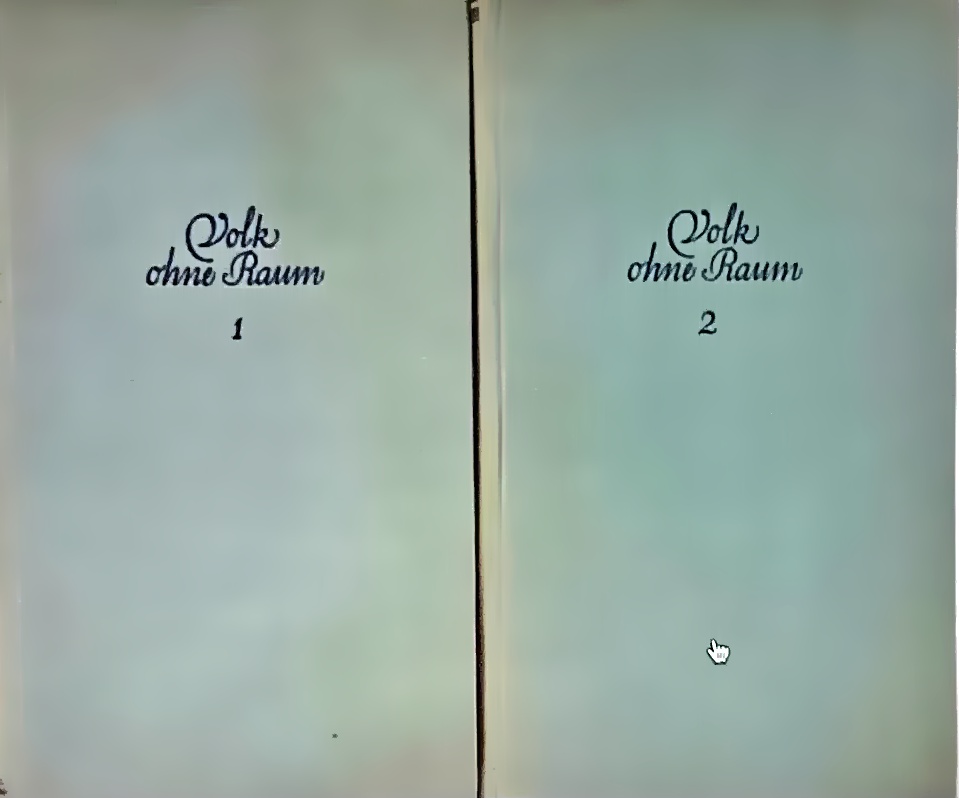
Not only that line, Volk onhe Raum, has become the title of Grimm’s very well-known novel, but because of that, the novel was probably the most-read book in Germany and Austria all the years from its release throughout the war, until 1945, at least. There is statistical data with this regard. Grimm’s 1345-page novelized ideology has become the backbone of the explanation of the necessity of expansionist global war. And its author has been very well-known in the top-layer of the Reich. So his nephew Gunter, who has been quite close to his writer uncle, had a very solid and far-stretching backing in his career and life in general, too.
Niethammer joined the Nazi party in 1937, when he was 25. Two years later, he joined the SS. Immediately after, he joined the Secret Field Police. He knew exactly what he was doing, why and what for. He was turned away from the Luftwaffe, mostly likely due to his age (he was over 30 at the time), and also due to the fact that he had no military background. He ended up as a guard in Auschwitz, staying there on duties at the main entrance. The most inviting point for bird-watching, naturally for the Nazis.
In a half of a year, he started to use his family and academic connections to get transferred from under that huge Arbeit Macht Frei sign over his head while on duty. At the same time, he tried hard to be useful for Rudolf Höss, who did not mind having a freshly-hunted game for his family dinners. There is an existing statistic, for example, that only during one month between September and October 1942, Niethammer provided over 100 wild ducks for Höss household for an upscale nutrition.
In demonstrating his patronage, Höss assigned Niethammer to ‘special ornithological duties’ in Auschwitz. It is thanks to the Nazis’ punctuality in maintaining their documentation that we have the documents about it. Otherwise, it would be too kitschy to believe in such sick fantasies of these humanoids.
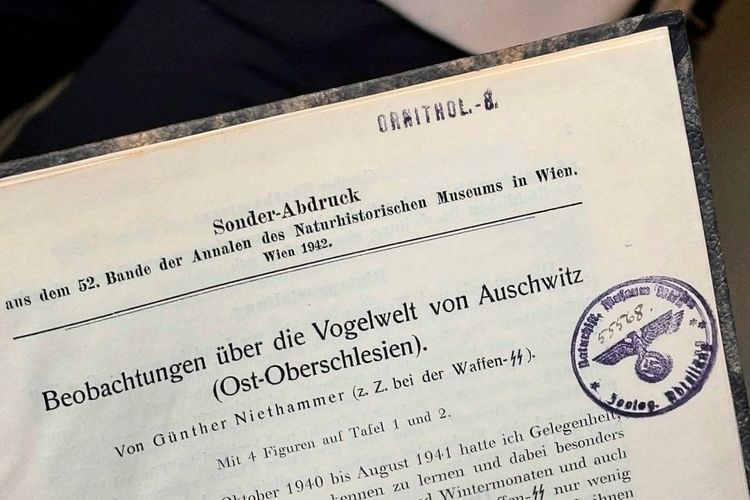
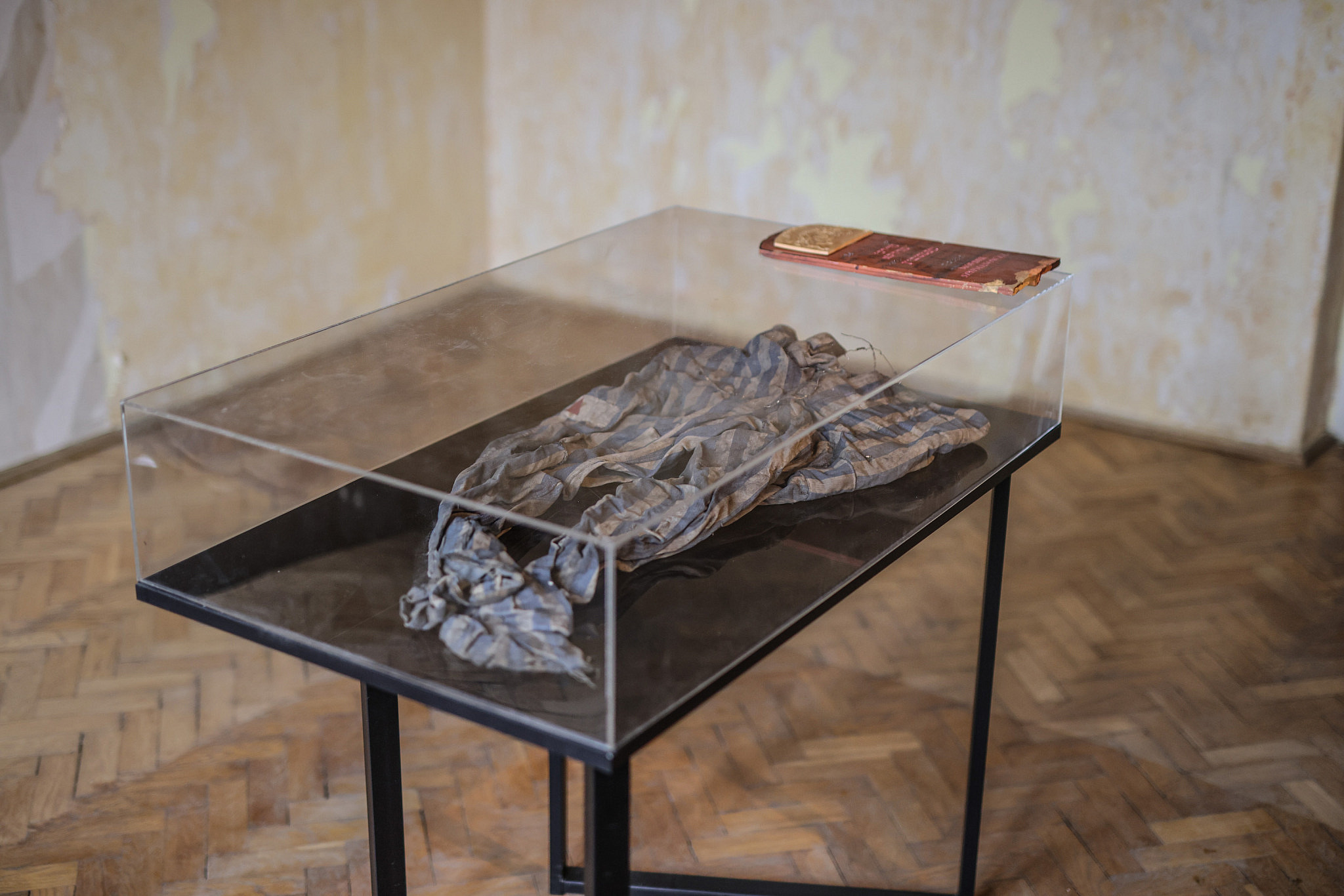
As a proof of his usefulness and existence of those ‘special ornithological duties’, methodical Nazi Niethammer cared for publishing a scientific paper on his effort in Auschwitz. It also exists, and the copy of it is one of the stunning exhibits at House 88. There is the photo of the scientific ornithological paper from Auschwitz in 1942, with a proud SS stamp in the headline.
The degree of perversion of those supposed-to-be humans was, in fact, far higher than it has been known publicly for decades after WWII. Importantly, it was a focused, deliberate effort by far too many people after the war to diffuse the scale of crimes against humanity committed by all those ‘white-color Nazis’, such as architects, scientists, engineers, and anyone else who did make the Shoah happen in the industrial scale or was such a willing Nazi fellow traveller. This is the shameful and screaming fact of history which has to be addressed in full detail, today and tomorrow. There is no statute of limitation for covering up the crimes against humanity.
Nicholas Milton, the author of The Birdman of Auschwitz book ( 2025) which has provided the material for the ongoing exhibition at ARCHER House 88 in Oswenciem, has shared with me one of his surprises while researching for his very thorough book: “Can you imagine that when the Red Army has liberated Auschwitz and went through the premises, including the Höss house, what did they find in his safe? The copy of that scientific publication of Niethammer, with his hand-written dedication and gratitude to Höss. The point is that Höss actually kept it in his safe, it was something important and meaningful for him”, – emphasized Nicholas.
If there would be any ornithologist who hunted delicacies for the Auschwitz commandant and his family, Höss most likely would not give a damn to whatever paper his private hunter might publish. But in the case of Niethammer, his family was well-known politically, and his uncle was literally an ideologist-at-large for the very core of the Nazi Germany’s expansionist zealotry. Höss’ guard on his special ornithological duties in Auschwitz belonged to the Reich elite. No wonder that his hand-written gratitude was regarded as something of value and perhaps something potentially useful by one of the Reich most notorious criminals.
While Niethammer was thoroughly enjoying his scientific activities in Auschwitz and elsewhere, his happy family, an exact version of Höss idyllic monsters, frau and four sons, were living all the time from 1940 through May 1945 in Vienna, in a large house of a Jewish family, whose owners were kicked off from their property unceremoniously, and later on, the owner of the villa and her mother were sent to their death in the concentration camps. The 83-year old mother of the owner, Sofia Grunspann was murdered in Treblinka in 1942. And the owner of a lovely villa Rudolfina Liatcheff has vanished without trace, somewhere in the one of the camps that the bastard whose family has seized and occupied her house, was so busy with his scientific ornithological observations. The murky irony did stop there: nowadays once forcibly seized by the Nazis Jewish villa in Vienna houses the Embassy of Libya.
Entertainment, Auschwitz Style
To add to all this mounting macabre, the exhibition at House 88 tells about ornithological museum, or show-room, in the extermination camp, that has been set there by Niethammer with backing by the special order by the camp’s commandant Höss, in one of the barracks, for the entertainment of the Auschwitz officers and personnel. It is not black humor.
As it is known, Auschwitz has become the place of the worst of moral perversity, additionally to its monstrous mass extermination. The Nazis set up three orchestras there, two male ones and one female one, of which my great-aunt Alma Rose after her arrest and deportation to Auschwitz from the Drancy in July 1943 was forced to lead. They also have a cinema for the officers and personnel, as it is known. And as it transpires from the exhibition at ARCHER at House 88 and Nicholas Milton’s book, they also cared enough to set up an ornithological museum in the extermination camp. According to Milton, during his inspectional visit to Auschwitz on July 17-18, 1942, Himmler visited the museum as well. The Zone of Interest, indeed.
There is one telling episode of the kind of ornithology that Niethammer exercised in Auschwitz. Nicholas Milton has told me about it specifically, and since that, the episode pierces my mind. “Among the species of the Niethammer’s hunted and stuffed birds that are on display at the current exhibition, there is sadly not the Black redstart, which does exist and belongs to the Niethammer Auschwitz trophies at the Vienna Natural History Museum collection. It is a nice bird that looks like a robin. In Niethammer’s papers, there is a specific description regarding the Black redstart, in his own handwrite”.
The Nazi ornithologist’s observation was the following: “June 25, 1941. The nest is found in a brickyard at the camp where amongst the bricks piled up by the prisoners the female (Black redstart bird) had built a loose cup of grass lined with hair, wool and feathers’, the hair and wool once belonging to the prisoners, the wool coming from the prisoners clothes and uniforms”. This kind of ornithology. This kind of science. This kind of conscious behavior of a humanoid in the midst of the engineered genocide.
That humanoid, after a brief, due to the intervention of his international scientific colleagues, just three years imprisonment in Poland after the war, has lived thirty more years, flourishing in his career and being recognized at many levels, both in Germany and internationally. He was elected as President of German Ornithological Society, the Chairman of German Zoological Society, Director of museums, professor of universities. There are as many as nine bird and other species officially named after him, still today. Of course, he was such an expert on the bird’s nests made with ‘formerly human hairs’. Shame is not enough for all those people and institutions who have blurred and covered up the Niethammer’s complicity in the crimes against humanity both in Germany and anywhere else for good three decades. This is actually co-complicity from all those individuals and institutions, and it has to be understood and known this way, for the sake of normality of this and next generations.
Expanding the Painful Lessons
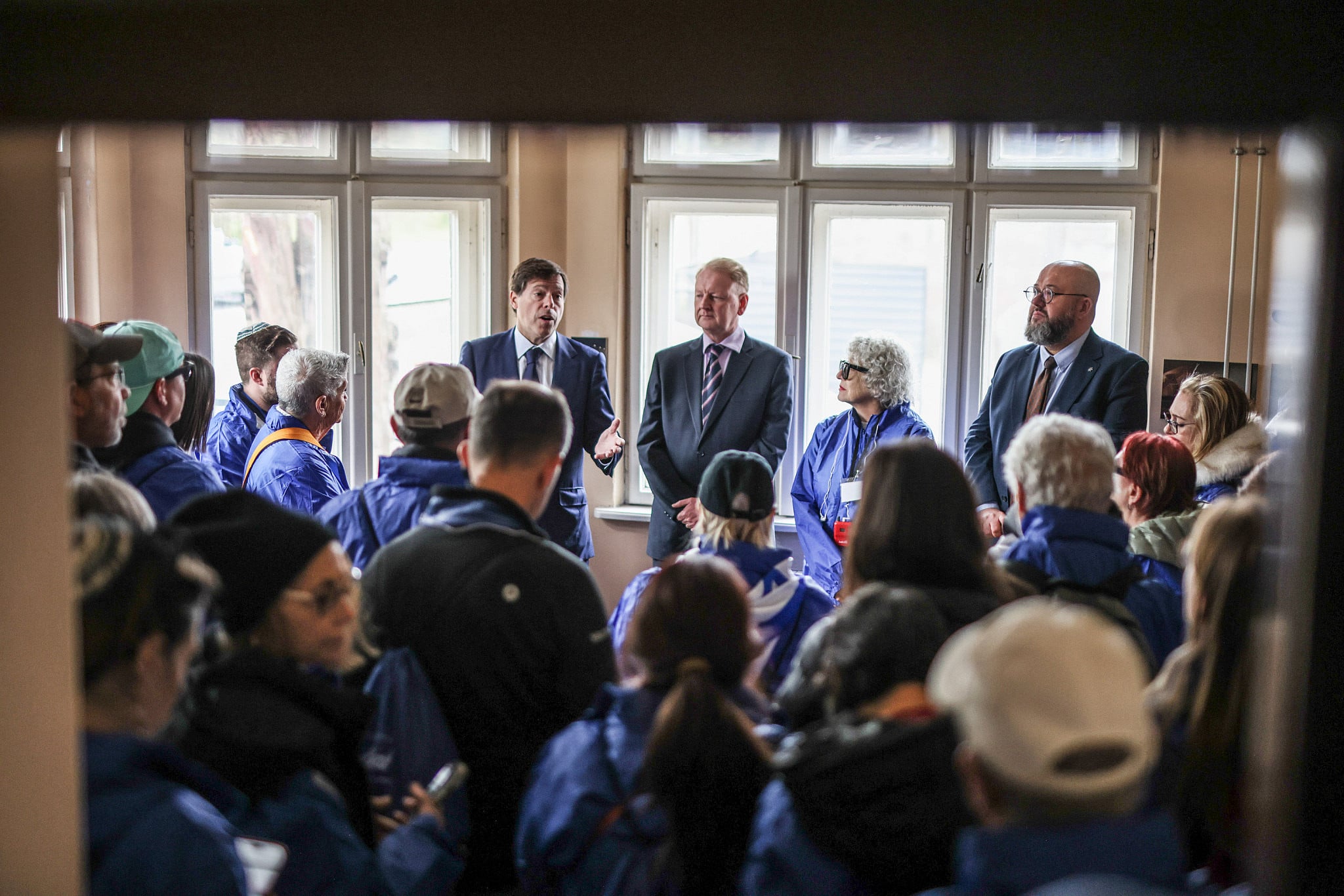
Probably, with this in mind, the people who are leading the Ornithology Department of the Vienna Natural History Museum nowadays, have become alerted with regard to their Niethammer collection of more than 90 species hunted by him in Auschwitz during WWII. Based on ongoing dialogue with them, Ambassador Mark Wallace has told me about them re-visiting the collection, and their plans to expand the Museum’s loan to ARCHER project with more species to be shown publicly, and also possibly in the expanded tour of this stunning exhibition.
That would be sobering and highly important.“Can you imagine, all these birds who were hunted and stuffed by that beast Niethammer personally, and which all bears his own nitty hand-written labels with the SS stamps of each of them, during past 85 years had been never shown to anyone, not for once, none of them. Now they, the material witnesses of the Nazi evil, will be shown internationally, and hopefully, will evoke people’s attention to the evil that has ruled that darkness that was the Shoah, and by seeing it as it is, and learning the story behind it, people will become more vigilant to the same-creed of evil which has been awakened so ugly today. This is one of the ways to show the wide public one of the dark faces of hate and crime, and to make people think about it, in general as well This is what we are aiming for at CEP and ARCHER Projects, fighting the hate of today by evoking the understanding and compassion by the authentic means of history for which we are looking tirelessly”.
It is quite uneasy and demanding emotionally and mentally, but an absolutely necessary thing to do today. Because tomorrow it might be too late.
Birdsong from Silence, Light from Darkness
In their determination to fight the evil of yesterday and today, Ambassador Wallace, his colleagues, principle co-funders of the ARCHER projects, such as Robin and Elliott Broidy, Dr. Thomas S. Kaplan and Dafne Recanati Kaplan, the CEP and ARCHER team, are going further than exhibiting artifacts. They are determined to fight the evil at its very housing. It can be done in different ways, what matters here is the principle and the intention.
In the case of the theme of birds over Auschwitz, the ARCHER team has placed four bird-houses in the garden made in part from wood from the Höss fence. As the exhibition’s curator Nicholas Milton has told me, “We plan to use the bird boxes to bring back birdsong to Auschwitz in memory of the victims.”
Nicholas also mentioned that in mid-April this year, the birds already sang at the premises, quite vividly so. It looks like the famed architect Daniel Libeskind who in early 2025 was telling his friend Ambassador Mark Wallace that the birds will sing there again, was right.
The birds that in Jewish tradition symbolizes Jewish souls and are connected to it directly, in their behavior also always feel human warmth, and the character of human activities, in a primary meaning, good or bad it is, roughly. This is a scientific fact, too.
In this first major awareness and educational, historic exhibition at ARCHER in House 88, we can see embodiment of the idea that Mark Wallace was graceful to share with me in one of our conversations: “Birdsong from silence, Light from Darkness”. Simple and clear, as moral clarity and determination to act for its sake should be, to be efficient and worthy.