There is a tendency to equate education with credentials. Degrees, certifications, and institutional affiliations are often treated as proxies for knowledge and capability. They have value, but they are not the same as learning.
Real education begins with curiosity. It is driven by a willingness to ask questions, test assumptions, and engage directly with the world rather than observe it from a distance.
That mindset cannot be conferred by a diploma. It has to be developed through experience.
Some of the most valuable business lessons are learned in the simplest settings. Running a lemonade stand for a summer teaches pricing, customer behavior, supply management, and accountability in a way that no textbook can fully replicate. When you are responsible for every decision, even on a small scale, the feedback is immediate and unfiltered. You learn what works and what does not because the outcome is yours to own.
Experience has a way of clarifying priorities. It forces you to confront tradeoffs, manage uncertainty, and adapt in real time. There is no curve to rely on and no abstraction to hide behind. Results are not theoretical. They are tangible, and they matter.
This does not diminish the importance of formal education. Structured learning provides a strong foundation and exposes individuals to ideas they might not encounter on their own. But it is only one part of a much larger process. Without practical application, knowledge remains incomplete.
The most effective builders, operators, and leaders tend to share a common trait: they engage directly. They take on responsibility early, seek out real-world challenges, and treat every experience as an opportunity to refine their judgment. Over time, that accumulation of hard-won experience becomes a form of expertise that is difficult to replicate in any classroom.
Curiosity initiates the process, but action sustains it. The willingness to get your hands dirty, to try, to fail, and to try again is what ultimately transforms information into understanding.
Education, in its most meaningful form, is not something you complete. It is something you continue.
Your word is a contract that doesn’t need a lawyer.
That idea may sound outdated in a world defined by fine print, negotiated carveouts, and carefully structured exit clauses. But in practice, it has only grown more valuable. When everything is hedged, qualified, and contingent, the rare individual who simply does what they said they would do stands out immediately.
Too often today, commitments are treated as flexible. Deadlines slip without much notice, expectations shift midstream, and agreements are framed in ways that leave room for reinterpretation. Over time, that mindset creates friction in places where there should be momentum. It slows decision-making, complicates partnerships, and introduces unnecessary uncertainty into even straightforward transactions.
The people who operate differently tend to move faster and build stronger relationships. They take their commitments seriously, not as aspirational statements but as obligations. When they say something will be done, it gets done. If circumstances change, they address it directly and early, rather than allowing small issues to become larger problems. There is a clarity to how they operate that others come to rely on.
In my experience, that kind of reliability compounds. When people know your word is solid, they stop second-guessing. Conversations become more efficient because less time is spent managing risk. Opportunities surface more quickly because there is confidence on the other side of the table. Over time, that trust becomes an asset in its own right.
That is why I view reliability as one of the most powerful forms of differentiation-arguably the most powerful. Strategies can be replicated and products can be improved upon, but a reputation for consistency and follow-through cannot be duplicated. It shapes how others evaluate you before a conversation even begins.
Of course, no one gets everything right all the time. What matters is how you respond when something falls short. Taking ownership, correcting the issue, and reinforcing the standard going forward does more to build credibility than avoiding mistakes altogether, because without risk there can’t be success.
Ultimately, your word is more than a statement of intent. It reflects how you approach your work and the level of respect you have for the people you engage with. Over time, that consistency defines your reputation-and determines the opportunities that come your way.
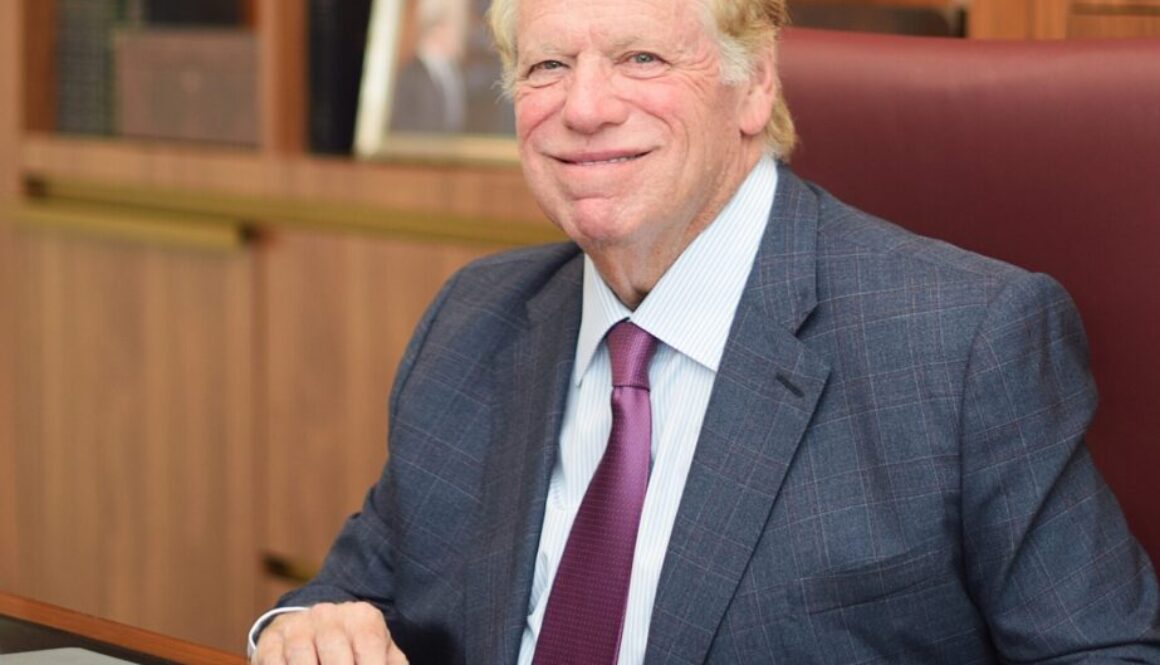
Elliott Broidy is the Chief Executive Officer and Chairman of Broidy Capital Holdings, LLC, a private equity investment firm specializing in AI-driven public safety software. He is also the Co-Chair of the Fund to End Antisemitism, Extremism and Hate which supports theAuschwitz Research Center on Hate, Extremism and Radicalization (ARCHER) at House 88, an initiative of The Counter Extremism Project.
This essay, written by author, artist, and filmmaker Inna Rogatchi, is the second of two parts and was originally published in The Times of Israel. Part I can be found here.
Thought-provoking and unusual exhibition The Birdman of Auschwitz: Science and Faltered Conscience has been opened at House 88 in Oswenziem, Poland, in a direct proximity to Auschwitz camp. The exhibition which evokes fundamental questions that has become acutely relevant today again, is located at the house in which Rudolf Höss’ family was happily thriving during his years as the Auschwitz Commandant, and even during his absence there. Since 2025, the house has become a site-specific awareness and education point of ARCHER Project that fights antisemitism and terrorism.
The Birdman of Auschwitz exhibition at ARCHER in House 88, Oswienciem, Poland. April 2026. Photo: Michael Bojara. (C) CEP?ARCHER. With kind permission.
The Story of Moral Creeps, Their Actions & Traces
The Birdman of Auschwitz exhibition presents in documents, photos, and artifacts the story that if it would be first laid out as a script , it might not get far as the Hollywood script-gatekeepers would think that the imagination of the script writer was too wild. Once again, history itself has proved to be the most surprising author. In this case, it happened through a very able and thorough British historian Nicholas Milton on whose book The Birdman of Auschwitz ( 2025) the current exhibition at ARCHER at House 88 is based.
The visitors of the exhibition and the readers of the book will learn the story of a very well-known and highly esteemed scientist in the pre- and post- WWII Germany and Austria, Gunter Niethammer, who was the head of the Department of Ornithology at the Museum of Natural History in Vienna just on the brink on WWII.
At the same time, the man was a devoted Nazi. Like many of his scientific colleagues, Niethammer did rush to prove his loyalty to the Nazism and join the party early, to guarantee the smoothness of his career. At the same time, he actually belonged to the Nazi elite, via his family circle.
Niethammer was the nephew of an ultra-nationalist writer Hans Grimm, the one who invented and created a concept of Volk onhe Raum, A People Without Space, at the early moment of the formation of the Nazi ideology, in 1926, next year after publication of Mein Kampf.
nuFiD-vYSZviVYUb_rj3ij__anPXDTzYgA.woff2The cover of two volumes of the Nazi expansionist ideology, the novel by Hans Grimm. First edition, 1926. Credit: Creative Commons.
Not only that line, Volk onhe Raum, has become the title of Grimm’s very well-known novel, but because of that, the novel was probably the most-read book in Germany and Austria all the years from its release throughout the war, until 1945, at least. There is statistical data with this regard. Grimm’s 1345-page novelized ideology has become the backbone of the explanation of the necessity of expansionist global war. And its author has been very well-known in the top-layer of the Reich. So his nephew Gunter, who has been quite close to his writer uncle, had a very solid and far-stretching backing in his career and life in general, too.
Niethammer joined the Nazi party in 1937, when he was 25. Two years later, he joined the SS. Immediately after, he joined the Secret Field Police. He knew exactly what he was doing, why and what for. He was turned away from the Luftwaffe, mostly likely due to his age (he was over 30 at the time), and also due to the fact that he had no military background. He ended up as a guard in Auschwitz, staying there on duties at the main entrance. The most inviting point for bird-watching, naturally for the Nazis.
In a half of a year, he started to use his family and academic connections to get transferred from under that huge Arbeit Macht Frei sign over his head while on duty. At the same time, he tried hard to be useful for Rudolf Höss, who did not mind having a freshly-hunted game for his family dinners. There is an existing statistic, for example, that only during one month between September and October 1942, Niethammer provided over 100 wild ducks for Höss household for an upscale nutrition.
In demonstrating his patronage, Höss assigned Niethammer to ‘special ornithological duties’ in Auschwitz. It is thanks to the Nazis’ punctuality in maintaining their documentation that we have the documents about it. Otherwise, it would be too kitschy to believe in such sick fantasies of these humanoids.
As a proof of his usefulness and existence of those ‘special ornithological duties’, methodical Nazi Niethammer cared for publishing a scientific paper on his effort in Auschwitz. It also exists, and the copy of it is one of the stunning exhibits at House 88. There is the photo of the scientific ornithological paper from Auschwitz in 1942, with a proud SS stamp in the headline.
The copy of the Niethammer’s scientific paper published in 1942, exhibited at The Birdman of Auschwitz. (C) CEP/ARCHER. With kind permission.
The degree of perversion of those supposed-to-be humans was, in fact, far higher than it has been known publicly for decades after WWII. Importantly, it was a focused, deliberate effort by far too many people after the war to diffuse the scale of crimes against humanity committed by all those ‘white-color Nazis’, such as architects, scientists, engineers, and anyone else who did make the Shoah happen in the industrial scale or was such a willing Nazi fellow traveller. This is the shameful and screaming fact of history which has to be addressed in full detail, today and tomorrow. There is no statute of limitation for covering up the crimes against humanity.
Nicholas Milton, the author of The Birdman of Auschwitz book ( 2025) which has provided the material for the ongoing exhibition at ARCHER House 88 in Oswenciem, has shared with me one of his surprises while researching for his very thorough book: “Can you imagine that when the Red Army has liberated Auschwitz and went through the premises, including the Höss house, what did they find in his safe? The copy of that scientific publication of Niethammer, with his hand-written dedication and gratitude to Höss. The point is that Höss actually kept it in his safe, it was something important and meaningful for him”, – emphasized Nicholas.
If there would be any ornithologist who hunted delicacies for the Auschwitz commandant and his family, Höss most likely would not give a damn to whatever paper his private hunter might publish. But in the case of Niethammer, his family was well-known politically, and his uncle was literally an ideologist-at-large for the very core of the Nazi Germany’s expansionist zealotry. Höss’ guard on his special ornithological duties in Auschwitz belonged to the Reich elite. No wonder that his hand-written gratitude was regarded as something of value and perhaps something potentially useful by one of the Reich most notorious criminals.
While Niethammer was thoroughly enjoying his scientific activities in Auschwitz and elsewhere, his happy family, an exact version of Höss idyllic monsters, frau and four sons, were living all the time from 1940 through May 1945 in Vienna, in a large house of a Jewish family, whose owners were kicked off from their property unceremoniously, and later on, the owner of the villa and her mother were sent to their death in the concentration camps. The 83-year old mother of the owner, Sofia Grunspann was murdered in Treblinka in 1942. And the owner of a lovely villa Rudolfina Liatcheff has vanished without trace, somewhere in the one of the camps that the bastard whose family has seized and occupied her house, was so busy with his scientific ornithological observations. The murky irony did stop there: nowadays once forcibly seized by the Nazis Jewish villa in Vienna houses the Embassy of Libya.
Villa, confiscated property of Liatcheff family, in Vienna, at Blaasstrasse, 33. (C) Creative Commons.
Entertainment, Auschwitz Style
To add to all this mounting macabre, the exhibition at House 88 tells about ornithological museum, or show-room, in the extermination camp, that has been set there by Niethammer with backing by the special order by the camp’s commandant Höss, in one of the barracks, for the entertainment of the Auschwitz officers and personnel. It is not black humor.
As it is known, Auschwitz has become the place of the worst of moral perversity, additionally to its monstrous mass extermination. The Nazis set up three orchestras there, two male ones and one female one, of which my great-aunt Alma Rose after her arrest and deportation to Auschwitz from the Drancy in July 1943 was forced to lead. They also have a cinema for the officers and personnel, as it is known. And as it transpires from the exhibition at ARCHER at House 88 and Nicholas Milton’s book, they also cared enough to set up an ornithological museum in the extermination camp. According to Milton, during his inspectional visit to Auschwitz on July 17-18, 1942, Himmler visited the museum as well. The Zone of Interest, indeed.
There is one telling episode of the kind of ornithology that Niethammer exercised in Auschwitz. Nicholas Milton has told me about it specifically, and since that, the episode pierces my mind. “Among the species of the Niethammer’s hunted and stuffed birds that are on display at the current exhibition, there is sadly not the Black redstart, which does exist and belongs to the Niethammer Auschwitz trophies at the Vienna Natural History Museum collection. It is a nice bird that looks like a robin. In Niethammer’s papers, there is a specific description regarding the Black redstart, in his own handwrite”.
The Nazi ornithologist’s observation was the following: “June 25, 1941. The nest is found in a brickyard at the camp where amongst the bricks piled up by the prisoners the female (Black redstart bird) had built a loose cup of grass lined with hair, wool and feathers’, the hair and wool once belonging to the prisoners, the wool coming from the prisoners clothes and uniforms”. This kind of ornithology. This kind of science. This kind of conscious behavior of a humanoid in the midst of the engineered genocide.
Authentic prisoner robe from Auschwitz exhibited at The Birdman of Auschwitz at ARCHER in House 88 exhibition. Photo: Michal Bojara. (C) CEP/ARCHER, with kind permission.
That humanoid, after a brief, due to the intervention of his international scientific colleagues, just three years imprisonment in Poland after the war, has lived thirty more years, flourishing in his career and being recognized at many levels, both in Germany and internationally. He was elected as President of German Ornithological Society, the Chairman of German Zoological Society, Director of museums, professor of universities. There are as many as nine bird and other species officially named after him, still today. Of course, he was such an expert on the bird’s nests made with ‘formerly human hairs’. Shame is not enough for all those people and institutions who have blurred and covered up the Niethammer’s complicity in the crimes against humanity both in Germany and anywhere else for good three decades. This is actually co-complicity from all those individuals and institutions, and it has to be understood and known this way, for the sake of normality of this and next generations.
Expanding the Painful Lessons
Probably, with this in mind, the people who are leading the Ornithology Department of the Vienna Natural History Museum nowadays, have become alerted with regard to their Niethammer collection of more than 90 species hunted by him in Auschwitz during WWII. Based on ongoing dialogue with them, Ambassador Mark Wallace has told me about them re-visiting the collection, and their plans to expand the Museum’s loan to ARCHER project with more species to be shown publicly, and also possibly in the expanded tour of this stunning exhibition.
That would be sobering and highly important.“Can you imagine, all these birds who were hunted and stuffed by that beast Niethammer personally, and which all bears his own nitty hand-written labels with the SS stamps of each of them, during past 85 years had been never shown to anyone, not for once, none of them. Now they, the material witnesses of the Nazi evil, will be shown internationally, and hopefully, will evoke people’s attention to the evil that has ruled that darkness that was the Shoah, and by seeing it as it is, and learning the story behind it, people will become more vigilant to the same-creed of evil which has been awakened so ugly today. This is one of the ways to show the wide public one of the dark faces of hate and crime, and to make people think about it, in general as well This is what we are aiming for at CEP and ARCHER Projects, fighting the hate of today by evoking the understanding and compassion by the authentic means of history for which we are looking tirelessly”.
It is quite uneasy and demanding emotionally and mentally, but an absolutely necessary thing to do today. Because tomorrow it might be too late.
From the left: historian Nicholas Milton, Ambassador Mark Wallace, director of ARCHER in House 88 Jacek Purski at the preview event of The Birdman of Auschwitz exhibition in Oswienciem, Poland. April 2026. Photo: Michal Bojara. (C) CEP/ARCHER. With kind permission.
Birdsong from Silence, Light from Darkness
In their determination to fight the evil of yesterday and today, Ambassador Wallace, his colleagues, principle co-funders of the ARCHER projects, such as Robin and Elliott Broidy, Dr. Thomas S. Kaplan and Dafne Recanati Kaplan, the CEP and ARCHER team, are going further than exhibiting artifacts. They are determined to fight the evil at its very housing. It can be done in different ways, what matters here is the principle and the intention.
In the case of the theme of birds over Auschwitz, the ARCHER team has placed four bird-houses in the garden made in part from wood from the Höss fence. As the exhibition’s curator Nicholas Milton has told me, “We plan to use the bird boxes to bring back birdsong to Auschwitz in memory of the victims.”
Nicholas also mentioned that in mid-April this year, the birds already sang at the premises, quite vividly so. It looks like the famed architect Daniel Libeskind who in early 2025 was telling his friend Ambassador Mark Wallace that the birds will sing there again, was right.
The birds that in Jewish tradition symbolizes Jewish souls and are connected to it directly, in their behavior also always feel human warmth, and the character of human activities, in a primary meaning, good or bad it is, roughly. This is a scientific fact, too.
In this first major awareness and educational, historic exhibition at ARCHER in House 88, we can see embodiment of the idea that Mark Wallace was graceful to share with me in one of our conversations: “Birdsong from silence, Light from Darkness”. Simple and clear, as moral clarity and determination to act for its sake should be, to be efficient and worthy.
Envy is one of the most unproductive, insidious habits we allow to take root in our thinking. It consumes attention, distorts perspective, and quietly redirects energy away from the only place it can make a difference: our own work. It fixates on outcomes while ignoring the process that produced them.
It is easy to look at someone else’s success and see only the finished product. The recognition, the wealth, the influence, the apparent ease. What is rarely visible is the long stretch of effort that came before it. The early mornings when no one was watching. The failed attempts that never made it into the story. The discipline required to keep going when the future was uncertain and results were far from guaranteed.
The harvest is always more visible than the planting.
When envy takes hold, it encourages a passive posture. It keeps your attention fixed outward, measuring your position against someone else’s results. That comparison does nothing to move you forward. It creates frustration without offering a path to improvement. It is a loop that leads nowhere. I would argue that it is disastrous for one’s mental health and overall well-being.
A more useful approach is to shift the focus from what someone has to how they got there. Success leaves clues, but only for those willing to study it honestly. That means looking beyond the surface and examining the habits, decisions, and tradeoffs that made the outcome possible. It means recognizing the sustained, deliberate effort over time that went into the successful outcome.
This kind of focus requires humility. It asks you to accept that achievement is rarely accidental and almost never immediate. It also requires responsibility. If you want a similar result, you must be willing to adopt the behaviors that lead to it, even when they are difficult or inconvenient.
There is also a quieter benefit to letting go of envy. It clears mental space. It allows you to concentrate fully on your own path, your own opportunities, and your own standards. Progress becomes a function of your actions rather than your comparisons. Over time, that shift compounds.
Everyone has access to the same fundamental choice. You can spend your energy resenting what others have built, or you can invest that energy in building something of your own. One path leads to stagnation. The other, while demanding, offers the only real chance at growth.
The work is always in the sowing. The results follow from there.
Success in business is often framed as a function of intelligence, credentials, or rare insight. There is a tendency to believe that the people who win are operating with some superior mental model or hidden brilliance. In reality, many outcomes are decided by something far more accessible: composure and steadiness.
Markets move on sentiment as much as fundamentals. Teams rise and fall based on morale as much as strategy. In both cases, the ability to remain calm while others react impulsively creates opportunity. When people panic, they compress timelines, abandon long-term thinking, and make decisions designed to relieve pressure rather than create value. That is often when the best assets are mispriced, the best ideas are dismissed, and the best opportunities are overlooked.
Composure allows you to operate on a different clock. Instead of being pulled into the urgency of the moment, you can differentiate between signals and noise — a skillset that is more and more necessary in our age, when the noise is incessant. That clarity compounds over time. It shows up in better capital allocation, more thoughtful hiring, and a willingness to stay the course when others are looking for an exit.
The same principle applies in moments of success. When things are going well, the temptation is to celebrate too early or assume that momentum will carry forward on its own. Discipline matters just as much on the upside. Staying measured during periods of growth creates space to evaluate risks, reinforce what is working, and prepare for the inevitable shifts that follow any period of expansion.
Emotion is not a negative thing. The point I am making is that it should be harnessed appropriately so that decisions are driven by judgment. Founders and executives operate in environments where uncertainty is constant and stakes are high. In that setting, the ability to stay composed is a strategic asset. It affects how others perceive you, how teams respond under pressure, and how consistently you can execute. During the most stressful times, your teams will look to you to lead them, and what they will want to see is a leader who is calm and collected.
There is also a practical advantage. Emotional volatility is exhausting. It leads to decision fatigue and erodes focus. A more grounded approach conserves energy for the moments that really require decisive action. Over time, that consistency becomes a differentiator that is difficult to replicate.
Business rewards those who can see clearly when others cannot. That clarity comes from maintaining perspective when conditions are at their most chaotic. The edge is not in having perfect foresight. It is in having the discipline to act rationally when it matters most.
In a competitive environment, small advantages compound. Composure is one of the few that is entirely within your control.
There’s a hard truth that most people resist until experience forces them to confront it: learning how to sell is the only skill that reliably ensures you can create opportunity, regardless of circumstance. Life is sales.
That idea makes some people uncomfortable because “sales” has been mischaracterized for decades. It conjures images of manipulation or pressure, as if success comes from talking someone into something they don’t need. The reality is that the ability to sell is the ability to communicate value clearly, build trust over time, and align what you offer with what others genuinely need.
Every day, whether you acknowledge it or not, you are selling.
You sell your ideas in meetings, your judgment in moments of uncertainty, and your credibility when others decide whether to follow your lead. You sell your skills when you interview for a role, negotiate a deal, or ask for responsibility. You sell your character in quieter ways too-through consistency, reliability, and how you handle setbacks when no one is watching.
The people who understand this move through the world with agency. They recognize that outcomes are rarely accidental and that influence is built, not granted. They invest in learning how to listen before they speak, how to frame ideas in a way that resonates, and how to deliver on what they promise. Over time, that combination compounds into trust, and trust is the foundation of every meaningful transaction, whether in business or in life.
Those who dismiss sales often do so because they misunderstand it. When you reject the responsibility to advocate for your own ideas, your own work, and your own direction, you leave those decisions to others who are more willing to step forward. The result is not neutrality; it is a quiet forfeiture of control.
In business, this distinction is obvious. Companies that can articulate their value clearly earn customers, partnerships, and capital. Leaders who can align teams around a shared vision build organizations that endure. In personal life, the same principle applies. Relationships, opportunities, and advancement all flow from your ability to communicate who you are, what you bring, and why it matters.
This is not about becoming someone you are not. It is about developing the discipline to express who you are with clarity and conviction. It is about understanding that credibility is earned through consistency and that persuasion is strongest when it is grounded in truth.
Learning to sell, in its most fundamental sense, is learning to take responsibility for your outcomes. It requires humility to refine your message, resilience to face rejection, and the patience to build trust over time. It also provides something invaluable: the confidence that you can create momentum even when conditions are uncertain.
The marketplace rewards those who can connect value with need. That marketplace extends far beyond commerce-it shapes careers, ideas, and institutions. When you embrace that reality, you stop waiting for permission and start building leverage.
Life is sales. Once you understand that, you begin to see opportunity where others see obstacles, and you gain the ability to move forward on your own terms.
Elliott Broidy is the Chief Executive Officer and Chairman of Broidy Capital Holdings, LLC, a private equity investment firm specializing in AI-driven public safety software. He is also the Co-Chair of the Fund to End Antisemitism, Extremism and Hate which supports the Auschwitz Research Center on Hate, Extremism and Radicalization (ARCHER) at House 88, an initiative of The Counter Extremism Project.
This article was originally published on Technology.org.
I returned to the U.S. about two weeks ago, after spending the better part of a year in Israel covering Israel’s war with Hamas in Gaza and now the confrontation with Iran. A year is a long time to be embedded in a country at war. You see things that don’t make the evening news. You develop a sense of how a society actually operates under sustained threat — not in theory, but day to day.
One thing struck me more than anything else: artificial intelligence in Israel is not a buzzword. It’s not a pilot program or a Silicon Valley talking point. It’s infrastructure. As common and as load-bearing as the country’s electrical grid.
When I came home, I started calling sources to make sense of what I’d witnessed. I spoke with Elliott Broidy — entrepreneur, CEO of Broidy Capital Holdings, and founder and managing partner of LEO Technologies, LLC (LeoTech), a firm deploying AI tools for law enforcement and public safety agencies across the United States, and Chairman and CEO of agentic AI Video Intelligence company Cynapse AI. Broidy has spent years watching the intersection of AI and national security from the investment side, and he has a clear-eyed view of where Israel sits relative to the rest of the world.
“What Israel has done,” Broidy told me, “is to compress decades of technological development into a few years of operational necessity. When your survival depends on making better decisions faster than your adversaries, you don’t wait for a perfect product. You build, you test, you deploy — and you refine under pressure.”
That compression is exactly what I observed on the ground.
A Hospital That Functions Two Stories Underground
One of the more surreal moments of my time in Israel came during a visit to the Sheba Medical Center outside Tel Aviv — the largest hospital in the Middle East, with 11,000 employees, 1,700 doctors, and over 3,000 nurses. What I found was a functioning hospital operating almost entirely underground, out of reach of Iranian ballistic missiles.
Pediatrics, oncology, ophthalmology, cardiology — all of it had migrated beneath the surface. Ambulances unloaded patients on gurneys in underground bays while workmen fixed overhead cables nearby. “This place is not a field hospital. This is the hospital. It is just subterranean,” one pediatric doctor told me. She said the staff had assumed they might be working this way indefinitely.
After the 12-day Israeli-U.S. war with Iran last June, hospital leadership had studied what they’d learned and built a more distributed underground system — spread across five subterranean locations, each capable of running independently.
What made it possible was the AI-driven systems, which monitor threat levels, coordinate logistics, and help hospital command know when to move, how fast, and in what sequence. The military gave the hospital roughly a month’s notice before the latest air strikes, based on its own predictive modeling. That lead time saved lives.
Predicting Emergencies Before They Happen
Below the level of military operations, Israel has also wired its civilian emergency response system with AI in ways that feel almost sci-fi.
Members of Unit 8200, Israel’s elite signals intelligence unit, collaborated with the emergency response organization United Hatzalah to build an AI dispatch system trained on 18 years of historical emergency data. The system predicts where medical emergencies are likely to occur within the next 10 minutes, dynamically repositioning ambulances and first-response “ambucycles” ahead of actual calls. During a three-month pilot, it correctly predicted the location of the next emergency call — within a one- to two-minute response radius — roughly 85 percent of the time.
The implications are straightforward: faster response times, more lives saved. In one documented case, a volunteer was directed to a mall based on an AI prediction. Before he arrived, his app flagged a patient with chest pains 400 meters away. He reached the patient before the caller even hung up the phone.
Magen David Adom, Israel’s national emergency service, has built a similarly sophisticated system — a Computer-Assisted Design AI platform that simultaneously alerts and dispatches the nearest certified civilian responders, ambulance crews, police, and fire services the moment an emergency call comes in. It routes everyone using real-time traffic data and predictive algorithms, all without a dispatcher manually coordinating each agency.
“What Israel has built in the civilian sector is just as instructive as the military applications,” Elliott Broidy said. “The same logic applies: you reduce the time between a threat and a response, you reduce harm. Whether the threat is a cardiac arrest or a missile, the principle is identical.”
On the Battlefield: AI as Operational Doctrine
The IDF’s adoption of AI goes well beyond logistics. Deep inside a fortified command facility known as the “Fortress of Zion” — a bunker beneath IDF headquarters in Tel Aviv — military planners coordinate air, sea, and land operations from a nerve center built for high-tech warfare.
On its walls of screens: three-dimensional building diagrams, live aerial drone feeds, real-time maps of ground and air assets across the region. During combat operations over Gaza and Lebanon, roughly 300 to 400 personnel worked there around the clock, with that number swelling to the thousands during active campaigns. Intelligence analysts from Mossad, Shin Bet, the Foreign Ministry, and police all shared the same operational picture.
The IDF has used this infrastructure to target enemy assets with a precision that older command structures simply could not achieve. It has also grappled with the serious ethical questions that come with it — the distance between a commander and a target, the reduction of human lives to data points in a system, the risk of indifference that can creep in when war is conducted from a climate-controlled room. Senior IDF officers acknowledge this tension directly. It is, as one general put it, “part of the commander’s challenge.”
On the medical side, the IDF Medical Corps has been running its own AI-driven revolution. An R&D division within the corps reduced evacuation times from the Gaza battlefield to a hospital to an average of 60 minutes — well within what medics call “the golden window” for saving the critically wounded. In Lebanon, where distances were greater, the average was 107 minutes. Paramedics were pre-positioned close to front lines so they could reach wounded soldiers within two to three minutes.
The corps also developed a drone delivery system for whole blood — one of the most time-sensitive medical supplies in combat. Engineers spent years solving the physics: keeping blood at two to four degrees Celsius at altitude, designing landing systems that wouldn’t rupture bags on impact, ensuring drones flying at 200 meters wouldn’t be shot down by friendly forces who didn’t recognize them. By October 2025, a full-scale drill had worked. Operational use was expected shortly after.
AI has also entered the realm of mental health. Using EEG machines paired with machine learning, IDF mental health professionals can now map individualized “calming cues” for soldiers dealing with PTSD, identifying whether exposure to a particular song, voice, or image has a measurable neurological effect. Separately, AI tools are cutting the time clinicians spend on administrative record-keeping from an hour down to about 15 minutes per session, freeing up more face time with patients.
What the U.S. Can Learn
Elliott Broidy has thought carefully about the gap between where Israel operates and where the United States still aspires to be.
“Israel doesn’t have the luxury of bureaucratic timelines,” he said. “When you’re a country of 10 million people surrounded by adversaries on multiple fronts, every tool has to work. That’s created a culture where AI gets deployed, gets tested in the hardest conditions imaginable, and gets refined fast. The U.S. has enormous assets, but we don’t always move with that kind of urgency.”
His firm, LEO Technologies, is trying to apply that urgency in the American public safety context. Through its VerusAI platform, LeoTech brings agentic, semantic, and generative AI to law enforcement agencies — compressing what used to take investigators weeks of manual work down to seconds. The platform monitors communications for contraband coordination, gang activity, and suicide risk in correctional facilities, surfacing the intelligence that matters and filtering out the noise. It currently serves more than 224 agencies nationwide.
“The core insight is the same whether you’re in Tel Aviv or Tulsa,” Broidy said. “AI doesn’t replace human judgment — it gives humans better information, faster, enabling better decisions that can be deployed more quickly. The question is always: what does your team need to know, and how quickly can you get it to them?”
A Country That Builds Under Fire
What I keep coming back to, weeks after returning home, is the sheer normality of AI’s role in Israeli life. Emergency dispatchers rely on predictive algorithms the way American dispatchers rely on phone maps. Hospitals have AI-integrated contingency protocols baked into their operations. The military runs targeting and logistics through systems that would have seemed like science fiction a decade ago.
The pressure that produced this ecosystem — decades of conflict, constant threat recalibration, a small population that cannot absorb large losses — is not something any country would choose. But the technological culture it has built is worth studying seriously. Israel has figured out something that larger, more comfortable nations are still working through: that AI deployed under real conditions, with real stakes, matures faster and proves its worth more clearly than AI developed in peacetime labs.
As Elliott Broidy put it: “Israel is the world’s most advanced proving ground for AI in national security. What works there, works. And what works there today often becomes doctrine everywhere else tomorrow.”
Permit me to introduce myself as I am unknown in Spain, a country whose Prime Minister, Pedro Sánchez, fills me, thousands of American Jews like me, and millions of American Christians, with great dread.
I am an entrepreneur based in Florida and dedicate much of my time to philanthropic causes. Most recently, I have supported the Counter Extremism Project (CEP), a, non-profit international policy organization working to combat the growing threat posed by extremist ideologies. I helped CEP purchase the house at Auschwitz just outside the perimeter of the death camp. It was the house in which the camp’s commandant Rudolf Höss had lived with his family. Many readers here will be familiar with the house from having seen “The Zone of Interest” (2023), a film about the comfortable banality of Höss’s idyllic domestic life while he planned and oversaw the murder of a million Jews.
That house, in which a monster once lived, has now become a center for research and investigation on organizations that are behind the rise of antisemitism around the world.
For those of us who dedicate our lives to the fight against antisemitism, and to a vigorous defense of a Jewish State in Israel, the attitude of Mr. Sánchez has been greatly troubling. Ever since the murderous attack by Hamas on Israel on October 7, 2023, Sánchez has not wasted an opportunity to treat Israel a pariah. He gives loud and frequent voice to the international leftist libels that describe Israel as an “apartheid” state and characterize its war of self-defense in Gaza as a “genocide.”
Sánchez has been at the forefront of European political efforts to recognize a Palestinian state and conferred such recognition on the Palestinians on behalf of Spain without even the most minimal concession by the Palestinians of Israel’s right to exist. He inveighs against Israel and its elected prime minister at every opportunity, and has now added to his anti-Israel zealotry a loud and gaudy opposition to the American-Israeli war against Iran. We understand, of course, that his motives are cynical: What better way can there be for him to distract attention from the corruption of his Socialist government than to posture as an international progressive poster-boy against the war.
The damage that Sánchez has done to Spain’s standing in Washington is incalculable and should be of concern to all right-thinking Spaniards. President Trump has, not surprisingly, threatened to cut all trade with Spain as a result of Mr. Sánchez’s hostility. A recent article in the Wall Street Journal suggested, also, that Spain should face punitive economic consequences under the Ribicoff Amendment to the Tax Reform Act of 1976 for boycotting Israel as a matter of national government policy.
More broadly, I write this piece so that Spanish readers are informed that their government is heaping shame on Spain’s good name among many in the United States and around the world. Not only do many American Jews regard him as a misinformed, uneducated, rabid antisemite, but millions of Christians do as well. I am widely involved in communities in Florida, California, and New York, and I have lost count of the number of people, both Christian and Jewish, who have expressed pain, and even disgust, at the hostility that Sánchez has displayed toward the only Jewish State.
There are 2.3 billion Christians in the world, and they are the majority in 120 countries. There are 1.5 billion Muslims in the world in 52 Muslim countries. In 30 of those countries, over 90% of the population is Muslim. There are only 15 million Jews in the world. Israel is the only country in the world where Jews are the majority. Of the 10 million people living in Israel, approximately 7 million are Jews and 2.1 million are Arabs. There is no apartheid in Israel. Arab Israelis go to public schools with Jewish Israelis, they are members of parliament, they work together in businesses and hospitals, and they serve as justices of the Supreme court of Israel.
Sánchez’s hostility shares horrific overtones with the Spanish Inquisition, a period when hundreds of thousands of Jews were forced to convert to Catholicism, thousands were tortured to determine if they had really converted, and at least 2,000 were killed. Estimates indicate that between 40,000 and 100,000 were exiled.
It’s a period that lives in infamy and it is being recalled now in the minds of Jews and Christians alike. Whereas the previous conservative government did the right thing by creating a law in 2015, that granted dual citizenship to Jews who could link their heritage to Spain, the next progressive government and the one that followed led by Sánchez did not. Before the law expired in 2019 and was not renewed, over 4,300 Jews were granted such citizenship. Now, no care is taken to disguise the hate and animosity of the Jewish people by the Spanish government. The Spanish people must wake up to the damage that Prime Minister Sánchez is doing, and the bridges he is burning.
The arson attack in London’s Golders Green, targeting ambulances operated by a Jewish volunteer rescue organization, shatters a basic rule of civilized society. It reaches far beyond the Jewish community of the United Kingdom. It signals something much broader: the erosion of lines that once held.
Ambulances save lives. They do not carry ideology. Anyone who burns them does not protest. They declare that nothing remains off limits. And when the target is Jewish, the meaning is unmistakable.
Burning a Jewish ambulance is not protest. It is permission. Permission for the next target, the next escalation, the next line erased.
This attack fits a pattern that grows more violent, more organized, and more brazen.
In Michigan, a gunman drove a vehicle into Temple Israel in West Bloomfield, forced entry, and opened fire. The attack unfolded in the middle of the day at a synagogue with a large preschool. Children were inside. A security guard suffered injuries, and dozens of first responders required treatment after the fire and smoke. No ambiguity surrounded the motive. The target told the story.
Months earlier in Sydney, two gunmen opened fire at a Hanukkah celebration at Bondi Beach, killing 15 people gathered for a public Jewish holiday. The attack stands as the deadliest antisemitic assault in Australia’s modern history.
In recent weeks, attackers firebombed Jewish institutions across Europe, including in Belgium and the Netherlands. The same network claimed responsibility in London. This is not coincidence. It is a coordinated campaign.
The targets are not random. Synagogues, schools, community centers, and ambulances form the backbone of Jewish life. They are visible, rooted, and essential. Attackers strike them to send a message: Jews do not belong.
Philanthropy has always been one of the most meaningful expressions of what I consider true success. As a businessman, I’ve had the good fortune to achieve financial success. But I have always believed that achievement without giving back remains incomplete.
I view giving not as a checkbox or a duty, but as a privilege. From the earliest stages of my career, I understood that thriving in business often means having the ability to help other people thrive—whether that means supporting hospitals, education, or the institutions of community that bind us together. On my website, I wrote the following words: “The true measure of philanthropy isn’t in what you give, but in the lives you help transform. There’s no greater reward than seeing your efforts turn into lasting impact—and knowing you played a part in making the world a little safer, kinder, and more just.” The sentiments behind these words motivate me every single day.
Central to my giving has been support of Jewish and pro-Israel causes. I believe deeply in the enduring value of Jewish life, Jewish heritage, and the strength of the State of Israel. Supporting institutions that nurture Jewish education, community, identity, and safety is about ensuring that future generations are grounded in values, culture, and purpose. I’ve been proud to contribute to organizations that embody that mission because I believe in vibrancy, continuity, and strong foundations.
Following the October 7, 2023 attacks on Israel, my wife Robin and I intensified our support for initiatives combating antisemitism and extremism by becoming involved with The Counter Extremism Project (CEP) and legal efforts aimed at reducing antisemitism on U.S. campuses and elsewhere.
I provided some of the funding that enabled CEP to purchase the former home of Auschwitz commandant Rudolf Höss, located directly next to the site of the death camp. This house has been transformed by CEP into the Auschwitz Research Center on Hate, Extremism, and Radicalization: ARCHER at House 88 (88 was and is code for “Heil Hitler” because “H” is the eighth letter of the alphabet). ARCHER is dedicated to fighting antisemitism and other forms of ideological and violent extremism that represent a threat to humanity by, among other things, using cutting-edge technology to disrupt extremist financial networks. I am Co-Chair of The Fund to End Antisemitism, Extremism & Hate which raises funds to ensure that ARCHER has the financial support it needs for its vital work.
Subsequently, I acquired an original architectural drawing, or whiteprint, of the crematoria at Auschwitz-Birkenau. This evil, but highly significant, document represents the earliest design concept of Crematoria II and III at the massive Birkenau complex, in which hundreds of thousands of Jews were murdered. I secured the artifact for $1.5 million, a symbolic amount honoring the 1.5 million Jewish children who were killed by the Nazis. That money will support an early childhood curriculum that will inoculate young students against hate and extremism by teaching values like altruism and empathy.
We are living through dark times of resurgent antisemitism and increasing Holocaust denial.
The whiteprint is irrefutable proof of the Nazis’ genocidal intent, and the meticulousness with which that was manifested. It is my strongest hope that it will help to undermine Holocaust denial while, at the same time, educating future generations about the Holocaust. As such, it will be exhibited at Holocaust memorials and institutions dedicated to fighting antisemitism before it is permanently donated to a Holocaust museum.
My philanthropy also extends into other spheres, including healthcare and hospitals. Health is the bedrock of opportunity, of life itself. Giving to hospitals means supporting the caregivers, the research, the infrastructure that allow people to survive and thrive. It means being part of something larger than oneself—making sure that when people face their hardest moments, there is help. I’ve supported hospitals because I know that no matter your background or your beliefs, the fragility of life is universal—and our willingness to step up when people need care says something about our community, our values, our humanity. Specifically, my wife and I are donors to Boca Regional Hospital, The Cleveland Clinic in Weston, FL, and the Boca West Children’s Foundation.
Giving back has become integrated into how I see my place in the world. For me, philanthropy is about responsibility, legacy, and hope. It’s about creating conditions where others can flourish, where communities are stronger, healthier, and more stable. I believe that when we invest in others, the return is moral as well as financial or reputational. It’s the feeling of making a difference, of doing something that matters.
In a world of challenges—including antisemitism surging to levels not seen since the Nazi era—giving back offers a way to say: “I see you. I’m with you.” It reminds us that success carries with it a purpose and a duty to help others. That’s why philanthropy matters to me.