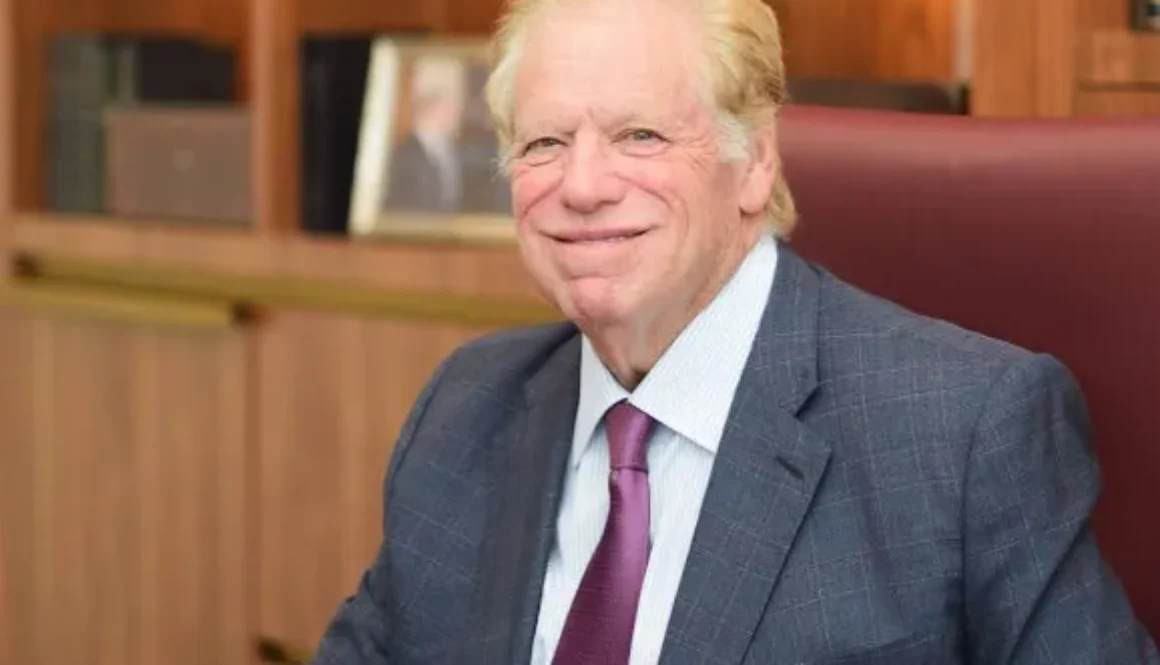
Elliott Broidy
Elliott Broidy: An original Auschwitz plan, a warning for our time
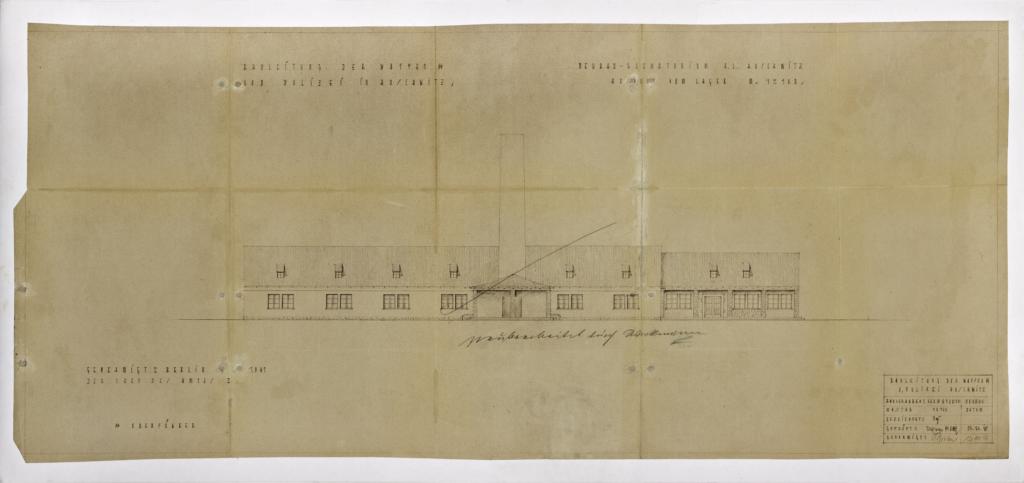
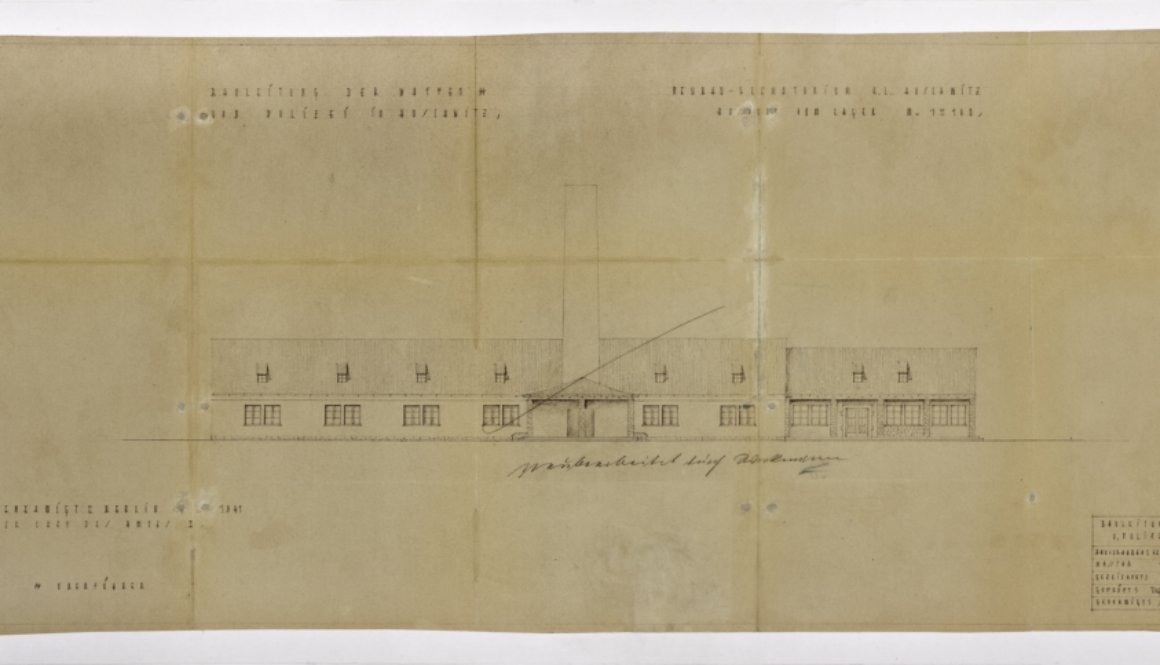
I have acquired an original architectural drawing – a “whiteprint” – of the very first design of the crematoria built in Birkenau as an expansion of Auschwitz by Austrian architect Walter Dejaco.
As an American Jew, I watched the images of the antisemitic attack in Australia with horror – images that, like those of October 7 in Israel, brought back into our present-day lives the antisemitic violence of the past. Alongside this horror was a determination to fight back, using every means at our disposal to ensure that history is not forgotten.
As part of that fight, I have acquired an original architectural drawing – a “whiteprint” – of the very first design of the crematoria built in Birkenau as an expansion of Auschwitz.
The term ‘genocide’
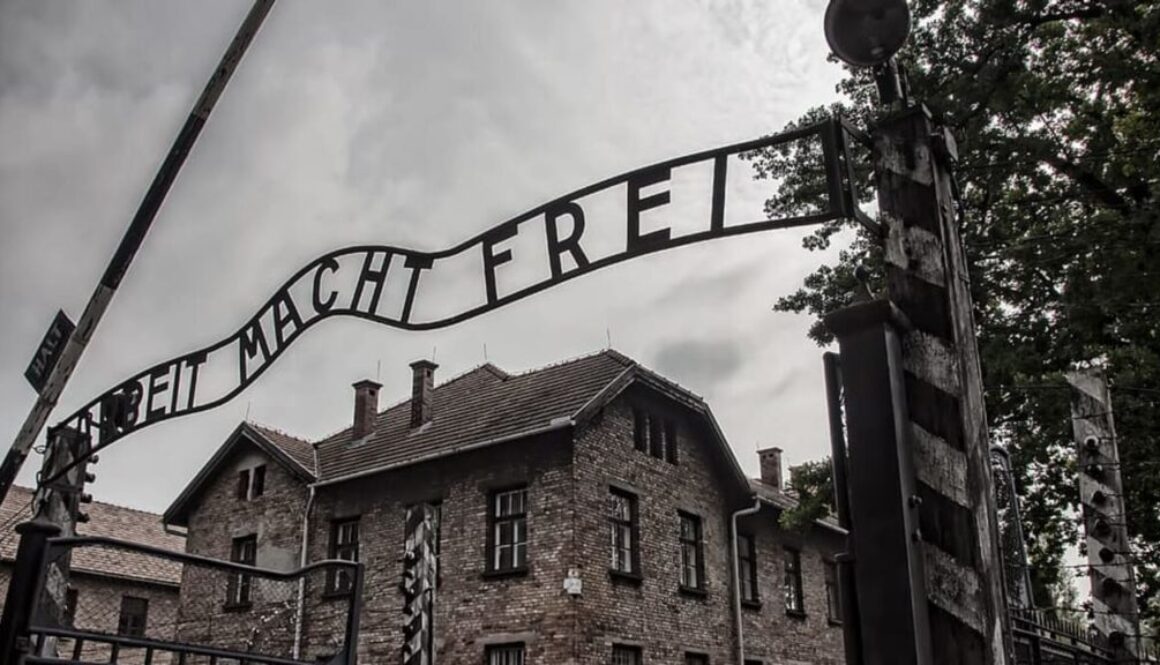
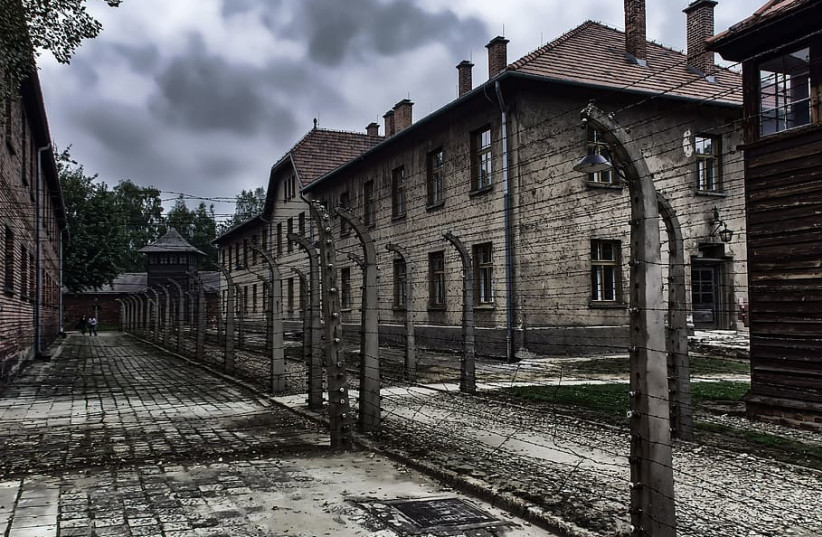
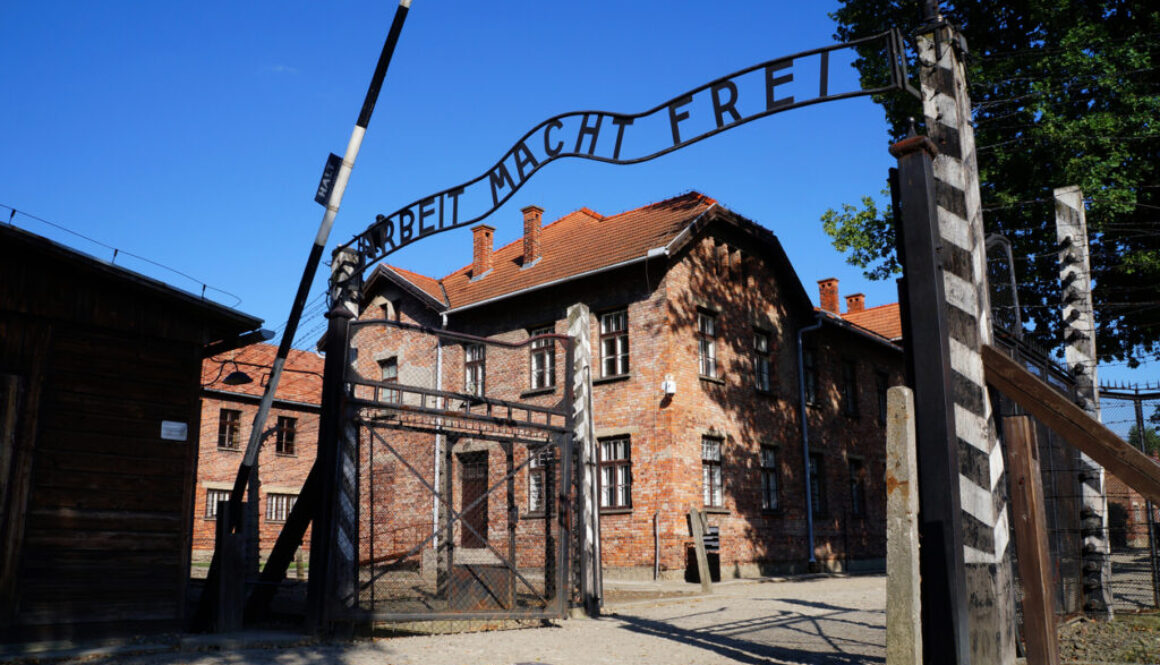
Prior to acquiring the whiteprint, in 2024, I helped the Counter Extremism Project, a nonprofit organization, purchase a house next door to Auschwitz. Commandant Rudolf Hoss lived there from May 1940 to December 1943, and again in early 1944, with his wife and five children. His chillingly dispassionate approach to the horror he oversaw at Auschwitz was portrayed in the Academy Award-winning film The Zone of Interest.
I obtained the whiteprint from a rabbi in the Los Angeles area, who had been given the document a decade earlier by a collector of Nazi memorabilia known to one of his congregants. The donor had come across it at an auction in Germany without knowing its true historical value.
Whiteprint ‘literally irreplaceable’
In exchange for the whiteprint, I committed to fund $1.5 million for an educational project that the rabbi is currently developing. It is an early-education curriculum on altruistic behavior – a “catch them while they are young” approach to safeguarding children from extremism. The sum is intended to honor the memory of the 1.5 million Jewish children murdered in the Holocaust.
The whiteprint is of immense historical significance. A member of my research team consulted Robert Jan van Pelt, a professor of architecture at the University of Waterloo in Canada and a leading authority on Nazi concentration camp architecture. He authenticated the whiteprint, describing it as “quite literally irreplaceable.”
Van Pelt explained that Dejaco created the design while visiting Auschwitz, where he would have been a guest of Hoss. The crematorium was initially planned to be located next to the Hoss family home, where he lived with his wife and young children. In 1942, the Nazis instead chose to build four crematoria in the nearby camp of Birkenau. These were later blown up by the Nazis as the Soviet Army advanced.
The four crematoria had an incineration capacity of nearly 4,400 corpses per day. Given their central role in the genocide of the Jews, van Pelt noted that Hoss “would have followed this project very intensely. It was a major capital outlay at a time of general rationing of resources like building materials and steel.”
Gassing and burning, starvation and disease
Although historians now estimate that approximately 1.1 million people were murdered at Auschwitz-Birkenau, roughly one million of them Jews, Hoss testified at Nuremberg that he believed the number was far higher. He stated that “at least 2,500,000 victims were executed and exterminated [at Auschwitz] by gassing and burning, and at least another half million succumbed to starvation and disease, making a total of about 3,000,000 dead.” This figure represents about 70% or 80% of all persons sent to Auschwitz as prisoners.”
Today, the two largest crematoria exist only in ruins.
Given the extraordinary rise in antisemitism across the globe and the threat it poses not only to Jews, but to Western civilization itself, we must make it impossible for anyone to deny that the Holocaust occurred. The whiteprint, in effect, makes denial untenable even for the most committed revisionists.
Philanthropist Elliott Broidy Acquires Rare Auschwitz Crematoria Whiteprint to Combat Antisemitism
This piece was originally published on Voice.media on January 6, 2026.
By Alinasir Nasir
Philanthropist and entrepreneur Elliott Broidy has acquired an extremely rare artifact of historical significance: one of only two surviving original architectural drawings—a whiteprint—of the first design of the crematoria at the Auschwitz-Birkenau death camp.
According to Broidy’s announcement, the artifact is “a chilling and irrefutable piece of evidence documenting the start of the systematic, industrialized murder of millions of Jews that defined the Holocaust.”
The only other known copy is held in a Moscow archive that is inaccessible to Western scholars.
Created in October 1941 by SS architect Walter Dejaco under the direction of Auschwitz commandant Rudolf Höss, the drawing informed the design of Crematoria II and III at Birkenau, where hundreds of thousands of Jews were murdered beginning in the spring of 1943.
Broidy purchased the document for $1.5 million from Rabbi David Baron of the Temple of the Arts Synagogue in Beverly Hills, California, an amount symbolically honoring the 1.5 million Jewish children murdered in the Holocaust. The funds will support Rabbi Baron’s development of a global early-childhood curriculum focused on empathy and altruism.
In the announcement, Broidy described the whiteprint as crucial evidence at a moment of rising antisemitism and Holocaust denial. “To behold it is to confront the deliberate design of evil,” he said. “My most sincere wish is for this whiteprint to be memorialized as part of an irrefutable body of evidence that negates Holocaust denial and helps to forever silence malevolent revisionists while also educating new generations about the lessons of the Holocaust.”
The document was authenticated by renowned Auschwitz scholar Robert Jan van Pelt, the author of, among other works, Auschwitz, 1270 to the Present (with Deborah Dwork) and The Case for Auschwitz: Evidence from the Irving Trial and an expert witness for the defense in David Irving’s civil libel suit brought against Holocaust historian Deborah Lipstadt.
Van Pelt and another Holocaust historian cited in the press release, Michael Berenbaum, view the document as an especially valuable artifact because it captures the meticulousness with which the Nazis planned, engineered, and implemented mass murder.
Broidy intends to exhibit the artifact at institutions dedicated to Holocaust education and combating antisemitism before donating it permanently to such an institution. He sees this journey as an extension of his broader commitment confronting extremist ideologies, including his help in supporting the purchase and transformation of the former home of Rudolf Höss—located directly next to the Auschwitz concentration camp in Oświęcim, Poland—into the Auschwitz Research Center on Hate, Extremism and Radicalization (ARCHER) at House 88, which fights antisemitism and other forms of extremism with cutting-edge technology. Broidy co-chairs The Fund to End Antisemitism, Extremism and Hate, whose purpose is to support ARCHER at House 88.
“The Nazis sought to erase the humanity of their victims and their very existence,” Broidy said. “This artifact—and the education it will support—reasserts that humanity, helps ensure the continuity of the Jewish people, and works to build ways for all people to see the good in others.”
Turning a Blueprint of Death into a Plan of Defiance
by Benjamin Raziel
Rare Architectural Drawing of Auschwitz Crematoria Acquired for $1.5 Million
This article original appeared in Space Coast Daily on December 19, 2025.
A rare architectural drawing tied to the earliest design of the Auschwitz-Birkenau crematoria has been acquired by South Florida-based philanthropist and entrepreneur Elliott Broidy. Broidy says he intends to use the artifact to strengthen public understanding of the Holocaust at a moment when antisemitism and denial are again on the rise.
The document—an October 1941 whiteprint created by SS architect Walter Dejaco—is one of only two surviving originals. According to the press release announcing the acquisition, the only other known copy is held in a Moscow archive inaccessible to Western researchers.
Such architectural drawings, including the acquired whiteprint, formed the basis for the crematoria and gas chamber complexes that, beginning in 1943, became the principal killing sites at Birkenau, where hundreds of thousands of Jews were murdered. Scholars have long regarded the technical evolution of these buildings as central to understanding the Nazis’ systematic approach to genocide.
Broidy called the whiteprint “a chilling and irrefutable piece of evidence documenting the start of the systematic, industrialized murder of millions of Jews that defined the Holocaust.” He purchased the artifact for $1.5 million.
The high price tag is not accidental, however—the amount is meant to represent the 1.5 million Jewish children murdered during the Holocaust. The proceeds from the sale of the whiteprint will fund Rabbi David Baron’s global early-childhood curriculum promoting empathy and altruism.
The whiteprint was authenticated by Auschwitz scholar Robert Jan van Pelt, known for his extensive scholarship on the Auschwitz-Birkenau concentration camp’s architectural history.

American Jewish University professor Michael Berenbaum emphasized the value of the whiteprint in illustrating how the Nazi killing apparatus was constructed. “This is one of the most important visual documents showing how the crematoria were created, and showing also the intentionality and professionalism, the intricate detail and the substance, with which the crematoria were thought through,” said Berenbaum.
According to Elliott Broidy, the whiteprint’s value is not only historical but moral. “To behold it is to confront the deliberate design of evil,” he said in the announcement. He hopes the artifact will become part of an “irrefutable body of evidence” capable of countering Holocaust denial and reaching younger generations with the truth of what unfolded at Auschwitz.
Speaking of the document’s significance, Broidy said, “The Nazis sought to erase the humanity of their victims and their very existence. This artifact—and the education it will support—reasserts that humanity, helps ensure the continuity of the Jewish people, and works to build ways for all people to see the good in others.”
Elliott Broidy plans to exhibit the drawing at institutions devoted to Holocaust memory and combating antisemitism before making a permanent donation.
The Boca Raton resident has become known for his involvement in efforts to confront extremism, including helping to acquire the former residence of Auschwitz commandant Rudolf Höss in Oświęcim, Poland.
Under the Counter Extremism Project’s initiative, ARCHER, at House 88, the commandant’s house is being transformed into a research center focused on combating antisemitism and radicalization. Broidy co-chairs The Fund to End Antisemitism, Extremism, and Hate, which was created to support ARCHER at House 88.
As Holocaust witnesses dwindle and denial of historical facts increasingly circulates online, the preservation and public display of original documentation, such as this whiteprint, become increasingly important.
The detailed architectural drawing demonstrates that Auschwitz’s crematoria were not improvised structures—they were engineered components of a bureaucratic and industrial system built to carry out genocide. Each surviving document that records this process serves as an antidote to historical amnesia.
Boca Raton Couple Preserve a Chilling Document As A Reminder Of The Holocaust’s Dark Path
This piece originally appeared in Boca Daily News on December 23, 2025.
By Daniel Nee
As Hanukkah concludes, and menorahs are being dutifully stored away for another year, shining light toward the darkest corners of humanity has rarely seen a time of more importance than the present. Just before the start of a holiday season that became marred by a terrorist attack on a sunny beach in Australia, canceled celebrations in Europe and fears of future tragedies reaching the shores of United States, one Boca Raton couple made it their mission to preserve a disturbing-but-powerful document that shows the literal pencil-to-paper plotting of evil, drawn up as a group of men gathered to discuss a macabre final solution.
Elliott Broidy, 68, has experienced a celebrated career straddling the worlds of defense, diplomacy and philanthropy. A pioneer in leveraging open source intelligence to improve safety and security, he and his wife, Robin, have acquired a rare, real, tangible object that would have made world leaders of the 1940s shudder at the thought of what was being planned. The landscape-style document, a few feet long, set forth a way to manage the horrors of the Auschwitz-Birkenau concentration camp: a physical whiteprint of Crematoria II and III, where the bodies of those whose lives were stolen in the Holocaust would be disposed.
The Broidys acquired the document in exchange for a $1.5 million commitment to efforts that will go toward developing anti-hate and anti-extremism curricula for children. The figure represents the 1.5 million children who were killed in the Holocaust.
The historic document was produced by SS architect Walter Dejaco on Oct. 24, 1941, in preparation for days of meetings in which the logistics of killing at an industrial scale were to be discussed in bureaucratic fashion. Under the leadership of camp commandant Rudolf Höss, two whiteprints were drawn up – one which is locked away in an archive in Moscow, having been seized by Soviet soldiers after the fall of the Nazi regime, and the other which resurfaced in the mid-2010s. The authenticity of the document was in question until it was examined by Dutch professor and Auschwitz historian Robert Jan van Pelt, who linked together the timeline of the meetings of Nazi officials, the location of the document’s origin, and the date of its physical creation, which directly corresponded to the conference led by Höss.
“This is about education,” Robin Broidy said. “Especially for young people. If you understand how this happened once, you’re less likely to accept it happening again.”
One of only two known surviving copies of the original whiteprint of the crematoria at Auschwitz-Birkenau. (Elliott Broidy)
In a world where it is becoming increasingly difficult to tell if photos and stories are real or the machinations of artificial intelligence platforms, human-authenticated documents such as the crematorium plans provide concrete – rather than theoretical – examples of what extremism can lead to.
“There are still Holocaust deniers in the world,” said Elliott Broidy. “We consulted experts to authenticate the document and learned that only two copies exist — one in Moscow that hasn’t been seen since 1991, and this one. We felt it was important for the public to see it. When the Nazis retreated, they destroyed much of Birkenau and burned many documents. But they forgot the architectural office. That’s why we still have proof of what these buildings were designed for.”
Based on the date of its creation, the planning document was drawn up for what has become known as the Wannsee Conference, the physical meeting of Nazi political and military leadership that produced plans to deport European Jews to facilities in occupied Poland where they would be killed. The result of the conference, named for the Berlin suburb where it was held, is clear. But documents such as the whiteprint help drive home the personal reality of its intent – real people, real plans and real decisions on how to perpetrate a genocide at scale. The plans represented an expansion of a camp that held Soviet POWs to what became the most infamous venue of the Holocaust.
“It shows the earliest planning stages of industrialized mass murder,” said Broidy. “That’s why it’s historically priceless.”
The Broidy family, who relocated to Boca Raton from California to be closer to family and enjoy a more peaceful daily life, have become more active in causes that battle antisemitism and extremism in recent years. With colleagues, they purchased the residential “house next door” to Auschwitz where Höss lived with his family. Photos in the Broidy’s personal collection show parties, children’s birthday celebrations, and joyous gatherings occurring with the death camp’s guard towers and exterior walls in the background. The house – which was the subject of the award-winning 2023 film The Zone of Interest – was acquired as a guarantee not only that history would be preserved, but so it would never become a deranged shrine to what happened mere yards away. The whiteprint added to the context of the prior purchase.
“History may not repeat itself exactly, but hatred persists,” said Robin Broidy. “This document shows how ordinary people were manipulated into participating in evil. It forces people to ask: ‘Am I being manipulated the same way?’”
“If it gives people pause — if it reminds them that this was planned, intentional, and real — then it serves a purpose,” she added.
The physical document has been shipped to a secured location in California where the facilities exist to preserve a sketch that is more than eight decades old, printed on what resembles yellowed newsprint. Its ultimate destination is to be determined – it may find a home at the United States Holocaust Museum in Washington, D.C., on the grounds of the Auschwitz-Birkenau museum in Poland, or another facility with preservation infrastructure. There is a chance, if feasible, that it could be transported to remote locations, giving a larger number of people an opportunity to experience the chilling sight with their own eyes.
“Our rabbi [in California] wanted the proceeds from the project to go toward education, but asked that the document be released,” Broidy said. “He, and we, felt it was important for the public to see it, though ultimately it should rest somewhere that can preserve it properly. While I didn’t have direct relatives affected in the Holocaust, I met many survivors and children of survivors.”
“Over the past few years, antisemitism became a very urgent issue for us,” Elliott Broidy said. “This was the best symbol, the best way to actively combat antisemitism, we could find.”
A window into horror: An original drawing of the Auschwitz-Birkenau crematoria sold for $1.5 million
This article was originally published on MSN on December 13, 2025.
By Shadab Alam
A profoundly significant, and deeply disturbing, Holocaust artifact has resurfaced — and its new owner hopes it will serve as a bulwark against antisemitism and extremism.
Entrepreneur and philanthropist Elliott Broidy recently announced the acquisition of one of only two known surviving copies of the original whiteprint of the crematoria at Auschwitz-Birkenau. The document, drawn on October 24, 1941 by SS architect Walter Dejaco, represents the earliest design concept of those crematoria, in which hundreds of thousands of Jews were murdered in 1943 and 1944.
The document has been authenticated and explicated by Auschwitz expert Robert Jan Van Pelt, who specializes in the architectural history of the camp.
According to van Pelt, the early architectural sketch “captures the moment when Auschwitz entered the technological imagination: a design that became the prototype for the most lethal killing facilities in human history.” He added that the plan “shows Auschwitz in motion — an architecture first shaped by the murder of Soviet POWs that was, through successive decisions, adapted into the machinery of destruction that resulted in the Holocaust.”
Auschwitz-Birkenau, the sprawling complex in modern-day Poland (during the war, the territory in which Auschwitz is located was annexed by Nazi Germany), was the Nazis’ most murderous death camp. More than one million people, the vast majority of whom were Jewish, were murdered there.
Another expert, historian Michael Berenbaum, who held prominent roles at the United States Holocaust Memorial Museum and was instrumental in that institution’s creation, emphasized the document’s significance: “This is one of the most important visual documents showing how the crematoria were created, and showing also the intentionality and professionalism, the intricate detail and the substance, with which the crematoria were thought through.”
Broidy purchased the document from a Beverly Hills, CA synagogue, and said that he paid $1.5 million for it — a figure matching the number of Jewish children murdered in the Holocaust — with the money earmarked for a “global early childhood curriculum promoting empathy, altruism, and anti-extremism.”
Broidy plans to exhibit the drawing at institutions dedicated to Holocaust education and combating antisemitism, before ultimately donating it to such an institution. He frames his acquisition of the document as serving the dual purpose of preserving the memory of the Holocaust and confronting today’s resurgent antisemitism and distortion of truth.
Rare Auschwitz Artifact Acquired
This piece was originally published in the Boca Raton Observer on December 12, 2025.
Elliott Broidy Secures Historic Whiteprint To Combat Holocaust Denial
Boca-based philanthropist Elliott Broidy purchased one of only two existing original architectural whiteprints of the Auschwitz-Birkenau crematoria for $1.5 million, a sum chosen to honor the 1.5 million Jewish children murdered during the Holocaust. Drawn in 1941 by SS architect Walter Dejaco under the direction of Rudolf Höss, this artifact marks the chilling start of the systematic, industrialized murder of Jews.
Authenticated by Auschwitz historian Robert Jan van Pelt, the whiteprint represents what would become Crematoria II and III, the main gas chambers of Birkenau — the massive camp adjacent to Auschwitz.
“This whiteprint is physical proof of humanity’s darkest capacity,” Broidy says. “To behold it is to confront the deliberate design of evil.”
The acquisition was facilitated by Rabbi David Baron of the Temple of the Arts in Beverly Hills, Calif., with proceeds funding a global early childhood curriculum promoting empathy, altruism and anti-extremism. Broidy plans to display the artifact at institutions dedicated to Holocaust education and combating antisemitism before donating it permanently.
Experts say the document is among the most significant visual records of the Holocaust’s intentionality.
“This first crematorium drawing captures the moment when Auschwitz entered the technological imagination,” van Pelt says. “An architecture … that was, through successive decisions, adapted into the machinery of destruction that resulted in the Holocaust.”
Michael Berenbaum, former project director at the United States Holocaust Memorial Museum, calls it “one of the most important visual documents showing how the crematoria were created.”
The announcement coincides with the 80th anniversary of the Nuremberg Trials, underscoring the enduring need to preserve historical truth amid rising antisemitism and Holocaust denial. Broidy’s efforts extend beyond this acquisition, including support for The Counter Extremism Project and the creation of ARCHER at House 88, a research center adjacent to Auschwitz focused on dismantling hate networks and extremist ideologies.
“The Nazis sought to erase the humanity of their victims,” Broidy says. “This artifact — and the education it will support — reasserts that humanity helps ensure the continuity of the Jewish people and works to build ways for all people to see the good in others.”
For more information, visit archer.counterextremism.com.
Elliott Broidy on Phil Hill, The American F1 Champion We Forgot
As Formula One returns to the United States for this weekend’s race to a growing American fanbase, it’s worth looking back at one of the country best drivers — who has rarely gotten his due.
Before the Netflix docuseries era, before the boom in fan culture, there was Phil Hill — the first and only American-born driver to capture the Formula One World Championship, and perhaps the sport’s most underrated athlete.
Ask most fans to name an American Formula One world champion and—if they can name one at all—almost all will say Mario Andretti. It’s understandable: Andretti is one of the greatest all-around drivers in motorsports history, with victories in Formula One, IndyCar, sports cars and more. But he was born in Italy, didn’t arrive in the United States until he was 15, and didn’t become a U.S. citizen until he was 25.
Hill’s résumé is remarkable. Excluding the Indianapolis 500—which counted as a world championship round in the 1950s—Hill was the first American-born driver to win both a Formula One race and the championship. He was also the last driver to win the title in a front-engine car, long after such designs were considered obsolete.
His sports-car accomplishments may be even more impressive. Hill became the first driver to complete endurance racing’s so-called triple crown, winning major events at Sebring, Daytona and the 24 Hours of Le Mans. He won both Sebring and Le Mans three times each, becoming the first to do so, and added two victories in the Nürburgring 1,000 kilometers.
Hill spent eight seasons as a factory Ferrari driver during one of the most dangerous periods in racing history. In that time, eight fellow Ferrari drivers—Alberto Ascari, Peter Collins, Eugenio Castellotti, Mike Hawthorn, Ricardo Rodríguez, Luigi Musso, Alfonso de Portago and Wolfgang von Trips—were killed in accidents, most on track.
To modern observers, it’s astonishing Hill continued racing at all. But the tragedy that defined his era also shaped his legacy—especially the circumstances surrounding his 1961 world championship.
The 1961 Italian Grand Prix remains one of the darkest days in Formula One history. It was the second-to-last round of the season, and only two drivers remained in championship contention: Hill and his popular German teammate, Wolfgang “Taffy” von Trips. Von Trips led with 33 points to Hill’s 29 and had two wins that season to Hill’s one.
Ferrari dominated the year and locked out five of the first six grid spots at Monza. Von Trips started from the pole; Hill from fourth. But Hill surged into the lead by the end of the first lap, unaware of the disaster behind him.
At nearly 160 mph, von Trips moved left without realizing Jim Clark’s Lotus was alongside. The cars touched. Clark spun to a stop, unhurt, but von Trips’ Ferrari climbed an embankment, tore through a fragile wire fence and plunged into the crowd. Von Trips and 15 spectators were killed.
Amazingly, the race was not stopped. Hill went on to win the Grand Prix and clinch the world championship.
Hill later called his title “blighted.” Some claimed he had inherited the championship—an unfair and deeply insensitive criticism given the circumstances. Hill, introspective and thoughtful, carried the weight of that day for the rest of his life.
Monza would be Hill’s final Formula One victory. His relationship with Ferrari deteriorated, and he left the team at the end of 1962. Although he continued racing with other constructors until 1964, he never again reached the Formula One podium.
Hill returned briefly at the 1966 Belgian Grand Prix, driving an otherwise ineligible McLaren fitted with a camera to capture footage for the film “Grand Prix.” A sudden downpour wiped out much of the field on the opening lap, but Hill navigated the chaos and returned safely.
He continued in sports cars sporadically, driving both Ford’s GT40 during its peak and the innovative but fragile Chaparral prototypes. His last major victory came at Brands Hatch in 1967, where he and Mike Spence won in a Chaparral, finishing ahead of future three-time Formula One champion Jackie Stewart.
Hill retired soon after—having won both the first and last races of his career and having survived a period in motorsports when few drivers did.
After retiring from competition, Hill built a successful classic-car restoration business, worked as a commentator and motoring journalist, and served as a respected judge at leading concours events such as Pebble Beach. He died in 2008 at age 81 due to complications from Parkinson’s disease.
Would he have been champion had von Trips survived? The question is unanswerable—and ultimately irrelevant. As fans often note, “F1 spelled backward is ‘if.’” The sport is built on split-second fortune and moments no one can predict.
What is certain is this: Phil Hill won his world championship fairly, drove with skill and sensitivity, and deserves to be remembered far more than he is today.
Elliott Broidy on Leadership, Investment, and the Future of Defense Tech
This article was originally published in Time Business News on November 14, 2025.
We recently sat down for a conversation with Elliott Broidy, an entrepreneur who has used his extensive experience and talent to found, invest in, and, in some cases, manage as CEO, more than 160 companies over his four-decade career. Since 2014, he has focused on technology businesses (including, more recently, AI) in the defense intelligence, homeland security, public safety, and law enforcement sectors. He is the Chairman and CEO of Broidy Capital Holdings, LLC, founded in 2022 in Boca Raton, FL, and its predecessor, Broidy Capital Management, headquartered in Los Angeles from 1991 to 2022. Mr. Broidy is the founder and Managing Partner of Threat Deterrence Capital Holdings, LLC and LEO Technologies Holdings, LLC.
Broidy’s commitment to public safety and the security of the United States and its allies has shaped both his career and philanthropy. Following 9/11, he redirected his business focus toward security and defense technology, driven by a mission to protect both the United States and its allies. This dedication to national security continues to guide his investment strategy and technological innovation in the defense sector.
In the following interview, we cover Elliott Broidy’s insights on business, security, and technology investments.
Q: What fundamental changes have you observed in defense technology over your career?
Elliott Broidy: The most fascinating shift has been the democratization of innovation in the defense sector. When I started my career, breakthrough technologies typically emerged from government labs or established defense contractors. Today, we’re seeing transformative solutions coming from startups, AI researchers, and commercial tech companies. This has fundamentally changed how we approach security challenges. What’s particularly interesting is how commercial technologies are being adapted for defense applications, rather than the other way around – a complete reversal from historical patterns. This shift has made the integration of civilian and defense technology development more important than ever.
Q: How do you evaluate potential investments in the defense tech sector?
Elliott Broidy: My evaluation process has evolved significantly over the years. Beyond the typical metrics of market size and growth potential, I look closely at three critical factors. First, does the technology meaningfully enhance human capabilities rather than trying to replace them entirely? Second, how flexible is the solution – can it adapt to emerging threats and changing operational needs? And third, perhaps most importantly, does the team understand both the technical and operational aspects of their solution? I’ve found that the most successful investments come from teams that deeply understand the day-to-day realities of their end users, not just the technology they’re developing.
Q: What role do you see AI playing in the future of defense and public safety?
Elliott Broidy: AI’s potential in defense and public safety goes far beyond what most people imagine. The real power lies not in replacing human judgment, but in enhancing our ability to process and understand vast amounts of information in real time. What excites me most is how AI can serve as a force multiplier for analysts and operators in the field. For instance, when analyzing large datasets, AI can quickly identify patterns and anomalies that would take human analysts weeks or months to discover. But the key is maintaining the right balance – AI should augment human expertise, not attempt to replace it. This means developing systems that provide actionable insights while leaving critical decision-making in human hands.
Q: How do you balance innovation with practical implementation when developing security solutions?
Elliott Broidy: The truth is, the most innovative solution isn’t always the most effective one. I’ve learned that successful implementation often comes down to understanding the operational environment where the technology will be used. You have to consider factors like existing workflows, training requirements, and system integration. I always tell my teams that a slightly less sophisticated solution that works seamlessly within existing systems is far more valuable than a cutting-edge technology that creates operational friction. It’s about finding the sweet spot between pushing technological boundaries and ensuring practical, day-to-day usability.
Q: What advice would you give to entrepreneurs looking to enter the defense technology space?
Elliott Broidy: Success in this sector requires a unique combination of innovation and pragmatism. Many entrepreneurs come in thinking it’s all about having the most advanced technology, but that’s only part of the equation. What’s equally crucial is understanding the regulatory and compliance landscape – it’s complex but essential to navigate effectively. I also encourage entrepreneurs to think carefully about team composition. The most successful ventures I’ve seen combine technical innovators with people who have deep operational experience in the field. And perhaps most importantly, focus on building sustainable, scalable solutions rather than chasing quick wins. The defense sector values reliability and longevity over rapid but unstable innovation. If you’re in this space, you need to be thinking about long-term impact and dependability.
Q: How do you see private sector investment in defense technology evolving over the next decade?
Elliott Broidy: We’re entering an incredibly dynamic period in defense technology investment. The pace of technological change continues to accelerate, and we’re seeing new threats emerge that require innovative solutions. I believe we’ll see increased collaboration between traditional defense contractors and emerging tech companies, particularly in areas like artificial intelligence, cybersecurity, and data analytics. The key to success will be maintaining focus on real-world impact rather than just technological advancement. The most effective investments will be those that enhance existing capabilities while enabling new ones, always with an eye toward actual operational needs. The companies that succeed will be those that can adapt quickly to emerging threats while maintaining the reliability and integration capabilities that this sector demands.