Every generation inherits documents, artifacts, photographs, buildings, and places that tell the story of those who came before us. Whether those stories survive depends on the choices we make today. Preservation is often viewed as an act of remembrance or nostalgia, but its purpose is far more practical. It is about ensuring that future generations have access to the evidence they need to understand the past for themselves.
Original artifacts have a unique power. They connect us directly to history in a way that reproductions or summaries cannot. Standing before an original document, walking through a historic site, or examining an object that was part of significant events reminds us that history is not abstract. It was lived by real people who faced difficult choices, experienced triumph and tragedy, and left behind lessons that remain relevant today.
This is one reason museums, archives, and historic preservation organizations perform such important work. They are safeguarding the historical record. Every preserved artifact strengthens our ability to study the past honestly and to resist the temptation to simplify, romanticize, or distort it.
The Holocaust is now beyond living memory for most people, making physical evidence more important with each passing year. Documents, photographs, architectural plans, and the sites themselves help ensure that future generations encounter this history through facts rather than abstraction.
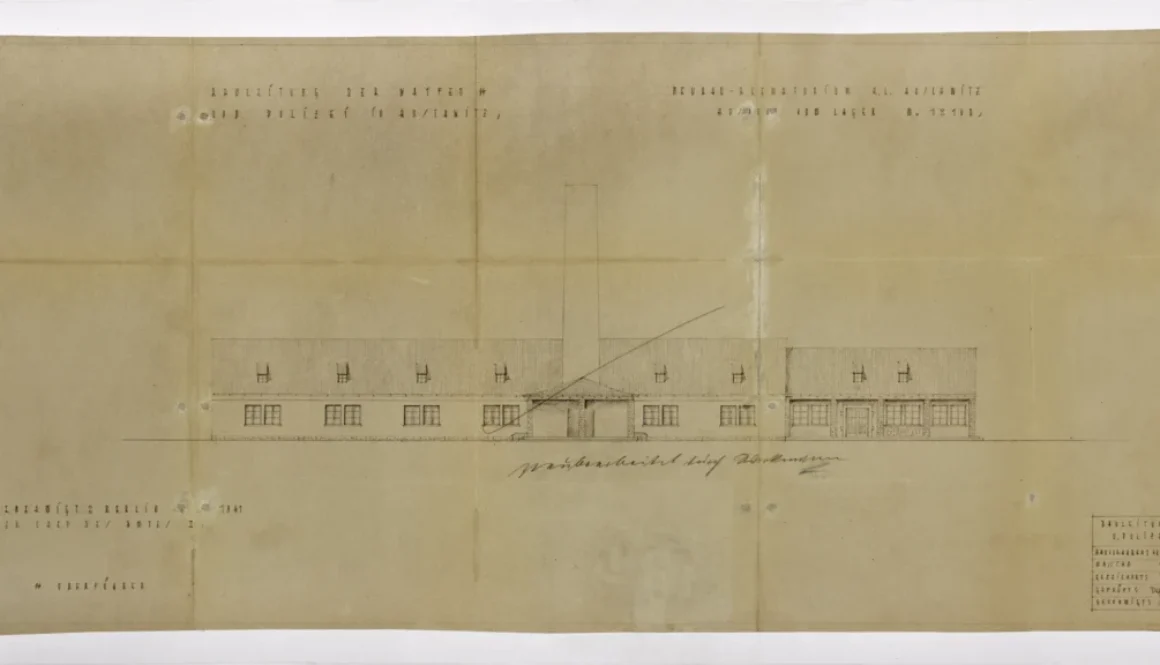
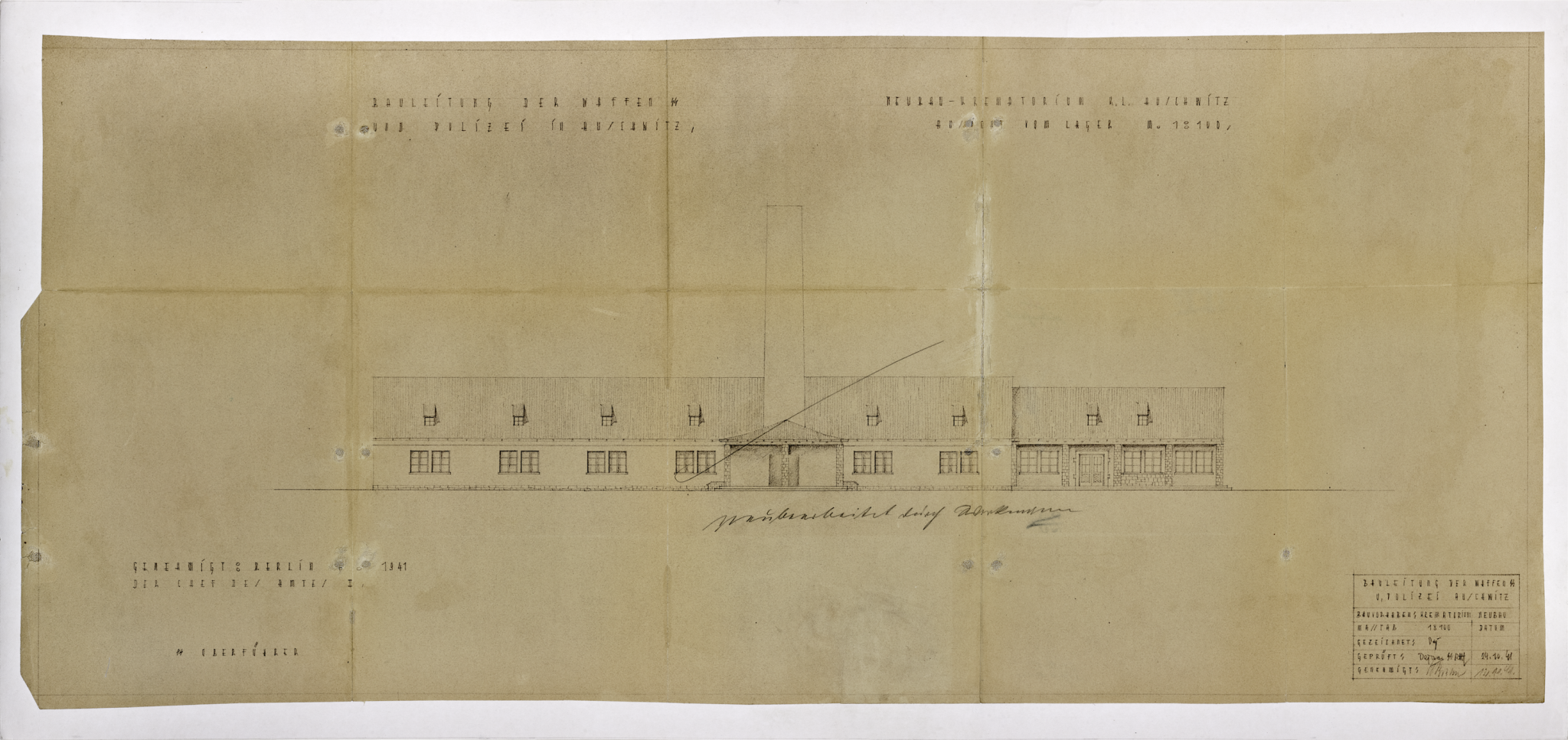
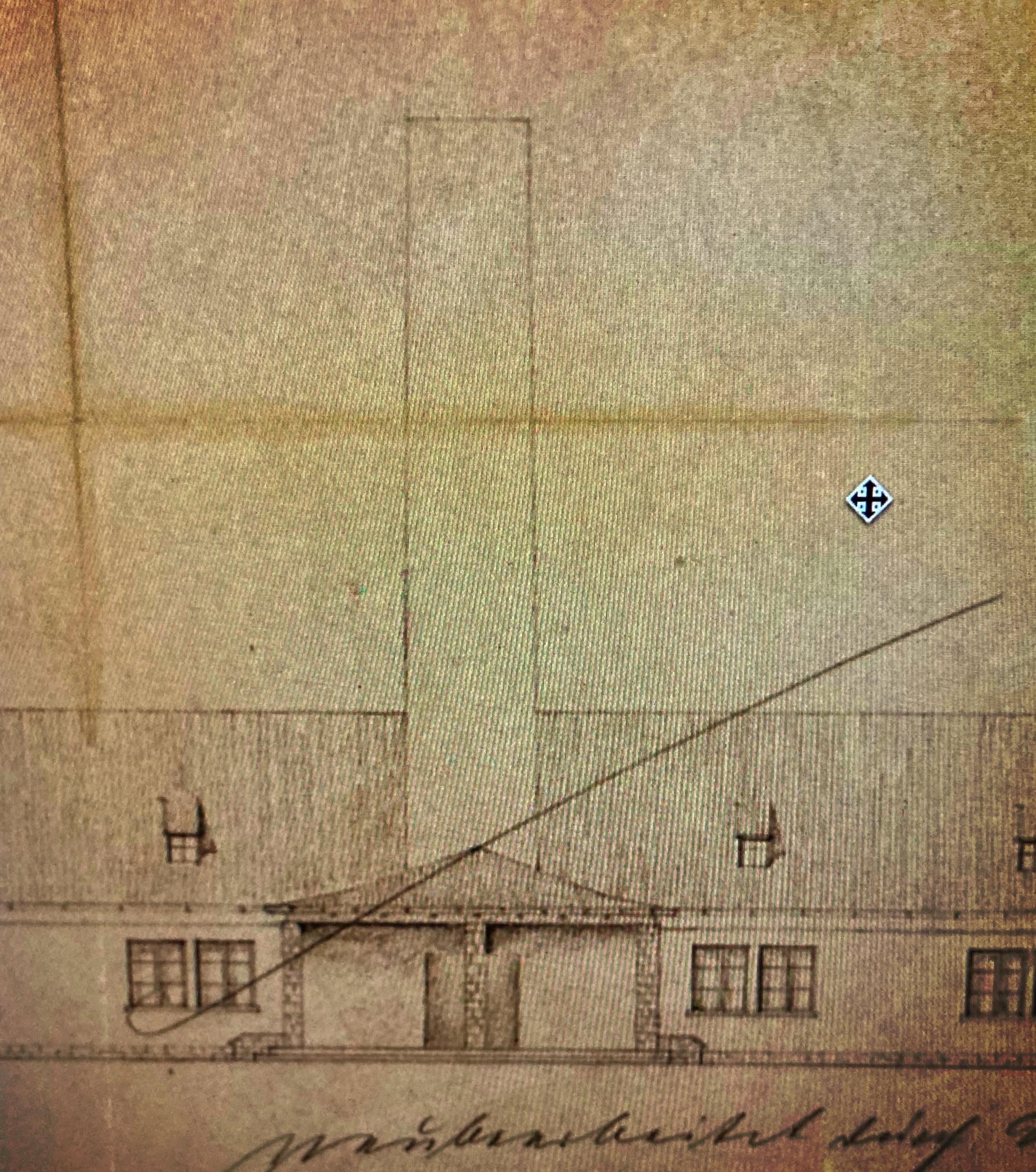
That conviction was one reason I chose to acquire an original whiteprint for the crematoria at Auschwitz-Birkenau. This is a chilling historical document that provides tangible evidence of the Nazis’ abominable crimes. Preserving artifacts ensures that they are protected, studied, and available to educate future generations.
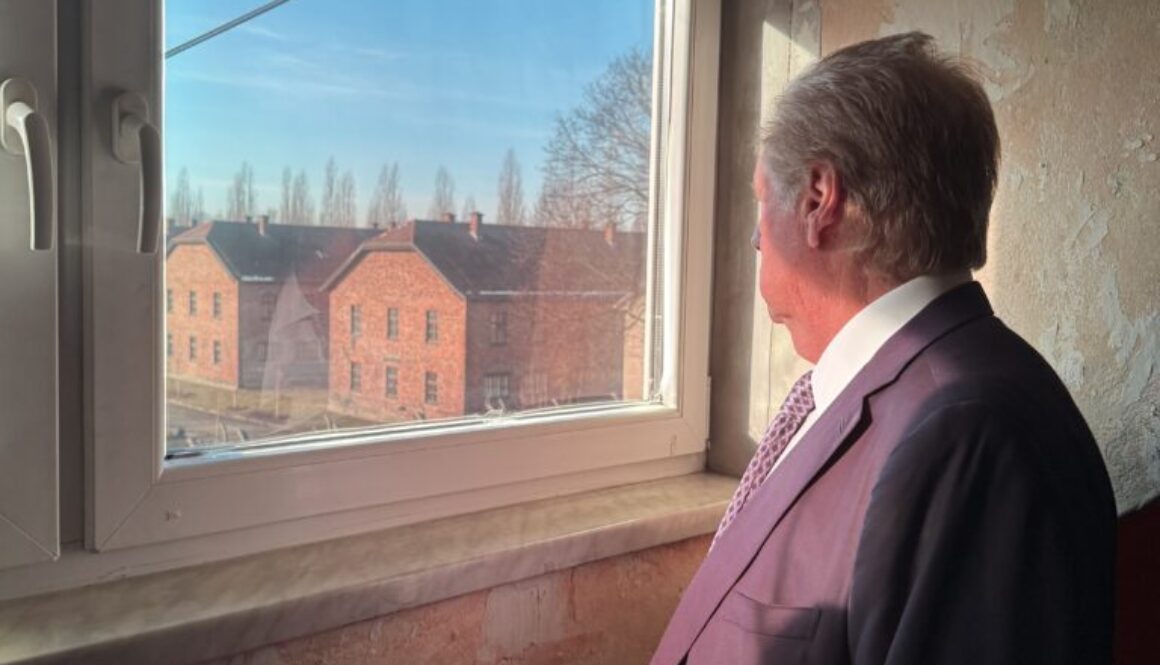
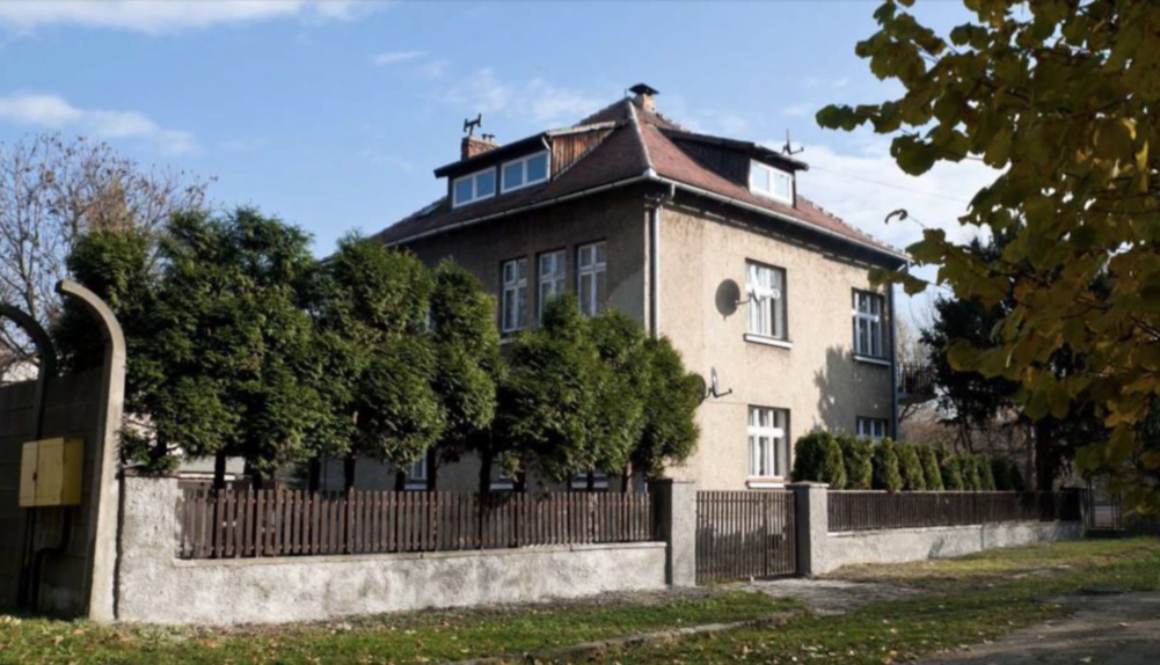
That belief also inspired me to help The Counter Extremism Project acquire the former home of Rudolf Höss, the commandant of Auschwitz, which sits right next door to the death camp. After being in private hands for the past 80 years, the house has been turned into The Auschwitz Center on Hate, Extremism, and Radicalization (ARCHER at House 88). The home where Hoss and other leaders of the Nazi Party planned the elimination of over 1,000,000 people, mostly Jews, has been transformed into an international center dedicated to confronting antisemitism, extremism, and hate through education, research, advocacy, and cultural events. Exhibitions such as the story of Lore Sternfeld, a master lens maker at Astro Berlin who was murdered at Auschwitz shortly after delivering 150 lenses to the Nazis, help restore the humanity of those whose lives were stolen and ensure that the victims — not the perpetrators — remain at the center of remembrance.
Every nation, community, institution, and family possesses pieces of history worth preserving. Letters, journals, photographs, official records, works of art, and historic buildings all contribute to our collective understanding of who we are and how we arrived here. Once they disappear, they cannot be recreated.
We often speak about leaving a legacy for future generations. Preservation is one of the most meaningful ways to do so. It reflects confidence that the past still has something to teach us and humility to recognize that future generations deserve the opportunity to examine that past through authentic evidence rather than incomplete memories.
History belongs to all of us. Preserving it is an investment in the future — a commitment to ensuring that those who come after us inherit not only our achievements but also an honest record of the lessons, sacrifices, and experiences that shaped them.
Elliott Broidy is Chairman and CEO of Broidy Capital Holdings, a family office specializing in AI-driven public safety software. He is also the Co-Chair of the Fund to End Antisemitism, Extremism and Hate which supports the Auschwitz Research Center on Hate, Extremism and Radicalization – ARCHER at House 88, an initiative of The Counter Extremism Project.
The occasion was Project Legacy’s annual Jewish American Heritage Month luncheon, an event that civic engagement leader Ezra Friedlander has, over the years, turned into one of May’s most substantive gatherings in Washington
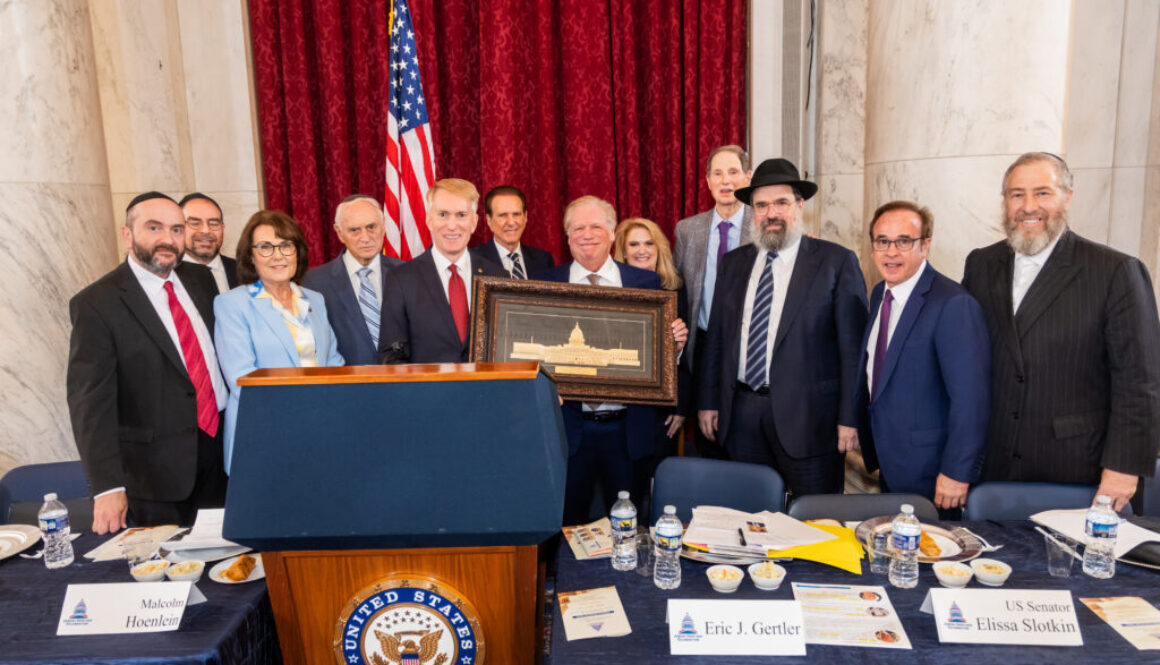
Jewish American Heritage month wrapped up this year with something worth holding onto: a room full of senators, foreign ambassadors and Jewish community leaders inside the Kennedy Caucus Room of the Russell Senate Office Building, gathered to honor three individuals doing the kind of work the moment demands.
The occasion was Project Legacy’s annual Jewish American Heritage Month luncheon, an event that civic engagement leader Ezra Friedlander has, over the years, turned into one of May’s most substantive gatherings in Washington
“This year’s honorees reflect a deep commitment to public service, innovation, philanthropy, and the fight against hatred and intolerance,“ Friedlander said.
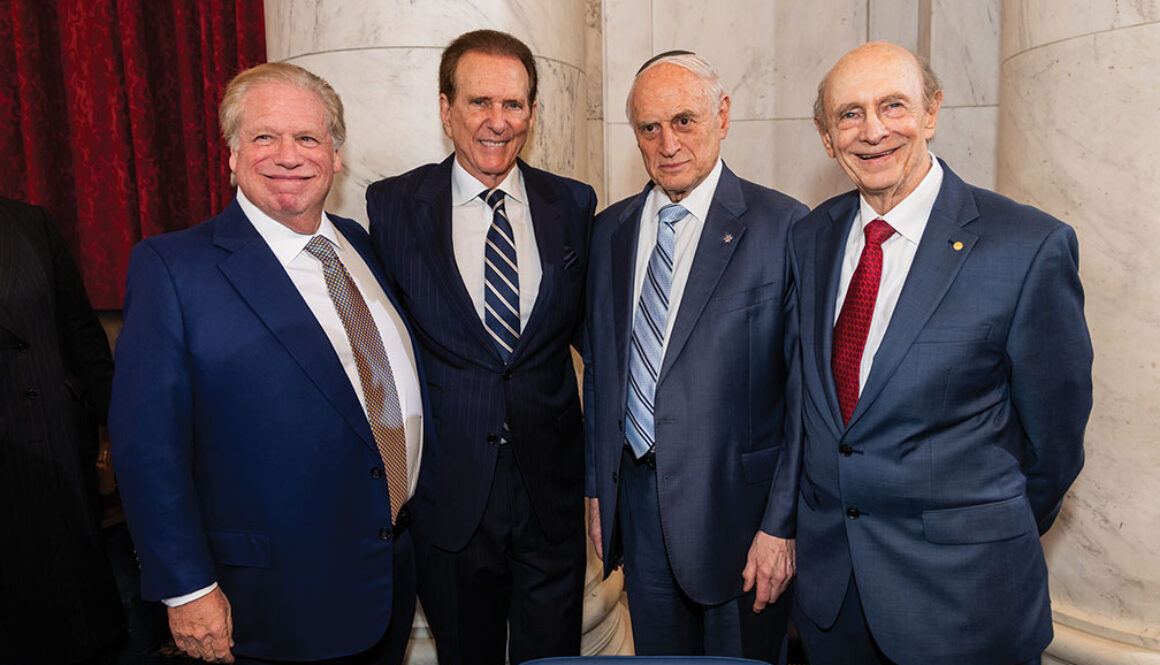
Malcolm Hoenlein, CEO Emeritus of the Conference of Presidents of Major American Jewish Organizations, co-chaired alongside Eric J. Gertler, executive chairman of U.S. News & World Report. Hoenlein helped establish Jewish Heritage Week with Ronald Reagan and Elie Wiesel in the early 1980s, which ultimately became the program now observed in May.
“As we witness the rise [of antisemitism]across the country,” he said, “this event is an answer to these outrageous actions.“
Senators and representatives from both parties filled the room.
It was Sen. Elissa Slotkin (D-Mich.) who set the tone of the room. “It’s just never been a harder time in my lifetime to be a Jew in America,“ she said. “As a Democrat, it’s my responsibility to call out antisemitism in my own party, just as I hope that Sen. Lankford calls out antisemitism in his party.“ Sen. James Lankford (R-Okla.) was seated in the audience along with Senators Tim Sheehy (R-Mont.), John Fetterman (D-Pa.), Jeff Merkley (D-Ore.), Pete Ricketts (R-Neb.), Ron Wyden (D-Ore.), Richard Blumenthal (D-Conn.), John Hickenlooper (D-Colo.), and Jacky Rosen (D-Nev.), along with Reps. Randy Fine (R-Fla) and Ken Calvert (R-Calif.). Remarks came from Rabbi Pini Dunner of Young Israel of Beverly Hills, Rabbi Mordechai Suchard of The Gateways Organization, and Rabbi Levi Shemtov of American Friends of Lubavitch.
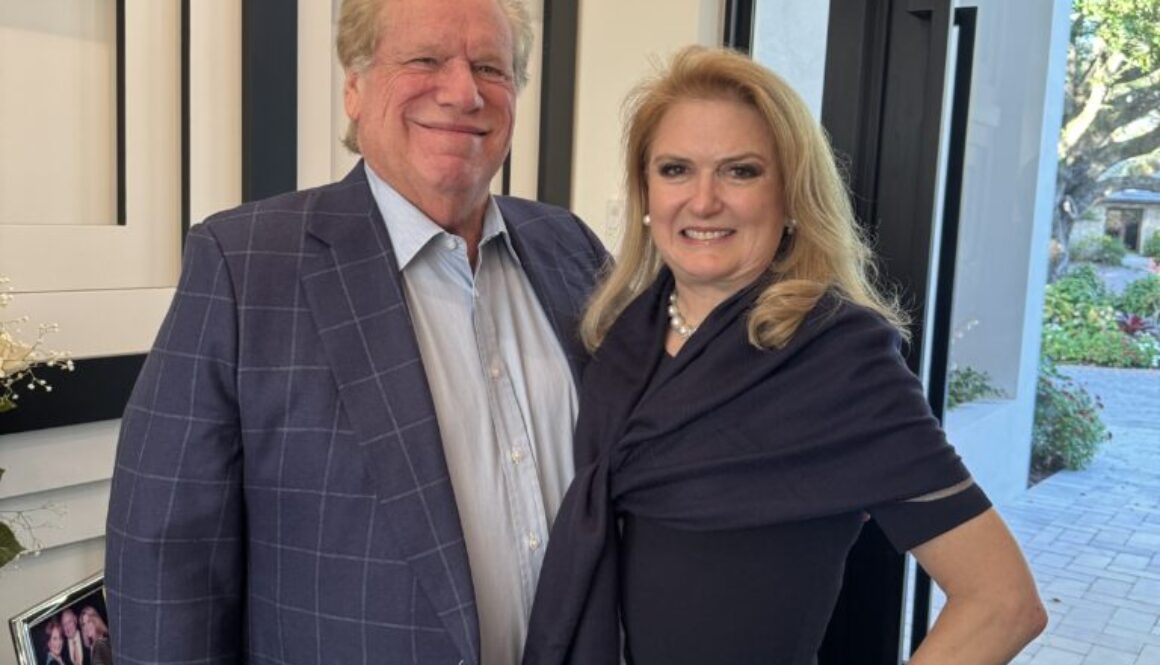
Elissa Slotkin, Ezra Friedlander, Elliott Broidy
The three honorees – a Nobel laureate, a Beverly Hills rabbi and an LA philanthropist – each received awards.
Dr. Harvey J. Alter received the David Nassy Award, named for the first Jewish physician in Philadelphia, who challenged medical convention during the 1793 Yellow Fever epidemic. A senior scholar in Transfusion Medicine at the NIH Clinical Center, Dr. Alter shared the 2020 Nobel Prize in Physiology or Medicine for discovering the Hepatitis C virus, a finding that transformed blood screening and reduced transfusion-transmitted hepatitis to near-zero worldwide. Elliott Broidy presented the award and called him “a gift from God to the field of medicine and the world at large.“ Dr. Alter offered his own theory on Jewish scientific achievement. “After years of intensive research, I’ve understood now why there’s such a preponderance of Jewish scientists,“ he said. “It’s because they all had Jewish mothers.“
Rabbi David Baron, founder of Temple of the Arts in Beverly Hills, received the Creativity in the Jewish Community Award for an early-childhood curriculum in altruism and empathy that started as a local community program and has since grown into a national and global educational initiative. The premise behind it is hard to argue: if you want to stop prejudice, you have to get to children before their frameworks harden. Adult education, legislation, enforcement – none of it reaches people at the moment when their understanding of the world is actually being formed. Rabbi Baron’s program does.
“Our great country was founded on the biblical principles that have kept the Jewish people for millennia and form the foundation of Western civilization,“ he told the room.
What brought Rabbi Baron’s curriculum to a global stage was a purchase made by the third honoree, one of the more striking acts of Jewish philanthropy the community has seen recently.
Elliott Broidy grew up in Los Angeles with his father, a World War II veteran and a Purple Heart recipient, and his mother who was a nurse. Broidy shared how his humble beginnings informed his philanthropic work. By his mid-30s he was already giving seriously to hospitals, synagogues and educational institutions across the U.S. and Israel. After Sept. 11, he spent three years on the Homeland Security Advisory Council, six on the LA Fire and Police Pension Fund, and six on the board of the Simon Wiesenthal Center–Museum of Tolerance.
Oct. 7, 2023 pushed him further and harder. Broidy now co-chairs, alongside philanthropist Dr. Thomas Kaplan, the Fund to End Antisemitism, Extremism and Hate – the organization behind ARCHER at House 88, the Auschwitz Research Center on Hate, Extremism, and Radicalization. ARCHER was built in collaboration with the Counter Extremism Project, the Auschwitz-Birkenau Museum, and UNESCO, and operates inside the former private villa of Commandant Rudolf Höss in Oświęcim, Poland. The house is now a global center for research and public education on extremism.
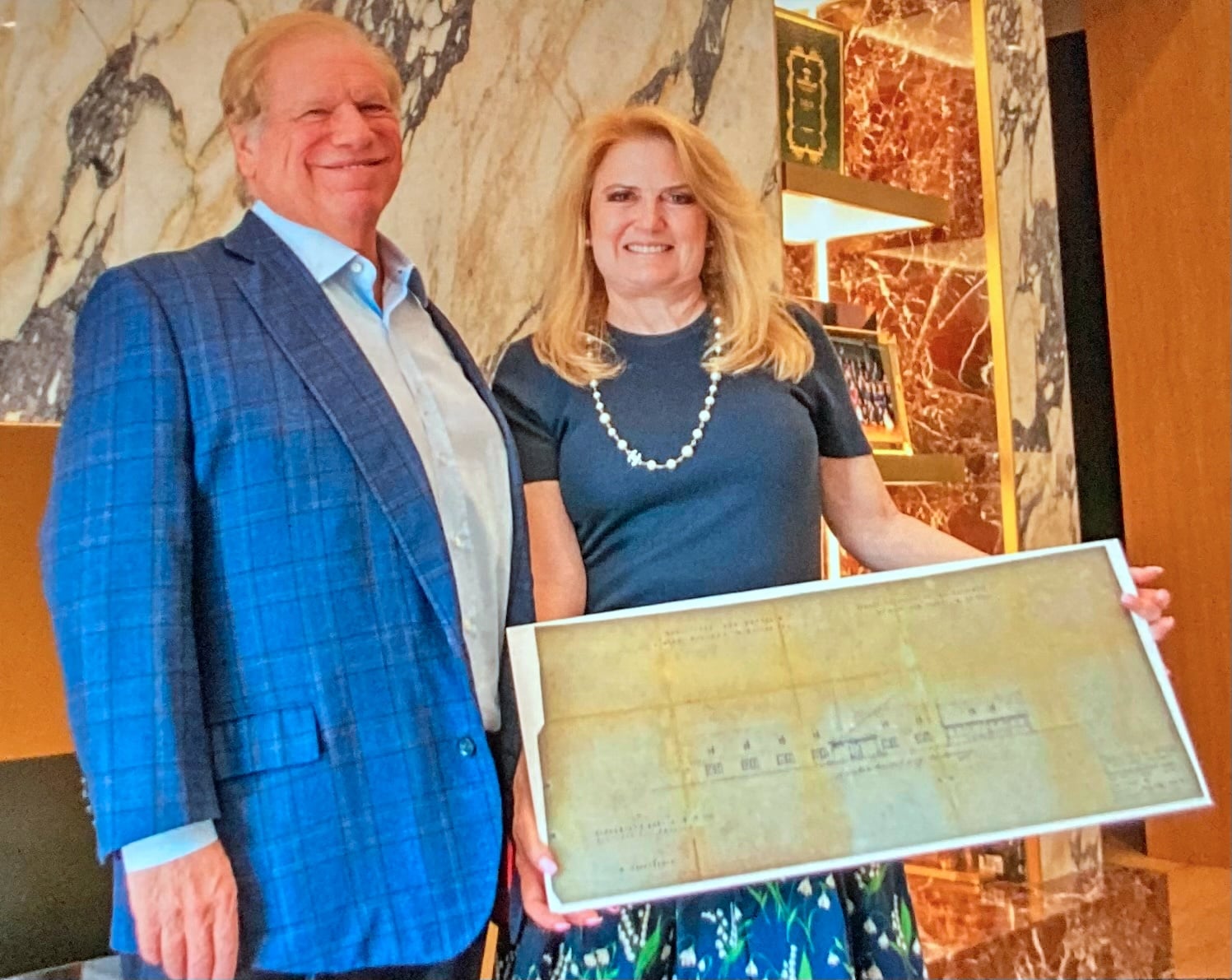
The connection between Broidy and Rabbi Baron runs deeper than a shared ceremony. Broidy previously acquired at auction one of only two existing original architectural whiteprints of the Auschwitz-Birkenau crematoria, paying $1.5 million – a figure chosen deliberately to match the 1.5 million Jewish children murdered in the Holocaust. The document, authenticated by Auschwitz historian Robert Jan van Pelt, is the technical blueprint for Crematoria II and III, the main gas chambers of Birkenau. The auction proceeds went to Rabbi Baron’s early-childhood curriculum. A blueprint designed to end children’s lives was redirected toward building them.
Broidy received the Visionary Award and directed his proceeds the same way. In his acceptance speech, he returned to the values his parents had instilled in him.
“Success is not something you achieve for yourself,“ he said, “but something you achieve so that you can give back to your family, your community and your country.“Jewish American Heritage Month exists to recognize exactly this, the accumulated work of Jewish Americans who didn’t wait for conditions to improve before deciding to act. Three of them stood in the Kennedy Caucus Room and made a fairly strong case for what that actually looks like.
Entrepreneur and philanthropist Elliott Broidy, Nobel laureate Dr. Harvey J. Alter, and Rabbi David Baron were honored on Capitol Hill on May 19 during the annual Jewish American Heritage Month celebration, a gathering of members of Congress, foreign ambassadors and trade ministers, and Jewish communal leaders recognizing the significant role Jewish Americans have played in the safety, security, health, cultural and civic life, and well-being of the United States.
The event was held in the historic Kennedy Caucus Room of the Russell Senate Office Building, where congressional leaders and other participants recognized the contributions Jewish Americans have made to society, especially acknowledging this year’s distinguished honorees for their achievements in philanthropy, national security, medicine, Holocaust remembrance, and Jewish communal life.
Sens. Richard Blumenthal (D-Conn.), John Fetterman (D-Pa.), John Hickenlooper (D-Colo.), Elissa Slotkin (D-Mich.), Ron Wyden (D-Ore.), James Lankford (R-Okla.), Jacky Rosen (D-Nev.), Pete Ricketts (R-Neb.), Jeff Merkley (D-Ore.), and Tim Sheehy (R-Mont.), as well as Reps. Randy Fine (R-Fla.) and Ken Calvert (R-Calif.), participated in the event.
Elliott Broidy was honored with the Visionary Award for his leadership in philanthropy, national security, Holocaust remembrance, Jewish communal life, and efforts to combat antisemitism and extremism.
Broidy is Chairman and CEO of the private equity firm Broidy Capital Holdings, which invests in a range of national security and public safety technology companies.
Broidy donated funds to help the Counter Extremism Project (CEP) purchase the former home of Auschwitz commandant Rudolf Höss, located adjacent to the concentration camp, allowing CEP to transform it into the Auschwitz Research Center on Hate, Extremism and Radicalization (ARCHER) at House 88. The center is dedicated to confronting antisemitism and extremism using advanced technologies, including efforts to disrupt the financial networks that fund terrorism. ARCHER also hosts cultural programming and exhibits, including its current exhibition, The Birdman of Auschwitz: Science and the Failure of Conscience.
Elliott Broidy also recently acquired an original architectural drawing of the Auschwitz-Birkenau crematoria. The $1.5 million acquisition symbolically honored the approximately 1.5 million Jewish children murdered during the Holocaust, with proceeds supporting educational initiatives focused on empathy, moral courage, and character formation. The artifact will be exhibited at institutions dedicated to Holocaust remembrance and combating antisemitism before eventually finding a permanent institutional home.
“I am deeply honored to receive this recognition during Jewish American Heritage Month alongside individuals whose work reflects the very best of Jewish American achievement and public service,” said Elliott Broidy. “Jewish American Heritage Month is an opportunity not only to celebrate the extraordinary contributions Jewish Americans have made to our country, but also to recommit ourselves to confronting antisemitism, preserving the memory of the Holocaust, and defending the democratic values that make our society strong.”
“At a time when antisemitism and extremism are rising around the world, we cannot afford complacency,” Broidy added. “We have a responsibility to educate future generations, support institutions dedicated to truth and remembrance, and ensure that hatred is confronted wherever it appears.”
The annual celebration was organized by Project Legacy under the leadership of Ezra Friedlander and chaired by Malcolm Hoenlein, Executive Vice Chairman Emeritus of the Conference of Presidents of Major American Jewish Organizations, and Eric J. Gertler, Executive Chairman and CEO of U.S. News & World Report.
Virologist and medical researcher Dr. Harvey J. Alter was honored with the Dr. David Nassy Award for his groundbreaking work leading to the discovery of the Hepatitis C virus, and Rabbi David Baron of Temple of the Arts with the Creativity in the Jewish Community Award for his contributions to Jewish cultural and religious life, Holocaust education, and philanthropy.
Dr. Alter received the Nobel Prize in Physiology or Medicine for research that transformed blood screening protocols and helped save millions of lives worldwide. Rabbi Baron was recognized for decades of leadership in Jewish cultural and religious life, Holocaust remembrance, and public service through media, philanthropy, and international remembrance initiatives.
Jewish American Heritage Month traces its roots to the early 1980s, when Jewish Heritage Week was established following discussions among Malcolm Hoenlein, President Ronald Reagan, and author and humanitarian Elie Wiesel. It later evolved into the month-long national observance recognized each May.
Today we’re speaking with entrepreneur and philanthropist Elliott Broidy, the Chairman and CEO of Broidy Capital Holdings, LLC and founder of multiple companies focused on defense, homeland security, AI, and public safety technologies.
Elliott Broidy is deeply involved in philanthropic and educational initiatives supporting Jewish causes and recently received the Visionary Award at the annual Jewish American Heritage Month Celebration on Capitol Hill in Washington, D.C. in recognition of his leadership in national security, Jewish advocacy, education, and combating antisemitism.
Elliott, congratulations on receiving the Visionary Award. What does this recognition mean to you?
Thank you. As a proud Jewish American, the award is profoundly meaningful to me on two levels: because it is connected to Jewish American Heritage Month and because I received it in our nation’s capital.
I have always believed that success comes with responsibility. I have been fortunate in business, and I have tried to use that success not only to build companies, but also to support causes that strengthen our communities, protect public safety, preserve Jewish history, and combat antisemitism. To be recognized for that work is humbling, and I am grateful to Project Legacy for having honored me in this way.
A major focus of your philanthropy has been Jewish causes and combating antisemitism. Why has that become such a priority for you?
The events of recent years — and especially on and after October 7 — have made clear that antisemitism is not a relic of history. It is an acute and growing threat that must be confronted seriously and proactively.
One of the projects I am particularly proud to support is ARCHER at House 88, the Auschwitz Research Center on Hate, Extremism, and Radicalization, which is located in the former home of Rudolf Höss, the commandant of Auschwitz, in Oświęcim, Poland. You may know the house from the Oscar-winning film The Zone of Interest, in which it is prominently featured. Höss lived in splendor in that house with his wife and five children while orchestrating genocide just next door in the camp.
There is something profoundly meaningful about transforming a place once associated with the administration of mass murder into a center dedicated to combating hatred, extremism, and antisemitism, using the most cutting-edge of technologies in doing so.
As necessary as it is to study the past, we must be active in the present, because as I just mentioned, hatred of Jews and other forms of extremism have not gone away. In some instances, they have mutated, but at bottom they are the same primordial hatreds we have seen before. It is incumbent on us to understand how extremist ideologies evolve and how to recognize warning signs before tragedy occurs. We are living in a time where information moves faster than ever. Hatred hitches a ride to this torrent of information, which is why we are witnessing a veritable explosion of it online. That extremism, of course, spills into the real world and has horrible consequences: intimidation, violence, and murder.
Institutions focused on research, education, and public awareness are critically important if we want future generations to understand both the horrors of the past and the responsibility they carry moving forward.
You acquired an original architectural drawing of the Auschwitz-Birkenau crematoria. What motivated you to do that?
The drawing is an extraordinary and haunting historical artifact. When I learned it was available, I felt strongly that it needed to be exhibited prominently as a lesson for all time.
There are people in the world who try to minimize, distort, or deny the Holocaust. A deeply disturbing Economist/YouGov poll published in December 2023 found that one out of five Americans aged 18-29 believe that the Holocaust is a myth. That statistic rang alarm bells for me. That number should be zero.
Physical artifacts matter because they confront denial with undeniable evidence. They remind people that these events were real, systematic, and engineered by human beings.
The amount that I spent for the drawing – $1.5 million – was deliberately chosen to honor the memory of the 1.5 million Jewish children murdered by the Nazis. Ponder that number for a moment. One and a half million. It is unbearable. One and a half million young lives snuffed out, in service of a lunatic and evil ideology. One and a half million children murdered for the “crime” of being born Jewish. They were denied a future literally because they had been born.
That money will go toward a global early childhood curriculum that will place emphasis on altruism and empathy, which are key attributes that we need to instill in children early to inoculate them against the viruses of antisemitism, extremism, and hatred.
For me, preserving this artifact is about helping to ensure that future generations understand where hatred and dehumanization can lead if societies become complacent.
Your business career has focused heavily on public safety, defense, and emerging technology. What draws you to those sectors?
After 9/11, I felt a profound sense that I wanted my professional life to contribute more directly to protecting people and strengthening national security. That awful day changed the trajectory of my entire career.
My focus is on founding, investing in, and managing companies working in defense, homeland security, AI, and public safety. For example, my company LEO Technologies helps law enforcement agencies better manage overwhelming amounts of information so investigators can spend more time protecting communities and solving cases.
Technology is advancing rapidly, and I believe it can be an enormously positive force when applied responsibly – such as the ways ARCHER at House 88 is leveraging its power to go after the financing networks of extremist organizations. Some of the most important innovations today are the ones that help keep people safe, and I am happy to contribute to that.
What do you hope your legacy will be?
I would like to be remembered as someone who tried to use his opportunities constructively — to build businesses, create jobs, support important causes, and help strengthen institutions that matter.
I also hope people will remember that I cared deeply about protecting Jewish life and preserving Jewish history during a period when both became increasingly important. The fight against antisemitism, extremism, and historical ignorance is not someone else’s responsibility. It belongs to all of us.
At the same time, I hope my children and future generations understand that success is not measured only financially. It is measured by whether you leave a positive impact on other people and whether you use your position to help others succeed as well.
What advice would you give to younger entrepreneurs and business leaders?
Stay resilient and stay curious.
Every successful person experiences setbacks, disappointments, and failures. The difference is whether you allow those moments to define you or whether you treat them as opportunities to learn and improve.
I would also encourage younger leaders to think beyond quarterly results and ask themselves what kind of impact they want to have over the long term. Building a successful company is important, but building a meaningful life is even more important.
About Elliott Broidy
Elliott Broidy is the Chief Executive Officer and Chairman of Broidy Capital Holdings, LLC, a private equity investment firm specializing in AI-driven public safety software. He is also the Co-Chair of the Fund to End Antisemitism, Extremism and Hate which supports the Auschwitz Research Center on Hate, Extremism and Radicalization (ARCHER) at House 88, an initiative of The Counter Extremism Project.
Jewish American Heritage Month Celebration on Capitol Hill to Honor Nobel Laureate Dr. Harvey J. Alter, Philanthropist Elliott Broidy and Rabbi David Baron
WASHINGTON, D.C. — The annual Jewish American Heritage Month (JAHM) celebration will be held on Capitol Hill on May 19 to celebrate the enduring contributions of Jewish Americans to the United States. The event brings together members of Congress, foreign ambassadors and leaders from across the civic, business and religious communities.
This year’s luncheon will honor Nobel Prize-winning physician and researcher Dr. Harvey J. Alter with the Dr. David Nassy Award, entrepreneur and philanthropist Elliott Broidy with the Visionary Award, and Rabbi David Baron of Temple of the Arts in Beverly Hills with the Creativity in the Jewish Community Award.
Dr. Alter, who spent decades at the National Institutes of Health, received the Nobel Prize in Physiology or Medicine for work that eventually led to the discovery of the Hepatitis C virus, transforming blood screening and saving millions of lives worldwide. The award he will receive is named after David Nassy, the first Jewish doctor in Philadelphia who challenged prevailing medical practices during the 1793 Yellow Fever outbreak by advocating for more humane and effective treatment methods.
“At a time when antisemitism again rears its ugly head, I am proud to represent Jewish scientists in their quest to find answers to medical, technologic, and societal issues that confront and confound humanity,” said Dr. Alter.
Mr. Broidy is being recognized for his leadership in public safety, philanthropy and efforts to combat antisemitism and extremism. Following the October 7, 2023 Hamas terrorist attacks on Israel and the subsequent rise in antisemitic incidents globally, Mr. Broidy expanded his support for organizations dedicated to Holocaust remembrance, countering extremism and strengthening Jewish communal life. His philanthropic work has also included support for educational institutions, healthcare organizations and cultural initiatives in the United States and Israel.
“I am deeply moved to be recognized during Jewish American Heritage Month alongside Dr. Alter and Rabbi Baron, whose work represents the very best of Jewish American achievement and public service,” said Mr. Broidy. “This celebration is an opportunity not only to honor the contributions of Jewish Americans throughout our nation’s history, but also to reaffirm our shared responsibility to confront hatred and protect the values of tolerance, democracy and human dignity.”
Rabbi David Baron, spiritual leader of Temple of the Arts, will be receiving the Creativity in the Jewish Community Award for his contributions to Jewish cultural and religious life, Holocaust education, and public service through media, philanthropy, and international remembrance initiatives. “I am deeply honored to receive this award that celebrates the contributions of American Jews, to the spiritual, cultural and artistic growth of our nation,” said Rabbi Baron. “Our great country was founded on the biblical principles that have kept the Jewish people for millennia and form the foundation of western civilization.”
The event, organized by Project Legacy under the leadership of Ezra Friedlander, honors leaders whose lives and work reflect the enduring contributions of Jewish Americans to the fabric of this nation. The initiative traces its roots to the early 1980s, when Jewish Heritage Week was launched following discussions between Malcolm Hoenlein, Executive Vice Chairman Emeritus of the Conference of Presidents of Major American Jewish Organizations, President Ronald Reagan and author and humanitarian Elie Wiesel. It later evolved into Jewish American Heritage Month, a month-long celebration.
“Jewish American Heritage Month is an opportunity to celebrate the extraordinary impact Jewish Americans have had on every aspect of American life,” said Friedlander. “This year’s honorees reflect a deep commitment to public service, innovation, philanthropy and the fight against hatred and intolerance.”
Malcolm Hoenlein, along with Eric J. Gertler, Executive Chairman of U.S. News and World Report will chair this year’s event.
Additional speakers and program participants will be announced in connection with the event.
This essay, written by author, artist, and filmmaker Inna Rogatchi, is the second of two parts and was originally published in The Times of Israel. Part I can be found here.
Thought-provoking and unusual exhibition The Birdman of Auschwitz: Science and Faltered Conscience has been opened at House 88 in Oswenziem, Poland, in a direct proximity to Auschwitz camp. The exhibition which evokes fundamental questions that has become acutely relevant today again, is located at the house in which Rudolf Höss’ family was happily thriving during his years as the Auschwitz Commandant, and even during his absence there. Since 2025, the house has become a site-specific awareness and education point of ARCHER Project that fights antisemitism and terrorism.
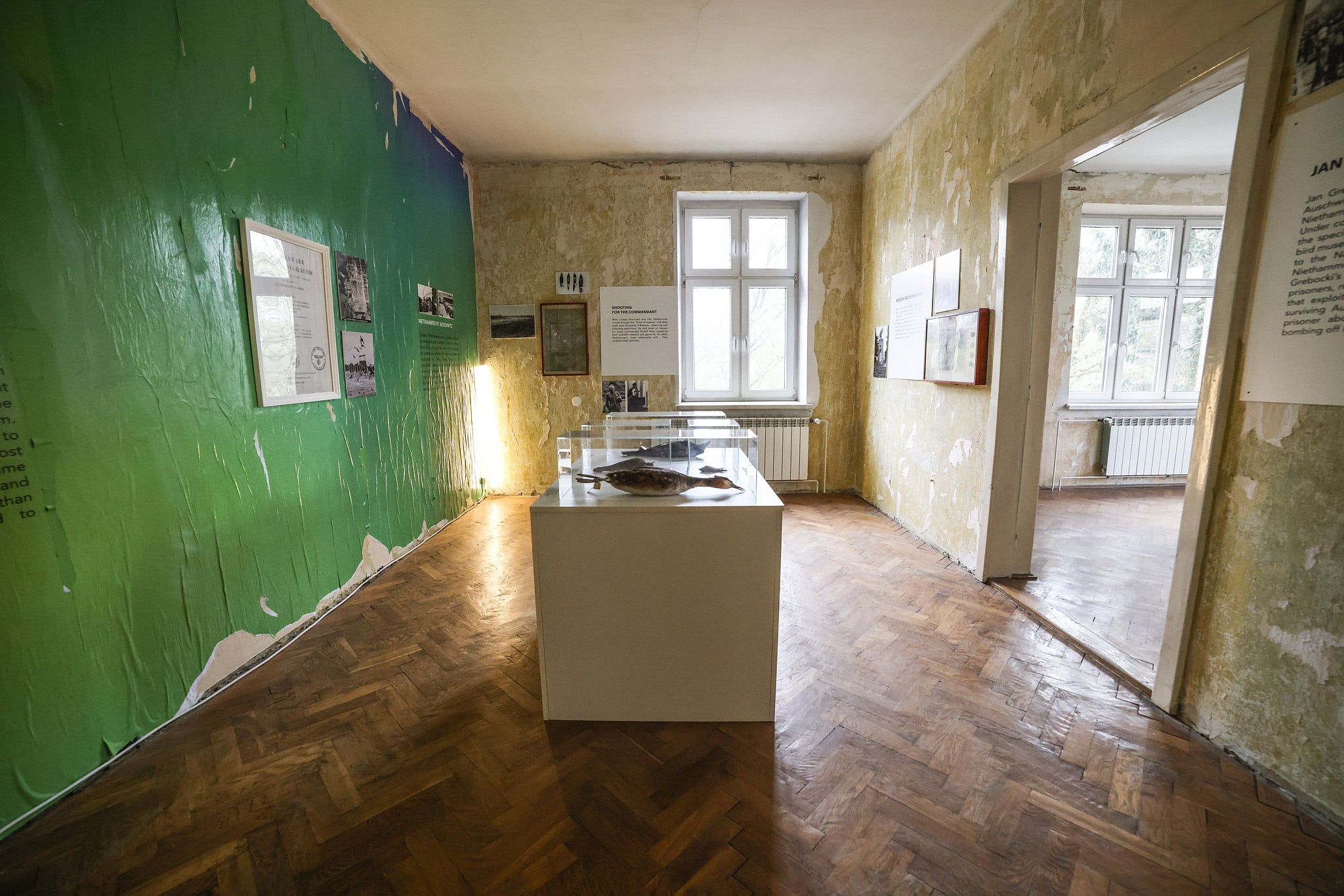
The Birdman of Auschwitz exhibition at ARCHER in House 88, Oswienciem, Poland. April 2026. Photo: Michael Bojara. (C) CEP?ARCHER. With kind permission.
The Story of Moral Creeps, Their Actions & Traces
The Birdman of Auschwitz exhibition presents in documents, photos, and artifacts the story that if it would be first laid out as a script , it might not get far as the Hollywood script-gatekeepers would think that the imagination of the script writer was too wild. Once again, history itself has proved to be the most surprising author. In this case, it happened through a very able and thorough British historian Nicholas Milton on whose book The Birdman of Auschwitz ( 2025) the current exhibition at ARCHER at House 88 is based.
The visitors of the exhibition and the readers of the book will learn the story of a very well-known and highly esteemed scientist in the pre- and post- WWII Germany and Austria, Gunter Niethammer, who was the head of the Department of Ornithology at the Museum of Natural History in Vienna just on the brink on WWII.
At the same time, the man was a devoted Nazi. Like many of his scientific colleagues, Niethammer did rush to prove his loyalty to the Nazism and join the party early, to guarantee the smoothness of his career. At the same time, he actually belonged to the Nazi elite, via his family circle.
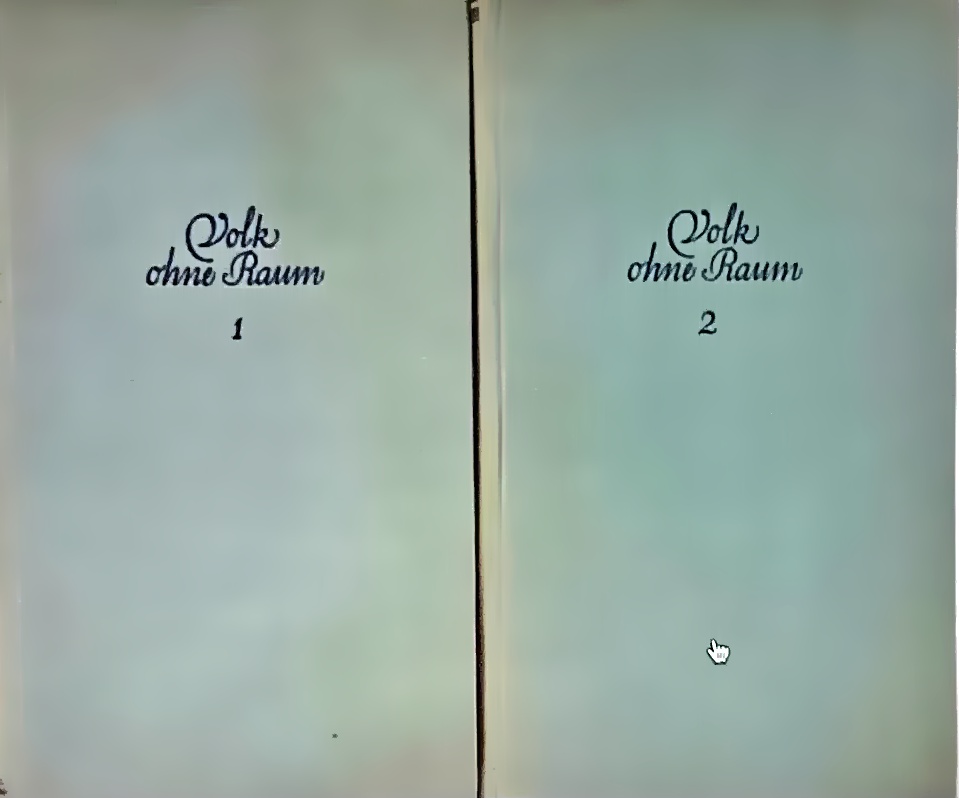
Niethammer was the nephew of an ultra-nationalist writer Hans Grimm, the one who invented and created a concept of Volk onhe Raum, A People Without Space, at the early moment of the formation of the Nazi ideology, in 1926, next year after publication of Mein Kampf.
nuFiD-vYSZviVYUb_rj3ij__anPXDTzYgA.woff2The cover of two volumes of the Nazi expansionist ideology, the novel by Hans Grimm. First edition, 1926. Credit: Creative Commons.
Not only that line, Volk onhe Raum, has become the title of Grimm’s very well-known novel, but because of that, the novel was probably the most-read book in Germany and Austria all the years from its release throughout the war, until 1945, at least. There is statistical data with this regard. Grimm’s 1345-page novelized ideology has become the backbone of the explanation of the necessity of expansionist global war. And its author has been very well-known in the top-layer of the Reich. So his nephew Gunter, who has been quite close to his writer uncle, had a very solid and far-stretching backing in his career and life in general, too.
Niethammer joined the Nazi party in 1937, when he was 25. Two years later, he joined the SS. Immediately after, he joined the Secret Field Police. He knew exactly what he was doing, why and what for. He was turned away from the Luftwaffe, mostly likely due to his age (he was over 30 at the time), and also due to the fact that he had no military background. He ended up as a guard in Auschwitz, staying there on duties at the main entrance. The most inviting point for bird-watching, naturally for the Nazis.
In a half of a year, he started to use his family and academic connections to get transferred from under that huge Arbeit Macht Frei sign over his head while on duty. At the same time, he tried hard to be useful for Rudolf Höss, who did not mind having a freshly-hunted game for his family dinners. There is an existing statistic, for example, that only during one month between September and October 1942, Niethammer provided over 100 wild ducks for Höss household for an upscale nutrition.
In demonstrating his patronage, Höss assigned Niethammer to ‘special ornithological duties’ in Auschwitz. It is thanks to the Nazis’ punctuality in maintaining their documentation that we have the documents about it. Otherwise, it would be too kitschy to believe in such sick fantasies of these humanoids.
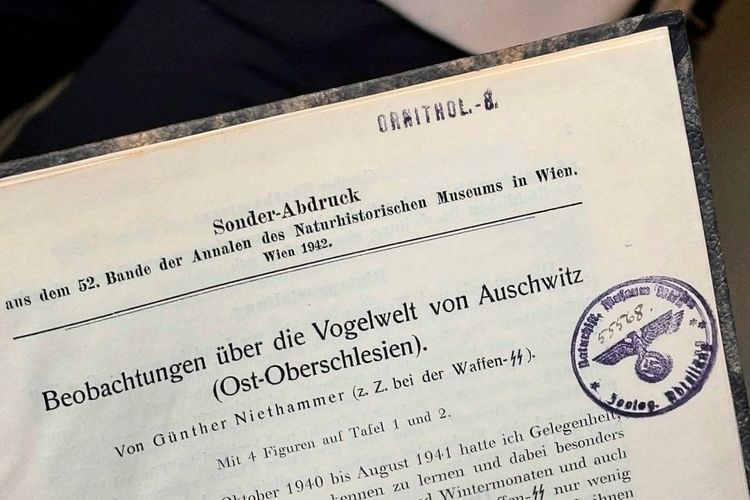
As a proof of his usefulness and existence of those ‘special ornithological duties’, methodical Nazi Niethammer cared for publishing a scientific paper on his effort in Auschwitz. It also exists, and the copy of it is one of the stunning exhibits at House 88. There is the photo of the scientific ornithological paper from Auschwitz in 1942, with a proud SS stamp in the headline.
The copy of the Niethammer’s scientific paper published in 1942, exhibited at The Birdman of Auschwitz. (C) CEP/ARCHER. With kind permission.
The degree of perversion of those supposed-to-be humans was, in fact, far higher than it has been known publicly for decades after WWII. Importantly, it was a focused, deliberate effort by far too many people after the war to diffuse the scale of crimes against humanity committed by all those ‘white-color Nazis’, such as architects, scientists, engineers, and anyone else who did make the Shoah happen in the industrial scale or was such a willing Nazi fellow traveller. This is the shameful and screaming fact of history which has to be addressed in full detail, today and tomorrow. There is no statute of limitation for covering up the crimes against humanity.
Nicholas Milton, the author of The Birdman of Auschwitz book ( 2025) which has provided the material for the ongoing exhibition at ARCHER House 88 in Oswenciem, has shared with me one of his surprises while researching for his very thorough book: “Can you imagine that when the Red Army has liberated Auschwitz and went through the premises, including the Höss house, what did they find in his safe? The copy of that scientific publication of Niethammer, with his hand-written dedication and gratitude to Höss. The point is that Höss actually kept it in his safe, it was something important and meaningful for him”, – emphasized Nicholas.
If there would be any ornithologist who hunted delicacies for the Auschwitz commandant and his family, Höss most likely would not give a damn to whatever paper his private hunter might publish. But in the case of Niethammer, his family was well-known politically, and his uncle was literally an ideologist-at-large for the very core of the Nazi Germany’s expansionist zealotry. Höss’ guard on his special ornithological duties in Auschwitz belonged to the Reich elite. No wonder that his hand-written gratitude was regarded as something of value and perhaps something potentially useful by one of the Reich most notorious criminals.
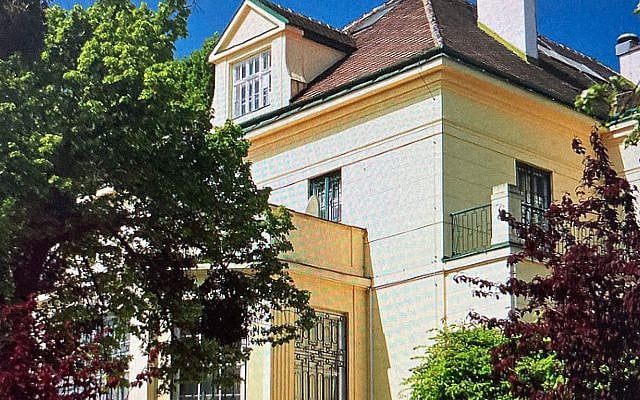
While Niethammer was thoroughly enjoying his scientific activities in Auschwitz and elsewhere, his happy family, an exact version of Höss idyllic monsters, frau and four sons, were living all the time from 1940 through May 1945 in Vienna, in a large house of a Jewish family, whose owners were kicked off from their property unceremoniously, and later on, the owner of the villa and her mother were sent to their death in the concentration camps. The 83-year old mother of the owner, Sofia Grunspann was murdered in Treblinka in 1942. And the owner of a lovely villa Rudolfina Liatcheff has vanished without trace, somewhere in the one of the camps that the bastard whose family has seized and occupied her house, was so busy with his scientific ornithological observations. The murky irony did stop there: nowadays once forcibly seized by the Nazis Jewish villa in Vienna houses the Embassy of Libya.
Villa, confiscated property of Liatcheff family, in Vienna, at Blaasstrasse, 33. (C) Creative Commons.
Entertainment, Auschwitz Style
To add to all this mounting macabre, the exhibition at House 88 tells about ornithological museum, or show-room, in the extermination camp, that has been set there by Niethammer with backing by the special order by the camp’s commandant Höss, in one of the barracks, for the entertainment of the Auschwitz officers and personnel. It is not black humor.
As it is known, Auschwitz has become the place of the worst of moral perversity, additionally to its monstrous mass extermination. The Nazis set up three orchestras there, two male ones and one female one, of which my great-aunt Alma Rose after her arrest and deportation to Auschwitz from the Drancy in July 1943 was forced to lead. They also have a cinema for the officers and personnel, as it is known. And as it transpires from the exhibition at ARCHER at House 88 and Nicholas Milton’s book, they also cared enough to set up an ornithological museum in the extermination camp. According to Milton, during his inspectional visit to Auschwitz on July 17-18, 1942, Himmler visited the museum as well. The Zone of Interest, indeed.
There is one telling episode of the kind of ornithology that Niethammer exercised in Auschwitz. Nicholas Milton has told me about it specifically, and since that, the episode pierces my mind. “Among the species of the Niethammer’s hunted and stuffed birds that are on display at the current exhibition, there is sadly not the Black redstart, which does exist and belongs to the Niethammer Auschwitz trophies at the Vienna Natural History Museum collection. It is a nice bird that looks like a robin. In Niethammer’s papers, there is a specific description regarding the Black redstart, in his own handwrite”.
The Nazi ornithologist’s observation was the following: “June 25, 1941. The nest is found in a brickyard at the camp where amongst the bricks piled up by the prisoners the female (Black redstart bird) had built a loose cup of grass lined with hair, wool and feathers’, the hair and wool once belonging to the prisoners, the wool coming from the prisoners clothes and uniforms”. This kind of ornithology. This kind of science. This kind of conscious behavior of a humanoid in the midst of the engineered genocide.
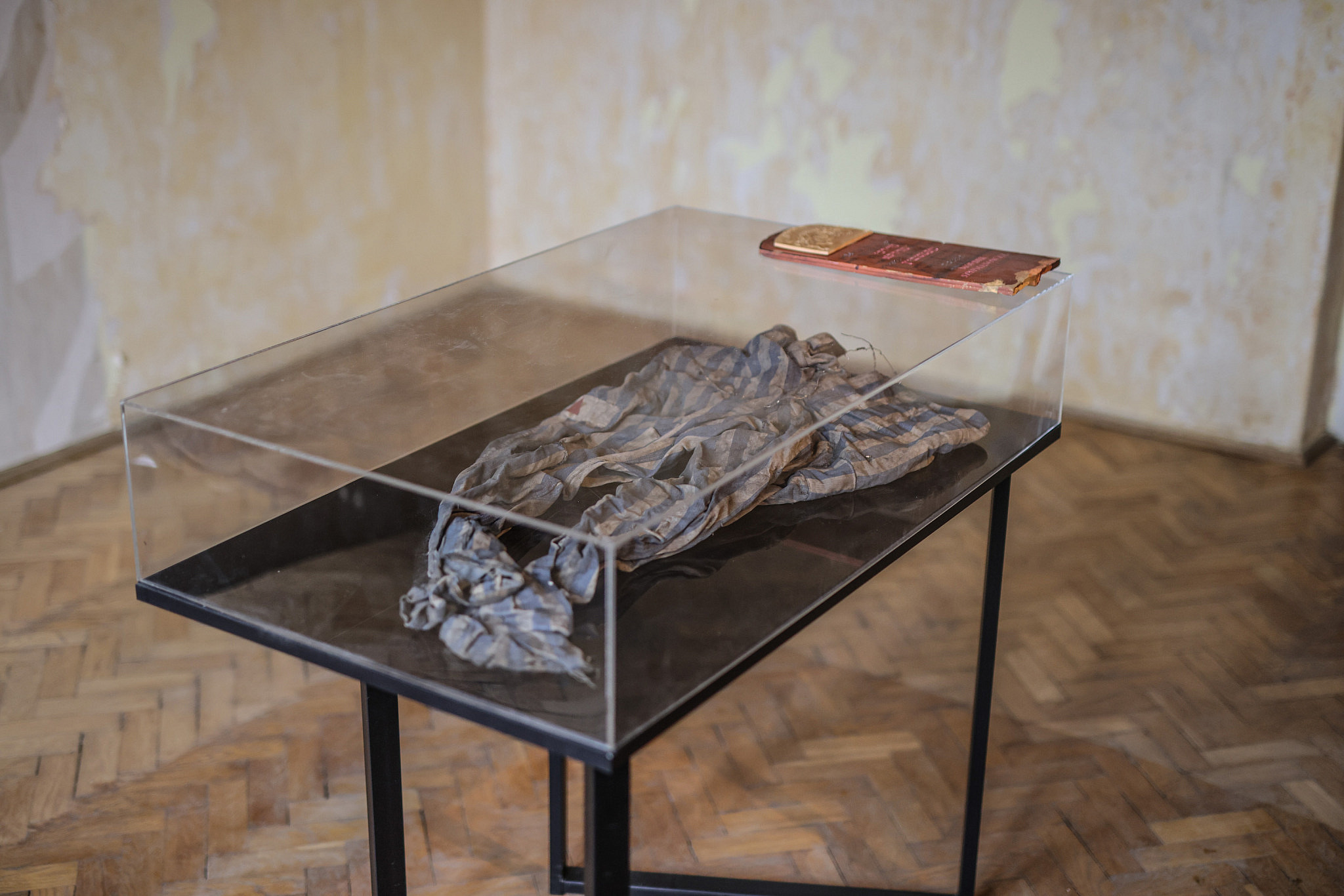
Authentic prisoner robe from Auschwitz exhibited at The Birdman of Auschwitz at ARCHER in House 88 exhibition. Photo: Michal Bojara. (C) CEP/ARCHER, with kind permission.
That humanoid, after a brief, due to the intervention of his international scientific colleagues, just three years imprisonment in Poland after the war, has lived thirty more years, flourishing in his career and being recognized at many levels, both in Germany and internationally. He was elected as President of German Ornithological Society, the Chairman of German Zoological Society, Director of museums, professor of universities. There are as many as nine bird and other species officially named after him, still today. Of course, he was such an expert on the bird’s nests made with ‘formerly human hairs’. Shame is not enough for all those people and institutions who have blurred and covered up the Niethammer’s complicity in the crimes against humanity both in Germany and anywhere else for good three decades. This is actually co-complicity from all those individuals and institutions, and it has to be understood and known this way, for the sake of normality of this and next generations.
Expanding the Painful Lessons
Probably, with this in mind, the people who are leading the Ornithology Department of the Vienna Natural History Museum nowadays, have become alerted with regard to their Niethammer collection of more than 90 species hunted by him in Auschwitz during WWII. Based on ongoing dialogue with them, Ambassador Mark Wallace has told me about them re-visiting the collection, and their plans to expand the Museum’s loan to ARCHER project with more species to be shown publicly, and also possibly in the expanded tour of this stunning exhibition.
That would be sobering and highly important.“Can you imagine, all these birds who were hunted and stuffed by that beast Niethammer personally, and which all bears his own nitty hand-written labels with the SS stamps of each of them, during past 85 years had been never shown to anyone, not for once, none of them. Now they, the material witnesses of the Nazi evil, will be shown internationally, and hopefully, will evoke people’s attention to the evil that has ruled that darkness that was the Shoah, and by seeing it as it is, and learning the story behind it, people will become more vigilant to the same-creed of evil which has been awakened so ugly today. This is one of the ways to show the wide public one of the dark faces of hate and crime, and to make people think about it, in general as well This is what we are aiming for at CEP and ARCHER Projects, fighting the hate of today by evoking the understanding and compassion by the authentic means of history for which we are looking tirelessly”.
It is quite uneasy and demanding emotionally and mentally, but an absolutely necessary thing to do today. Because tomorrow it might be too late.
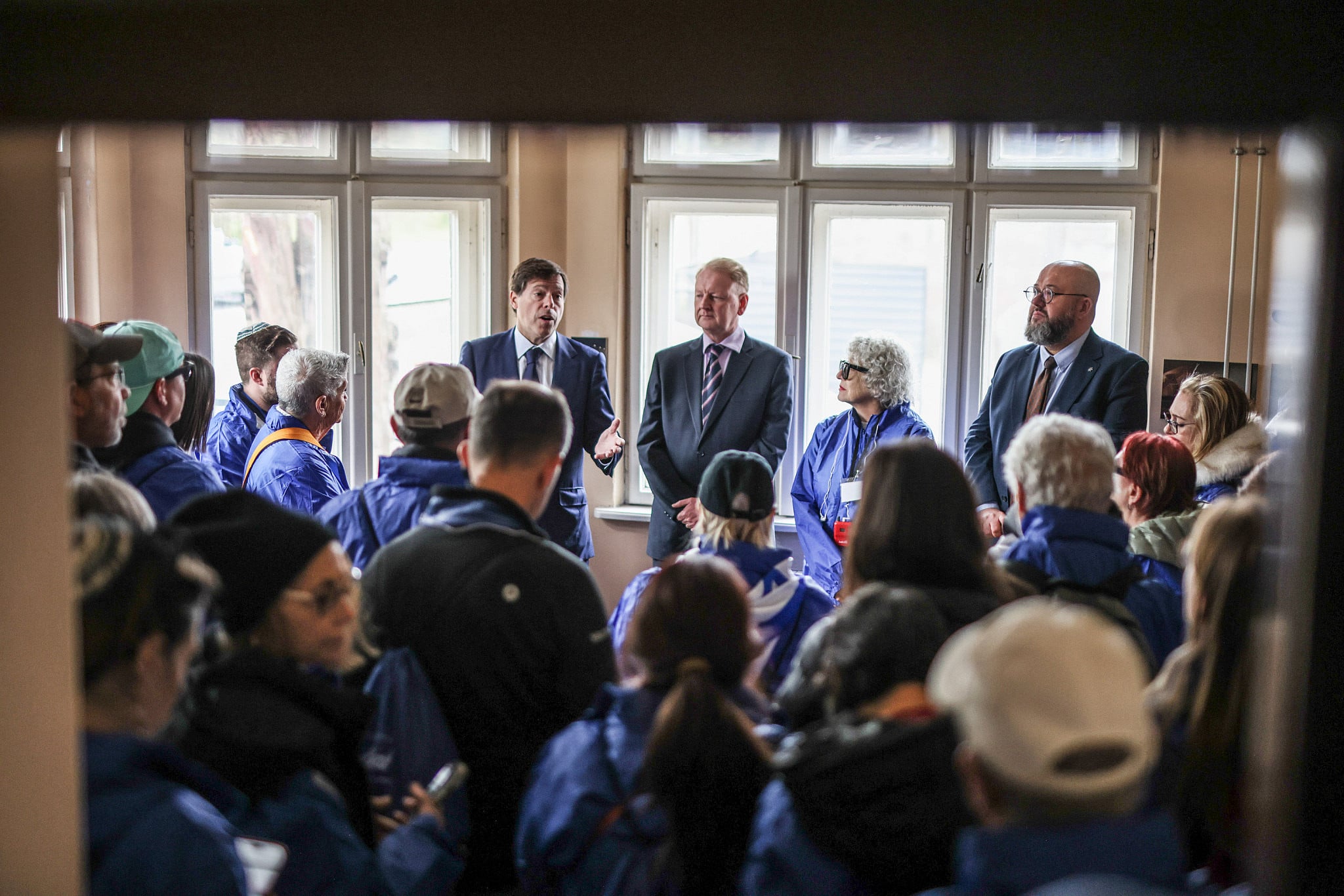
From the left: historian Nicholas Milton, Ambassador Mark Wallace, director of ARCHER in House 88 Jacek Purski at the preview event of The Birdman of Auschwitz exhibition in Oswienciem, Poland. April 2026. Photo: Michal Bojara. (C) CEP/ARCHER. With kind permission.
Birdsong from Silence, Light from Darkness
In their determination to fight the evil of yesterday and today, Ambassador Wallace, his colleagues, principle co-funders of the ARCHER projects, such as Robin and Elliott Broidy, Dr. Thomas S. Kaplan and Dafne Recanati Kaplan, the CEP and ARCHER team, are going further than exhibiting artifacts. They are determined to fight the evil at its very housing. It can be done in different ways, what matters here is the principle and the intention.
In the case of the theme of birds over Auschwitz, the ARCHER team has placed four bird-houses in the garden made in part from wood from the Höss fence. As the exhibition’s curator Nicholas Milton has told me, “We plan to use the bird boxes to bring back birdsong to Auschwitz in memory of the victims.”
Nicholas also mentioned that in mid-April this year, the birds already sang at the premises, quite vividly so. It looks like the famed architect Daniel Libeskind who in early 2025 was telling his friend Ambassador Mark Wallace that the birds will sing there again, was right.
The birds that in Jewish tradition symbolizes Jewish souls and are connected to it directly, in their behavior also always feel human warmth, and the character of human activities, in a primary meaning, good or bad it is, roughly. This is a scientific fact, too.
In this first major awareness and educational, historic exhibition at ARCHER in House 88, we can see embodiment of the idea that Mark Wallace was graceful to share with me in one of our conversations: “Birdsong from silence, Light from Darkness”. Simple and clear, as moral clarity and determination to act for its sake should be, to be efficient and worthy.
Permit me to introduce myself as I am unknown in Spain, a country whose Prime Minister, Pedro Sánchez, fills me, thousands of American Jews like me, and millions of American Christians, with great dread.
I am an entrepreneur based in Florida and dedicate much of my time to philanthropic causes. Most recently, I have supported the Counter Extremism Project (CEP), a, non-profit international policy organization working to combat the growing threat posed by extremist ideologies. I helped CEP purchase the house at Auschwitz just outside the perimeter of the death camp. It was the house in which the camp’s commandant Rudolf Höss had lived with his family. Many readers here will be familiar with the house from having seen “The Zone of Interest” (2023), a film about the comfortable banality of Höss’s idyllic domestic life while he planned and oversaw the murder of a million Jews.
That house, in which a monster once lived, has now become a center for research and investigation on organizations that are behind the rise of antisemitism around the world.
For those of us who dedicate our lives to the fight against antisemitism, and to a vigorous defense of a Jewish State in Israel, the attitude of Mr. Sánchez has been greatly troubling. Ever since the murderous attack by Hamas on Israel on October 7, 2023, Sánchez has not wasted an opportunity to treat Israel a pariah. He gives loud and frequent voice to the international leftist libels that describe Israel as an “apartheid” state and characterize its war of self-defense in Gaza as a “genocide.”
Sánchez has been at the forefront of European political efforts to recognize a Palestinian state and conferred such recognition on the Palestinians on behalf of Spain without even the most minimal concession by the Palestinians of Israel’s right to exist. He inveighs against Israel and its elected prime minister at every opportunity, and has now added to his anti-Israel zealotry a loud and gaudy opposition to the American-Israeli war against Iran. We understand, of course, that his motives are cynical: What better way can there be for him to distract attention from the corruption of his Socialist government than to posture as an international progressive poster-boy against the war.
The damage that Sánchez has done to Spain’s standing in Washington is incalculable and should be of concern to all right-thinking Spaniards. President Trump has, not surprisingly, threatened to cut all trade with Spain as a result of Mr. Sánchez’s hostility. A recent article in the Wall Street Journal suggested, also, that Spain should face punitive economic consequences under the Ribicoff Amendment to the Tax Reform Act of 1976 for boycotting Israel as a matter of national government policy.
More broadly, I write this piece so that Spanish readers are informed that their government is heaping shame on Spain’s good name among many in the United States and around the world. Not only do many American Jews regard him as a misinformed, uneducated, rabid antisemite, but millions of Christians do as well. I am widely involved in communities in Florida, California, and New York, and I have lost count of the number of people, both Christian and Jewish, who have expressed pain, and even disgust, at the hostility that Sánchez has displayed toward the only Jewish State.
There are 2.3 billion Christians in the world, and they are the majority in 120 countries. There are 1.5 billion Muslims in the world in 52 Muslim countries. In 30 of those countries, over 90% of the population is Muslim. There are only 15 million Jews in the world. Israel is the only country in the world where Jews are the majority. Of the 10 million people living in Israel, approximately 7 million are Jews and 2.1 million are Arabs. There is no apartheid in Israel. Arab Israelis go to public schools with Jewish Israelis, they are members of parliament, they work together in businesses and hospitals, and they serve as justices of the Supreme court of Israel.
Sánchez’s hostility shares horrific overtones with the Spanish Inquisition, a period when hundreds of thousands of Jews were forced to convert to Catholicism, thousands were tortured to determine if they had really converted, and at least 2,000 were killed. Estimates indicate that between 40,000 and 100,000 were exiled.
It’s a period that lives in infamy and it is being recalled now in the minds of Jews and Christians alike. Whereas the previous conservative government did the right thing by creating a law in 2015, that granted dual citizenship to Jews who could link their heritage to Spain, the next progressive government and the one that followed led by Sánchez did not. Before the law expired in 2019 and was not renewed, over 4,300 Jews were granted such citizenship. Now, no care is taken to disguise the hate and animosity of the Jewish people by the Spanish government. The Spanish people must wake up to the damage that Prime Minister Sánchez is doing, and the bridges he is burning.
Philanthropy has always been one of the most meaningful expressions of what I consider true success. As a businessman, I’ve had the good fortune to achieve financial success. But I have always believed that achievement without giving back remains incomplete.
I view giving not as a checkbox or a duty, but as a privilege. From the earliest stages of my career, I understood that thriving in business often means having the ability to help other people thrive—whether that means supporting hospitals, education, or the institutions of community that bind us together. On my website, I wrote the following words: “The true measure of philanthropy isn’t in what you give, but in the lives you help transform. There’s no greater reward than seeing your efforts turn into lasting impact—and knowing you played a part in making the world a little safer, kinder, and more just.” The sentiments behind these words motivate me every single day.
Central to my giving has been support of Jewish and pro-Israel causes. I believe deeply in the enduring value of Jewish life, Jewish heritage, and the strength of the State of Israel. Supporting institutions that nurture Jewish education, community, identity, and safety is about ensuring that future generations are grounded in values, culture, and purpose. I’ve been proud to contribute to organizations that embody that mission because I believe in vibrancy, continuity, and strong foundations.
Following the October 7, 2023 attacks on Israel, my wife Robin and I intensified our support for initiatives combating antisemitism and extremism by becoming involved with The Counter Extremism Project (CEP) and legal efforts aimed at reducing antisemitism on U.S. campuses and elsewhere.
I provided some of the funding that enabled CEP to purchase the former home of Auschwitz commandant Rudolf Höss, located directly next to the site of the death camp. This house has been transformed by CEP into the Auschwitz Research Center on Hate, Extremism, and Radicalization: ARCHER at House 88 (88 was and is code for “Heil Hitler” because “H” is the eighth letter of the alphabet). ARCHER is dedicated to fighting antisemitism and other forms of ideological and violent extremism that represent a threat to humanity by, among other things, using cutting-edge technology to disrupt extremist financial networks. I am Co-Chair of The Fund to End Antisemitism, Extremism & Hate which raises funds to ensure that ARCHER has the financial support it needs for its vital work.
Subsequently, I acquired an original architectural drawing, or whiteprint, of the crematoria at Auschwitz-Birkenau. This evil, but highly significant, document represents the earliest design concept of Crematoria II and III at the massive Birkenau complex, in which hundreds of thousands of Jews were murdered. I secured the artifact for $1.5 million, a symbolic amount honoring the 1.5 million Jewish children who were killed by the Nazis. That money will support an early childhood curriculum that will inoculate young students against hate and extremism by teaching values like altruism and empathy.
We are living through dark times of resurgent antisemitism and increasing Holocaust denial.
The whiteprint is irrefutable proof of the Nazis’ genocidal intent, and the meticulousness with which that was manifested. It is my strongest hope that it will help to undermine Holocaust denial while, at the same time, educating future generations about the Holocaust. As such, it will be exhibited at Holocaust memorials and institutions dedicated to fighting antisemitism before it is permanently donated to a Holocaust museum.
My philanthropy also extends into other spheres, including healthcare and hospitals. Health is the bedrock of opportunity, of life itself. Giving to hospitals means supporting the caregivers, the research, the infrastructure that allow people to survive and thrive. It means being part of something larger than oneself—making sure that when people face their hardest moments, there is help. I’ve supported hospitals because I know that no matter your background or your beliefs, the fragility of life is universal—and our willingness to step up when people need care says something about our community, our values, our humanity. Specifically, my wife and I are donors to Boca Regional Hospital, The Cleveland Clinic in Weston, FL, and the Boca West Children’s Foundation.
Giving back has become integrated into how I see my place in the world. For me, philanthropy is about responsibility, legacy, and hope. It’s about creating conditions where others can flourish, where communities are stronger, healthier, and more stable. I believe that when we invest in others, the return is moral as well as financial or reputational. It’s the feeling of making a difference, of doing something that matters.
In a world of challenges—including antisemitism surging to levels not seen since the Nazi era—giving back offers a way to say: “I see you. I’m with you.” It reminds us that success carries with it a purpose and a duty to help others. That’s why philanthropy matters to me.
How the Auschwitz Research Center on Hate, Extremism and Radicalization (ARCHER) is combining artificial intelligence, digital forensics, and philanthropy to identify, expose, and disrupt extremist networks before they spread.
In recent years, the fight against extremism and hate has become more urgent than ever. With rising antisemitism, violent extremism, and radical ideologies, the old methods of combating hate are insufficient in today’s hyper-connected world. As an entrepreneur I focus on investing in businesses that advance public safety and national security. I’ve come to realize that to effectively fight the forces of hate and irrationalism, we must innovate and combine cutting-edge technology with philanthropy.
The Changing Face of Extremism
Historically, extremism was something seen in isolated pockets of society: radical groups operating underground, often in the shadows. Today, however, the rise of social media, encrypted messaging apps, and global connectivity have brought extremist ideologies to the forefront. Radical, violent extremism, including virulent antisemitism which incites the susceptible and misinformed to violence, are no longer confined to hidden extremist groups; they thrive online, in the dark corners of the internet, and increasingly in public view.
ARCHER at House 88: A New Approach to Fighting Extremism
That is precisely why I decided to support the creation of the Auschwitz Research Center on Hate, Extremism and Radicalization (ARCHER) at House 88, an initiative of the Counter Extremism Project (CEP), a non-profit, non-partisan organization that was founded in 2014 by Ambassador Mark Wallace, Senator Joseph Lieberman, and former Homeland Security Advisor Frances Townsend.
With my help, alongside philanthropist Dr. Thomas Kaplan, CEP purchased the former home of Auschwitz commandant Rudolf Höss at 88 Legionów Street (“88” was code for Heil Hitler because H is the eighth letter of the alphabet) in Oswięcim, Poland. The house, adjacent to the concentration camp, has been transformed into ARCHER, which represents a paradigm shift in how we combat antisemitism.
What sets ARCHER apart from other organizations fighting antisemitism is its relentless focus on action. ARCHER doesn’t just create programs that describe the horrors of the past or organize remembrance events, as important as those are, or research how many violent extremist or antisemitic incidents occur around the world. ARCHER develops AI-driven software tools to track violent extremist content on the internet, expose extremist networks, and disrupt the funding of terrorist and extremist organizations. The leadership and staff consist of former government intelligence officials, subject matter experts, and researchers who write important reports about existing an developing threats, and advise governments, multi-government commissions, and tech companies about how to counter these threats.
CEP and ARCHER use real-time data to identify hate before it spreads and strategically mobilize resources to stop it. In the fight against extremism, technology has proven to be both a weapon for hate and a tool for combating it. We expose extremist networks in reports, webinars, podcasts, social media, and traditional media to ensure that hate speech is no longer tolerated and allowed to proliferate under the guise of free expression. We are expert at finding all extremist content on the internet thanks to our partnership with the father of digital forensics, Dr. Hany Farid of the University of California at Berkeley. In 2016, Dr. Farid adapted his PhotoDNA software—designed to find missing and exploited children content on the internet—to create “eGlyph technology,” which enables social media platforms and governments to track where a particular piece of violent, inciting, extremist video, audio, or image has been uploaded and by whom. ARCHER is currently updating this software to enable platforms and governments to use general natural language queries to find all newly uploaded or downloaded extremist content, rather than searching for each identified piece individually.
Getting harmful and inciting extremist content off the internet, tracking terrorism finance globally, and teaching governments how to find and eliminate such material are all part of the arsenal ARCHER will use to counter the proliferation of extremist ideologies. Social media platforms like X, Instagram, and TikTok play an enormous role in the radicalization process, so it’s imperative that we hold tech companies accountable for the content being spread through their platforms. To help achieve that mission, CEP helped craft the language for the United Kingdom’s Online Safety Act 2023, which requires platforms to take down violent extremist content or face severe fines. The law also requires platforms to use the type of technology that CEP developed to find such content.
Philanthropy in the Fight Against Hate
Philanthropy has always played a critical role in shaping our societies. As someone who has been privileged to support initiatives that promote public safety, security, and education, I’ve come to believe that fighting extremism requires not just government or military intervention, but active philanthropic engagement.
That belief is reflected in my work with The Fund to End Antisemitism, Extremism and Hate, which I co-chair with Dr. Kaplan. The Fund was created to support ARCHER at House 88 and ensure that the initiative has the resources necessary to develop its research, technology, and global partnerships over the long term. Initiatives of ARCHER’s scale require sustained investment, and philanthropy can play a unique role in helping ensure that organizations working to counter extremism have the independence and resources they need to act decisively.
That same sense of responsibility also guided my decision to acquire the original architectural whiteprint for the crematoria at Auschwitz-Birkenau. The document is a chilling reminder of how bureaucratic systems and meticulous technical expertise were mobilized in service of genocide. I acquired the document for $1.5 million to honor the memory of the 1.5 million Jewish children who were murdered during the Holocaust, many of them in crematoria like the one depicted in the whiteprint. That money will support the creation of a global early-childhood curriculum that teaches altruism and empathy—precisely the traits necessary to inoculate young children against extremism and hate.
I want the document to be studied and used as a powerful educational tool. It is irrefutable evidence of the Nazis’ genocidal intent and the thought and purposefulness that went into their attempt to wipe Jews from the face of the earth. My plan is to exhibit it at institutions dedicated to Holocaust commemoration and combating antisemitism before donating it permanently to such an institution.
Through education, action, and thoughtful philanthropy, we can make a profound difference in the world.
A Call to Action
We cannot do this work alone. These are global, whole-of-society problems and they require global, whole-of-society solutions. Each of us must take responsibility. As business leaders, philanthropists, and citizens, we have a duty to combat hate wherever it resides—whether it’s in our own communities, on the internet, or in the policies of other nations.
As we move forward in this battle, I’m reminded of a cry that has been seared into my consciousness from a young age: “Never Again.” The phrase was popularized by Elie Wiesel, the author of so many important works that described the horrors of the Holocaust and the genesis of the hate that led to it. But in his 1986 Nobel Peace Prize acceptance speech he added, “Sometimes we must interfere.” Hate doesn’t disappear of its own accord. We must fight to ensure that it cannot find fertile ground in which to grow.
In Conclusion
The future of global security and peace depends on our ability to work together—to harness the power of technology, philanthropy, and international cooperation to fight against the forces that threaten our shared values of tolerance, freedom, and human dignity. Only by working together can we arrive at a safer, more just world, one free from hate and the horrors that flow from it.
Elliott Broidy is an entrepreneur who has used his extensive experience and talent to found, invest, and in some cases, manage as CEO, more than 160 companies over his four-decade career. Since 2014, he has focused on technology businesses (including, more recently, AI) in the defense intelligence, homeland security, public safety, and law enforcement sectors.
At the end of 2025, an eye-catching headline appeared in several major news outlets: Robin and Elliott Broidy had paid $ 1.5 million for an original architectural drawing of the Auschwitz-Birkenau crematoria.
The fact behind the news was both significant and unusual. Private individuals rarely spend such a substantial amount on a single artifact, particularly one of such grave nature. In my 35 years working in this field, I can recall very few comparable acts. I wanted to understand the decision behind it in more detail.
It is known that only two original versions of this document exist: the one recently acquired by Robin and Elliott Broidy for philanthropic and Holocaust-education purposes, and another that was seized by the Soviet Army when it liberated Auschwitz in January 1945. The latter has been sealed in a Russian state military archive ever since, aside from a brief de-classification period in the mid-1990s when researchers were allowed limited access. It has not been available for review since.
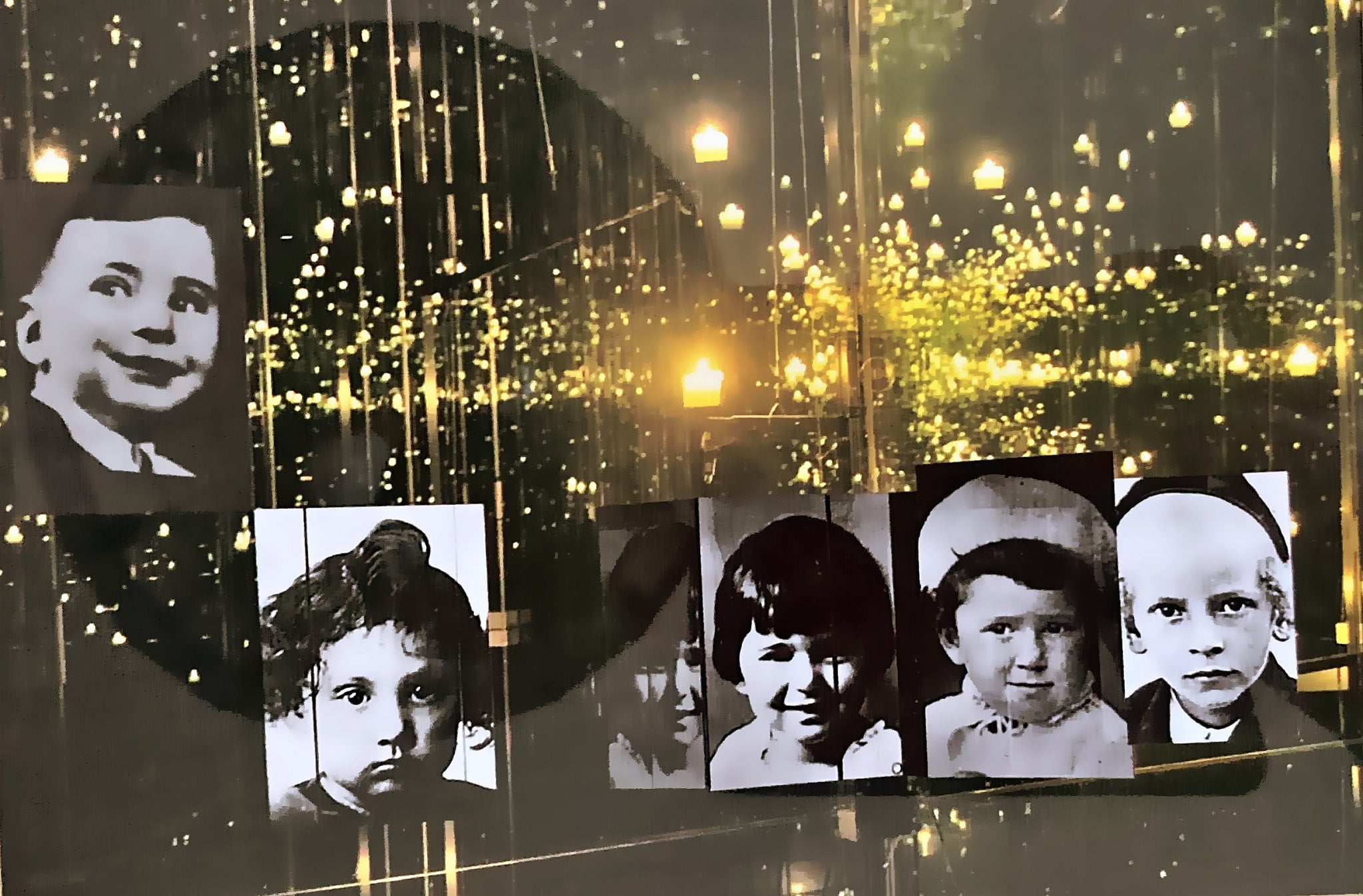
Importantly, the amount the Broidys paid for the whiteprint was chosen to honor the one and a half million Jewish children murdered during the Holocaust. This dedication tells you everything about the significance of their acquisition.
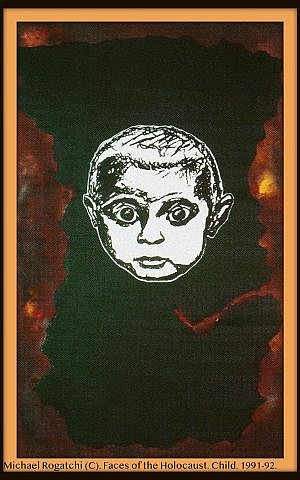
The above photograph of murdered Jewish children hangs in the centre of my husband, artist Michael Rogatchi’s studio, and always will. The children are at his side as he works, and he spends most of his time there. They are always with him.
So we understand the power of Elliott and Robin Broidy’s gesture completely.
White-print of mass murder
Before me lies a typical product of a European architectural bureau or engineering office from the 1940s: clean, sophisticated, precise, confidently drawn lines, all executed by hand, lending the document an unsettling authenticity.
You look casually at the document, yellowed with age. It appears to be a precise drawing of an ordinary house. Then your eyes reach the two vertical lines at its centre, and your heart stops: a chimney, disproportionally large.
No wonder the Nazis tried to destroy all material evidence of their unspeakable crimes. Yet according to first-hand accounts I studied in the Simon Wiesenthal Archive, Soviet troops approaching Auschwitz in January 1945 were guided by the stench of burning bodies. The crematoria were operating until the very end.
Once you recover your breath, you notice the German bureaucratic stamps surrounding the carefully drawn structure with its heartrending vertical lines. The images become much more than an architectural plan.
As it is known, the first large-scale Zyklon B gassing experiment occurred on September 3, 1941, when 600 Soviet prisoners of war and 250 sick Polish prisoners were murdered in the basement of Block 11 at Auschwitz. Following the gassing, it became evident that the existing crematorium at the Auschwitz site could not adequately dispose of the bodies. Within seven weeks, SS architects from Berlin arrived in Auschwitz to address this ‘problem’.
Architect Walter Dejaco and others spent two days – October 22 and 23 – with Auschwitz commandant Rudolf Höss and others to determine the necessary scale of the new crematoria. The white-print in question is dated October 24, 1941. It is also known that the plans were later amended and expanded and presented at the Wannsee Conference on January 20th, 1942, as proof that their plan to eliminate all the Jews of Europe – the “Final Solution” – was feasible.
The aged white-print produced 85 years ago is clear evidence of the careful planning that made the worst crimes in human history possible.
Today, sadly and alarmingly, the historic evidence of the crimes against humanity is seen with an additional gravity in a new context of the unleashed hatred that intensified after October 7th, 2023.
We are now living in a time when irrational hatred of Jews is being normalized and spreading rapidly. Within days of the October 7, 2023 massacre – the worst mass-murder of Jews since the Holocaust – virulent antisemitic lies were spread across traditional and social media by the antisemitic zealots and those who are orchestrating the new “normality”.
Within one year of the attacks, antisemitic incidents reached their highest level since the end of the Second World War.
One recent disturbing example: at the 2026 Winter Olympics, the International Olympic Committee ordered, produced, and sold merchandise featuring imagery from the 1936 Berlin Olympics, which were a triumph of Nazi propaganda. This is a profound insult to the victims of Nazism and their families. Yet today it is a new normal, or rather an old one returning, because we have seen it before.
Personal dimension
I have been to Auschwitz many times, to work, observe, film, and think. It is a difficult place to be, as is any Nazi camp. Without being there, one cannot grasp the meaning of Nazism. The horrors of what happened there are beyond rationality. They can only be understood through raw feeling after having seen such a place firsthand.
It is for that reason that I worked with colleagues at the European Parliament to propose mandatory school visits to Auschwitz and the other extermination Nazi camps. The proposal failed, officially due to parental objections, although perhaps some countries were simply unwilling or uninterested.
I work in Auschwitz, I think about the camp orchestras. Three large ensembles: two male orchestras and one female orchestra. The latter was led for a time by my great-aunt Alma Rosé. So, Auschwitz is personal to me.
Prisoners recalled that the orchestras were forced to play, among the other grim compulsions, during selections, when SS men decided at a moment’s notice who would live and who would die. Who could forget such a thing?
Professionals such as doctors and architects planned and implemented the extermination of millions of people. Many architects were never held accountable for their crimes, or were acquitted at their trials, despite knowingly designing facilities whose purpose was mass murder.
An Acquitted Holocaust perpetrator
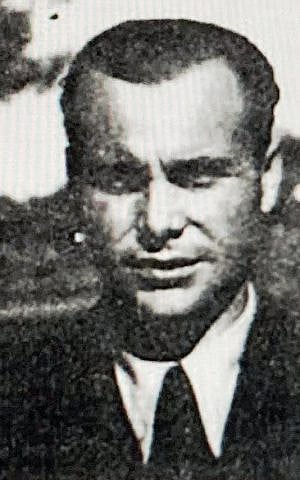
The white-print’s author was Walter Dejaco, an Austrian architect with no notable career before the Second World War. An enthusiastic Nazi, he joined the SS in 1933, when it was still illegal in Austria, five years before the Anschluss.
This unremarkable man – so many of them were unremarkable, including Rudolf Höss – thrived for the first time in his life during Nazi rule, and he proceeded with his tasks happily. He even joked on his architectural plans, writing ‘Auschwitz’ as ‘Au / Schwitz’ , a pun suggesting sweat. Such ‘humor’ tells you a great deal about the atmosphere in which the Auschwitz-Birkenau crematoria were planned.
My dear friend Simon Wiesenthal told me about Dejaco many years ago. Together with Auschwitz prisoner and writer Hermann Langbein, Wiesenthal tracked Dejaco for years. Dejaco had been held by the Red Army as a prisoner of war from 1945 in the camp in the USSR until 1949 or 1950, when he was inexplicably released.
So, one of just four architects who had planned and constructed the Auschwitz-Birkenau crematoria returned home and resumed his profession. He built parish buildings and was thanked and rewarded by local clergy.
After persistent efforts by Wiesenthal and Langbein, the investigation started in 1962. It took ten years before it reached the courtroom. Dejaco and two of his assistants were finally brought to trial in 1972.
It was a fiasco. One assistant’s case was dropped, and Dejaco and Fritz Ertl were acquitted on the grounds that they had acted under “duress”.
Dejaco died peacefully in his bed in 1978.
One detail from the trial still haunts me. The trial was public, but nobody attended it.
“The hall was empty”, Simon Wiesenthal told me. “ Just empty. You understand?”
I did. And I did not. I still do not.
“We did it for ourselves” – a couple ensures remembrance
But the acquisition of the crematoria whiteprints was a personal decision for the Broidys.
“We wanted to find a way to use the money spent on this terrible, but historically important, document for something good”, Elliott Broidy told me. “In conversations with Rabbi David Baron of the Temple of Arts in Beverly Hills, we decided to dedicate the sum, honoring the one and a half million Jewish children murdered by the Nazis, to fund the Temple’s creation of a global curriculum that would teach empathy and altruism to children under five, inoculating them against the scourge of extremism”.
Michael Rogatchi (C). Faces of the Holocaust. 1991-1992.
I hope this new curriculum, teaching altruism, understanding, tolerance and humanity, will flourish. This is one of those rare stories showing that even the darkest history can, through human will, be transformed into something constructive.
Evil can, and must, be answered and overcome by good, even generations later. It can prompt us to rethink, revisit, and reckon with the most painful lessons of history and to draw from them, against all odds, understanding and moral clarity.
It is never too late, so long as the memory of every soul lost in the Holocaust remains alive.