This article was originally published at The Supercar Kids on March 25, 2025.
Elliott Broidy: “Ferrari’s craftmanship is second to none in the automotive world.”
Ferrari enthusiasts, luxury car collectors and notable figures from around the world gathered in Palm Beach, Florida for the 34th Cavallino Classic to celebrate the enduring legacy of the world-class brand.
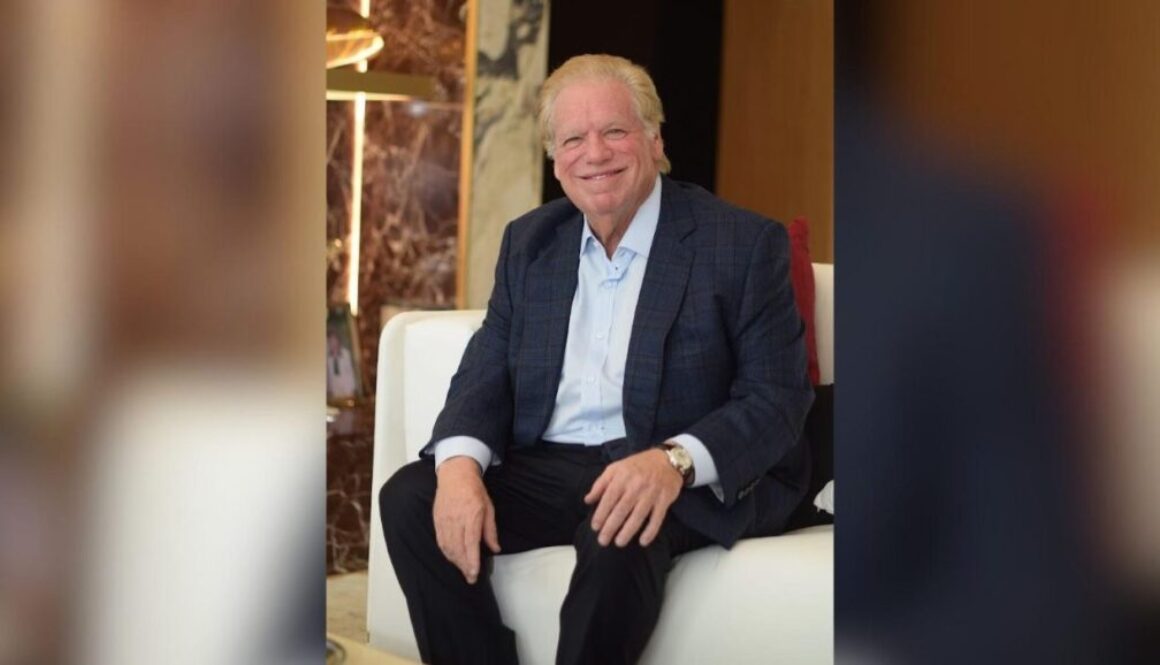
“Being part of the Cavallino Classic is always an incredible experience,” said entrepreneur and philanthropist Elliott Broidy, who also owns two Ferraris. “It’s about beautiful, extraordinarily made cars, but also about connecting with people who share a deep appreciation for Ferrari’s history and its significance as an iconic brand.”
The event, which took place from January 23-26, highlights some of the world’s most unique and meticulously restored Ferraris. The showcase has garnered attention from Ferrari aficionados since its inception in 1992 and is hosted annually at the Breakers hotel as a celebration of the brand’s evolution.
To kick off the weekend, attendees gathered for a welcome reception, where they shared stories about their experiences with the Ferrari brand. The following day, participants had the opportunity to see their Ferraris in motion during the Tour d’Eleganza, a scenic drive along Florida’s coastline. The glamorous weekend concluded with the Party Under the Stars, a night of fine dining and live entertainment that embodied the luxury associated with the Ferrari brand
Ferrari F80 Unveiled as Star of the Show, Concorso d’Eleganza Celebrates Marque’s Legacy
The most special moment of the night was the unveiling of Ferrari’s newest hybrid sports car – the F80, which was designed and built to commemorate Ferrari’s 80th anniversary. Car and Driver magazine explains “the F80 is powered by a plug-in-hybrid powertrain that makes an incredible 1184 horsepower and features technology gleaned from Ferrari’s Formula 1 racing team.” Ferrari has said this car will have a very limited production run – only 799 are scheduled to be made – and will join the ranks of iconic models from the 1984 GTO to the 2016 LaFerrari, making it Ferrari’s newest “hybrid supercar.”
The other centerpiece of the weekend was the Concorso d’Eleganza – the judged car show – where expert judges evaluated each car based on the International Advisory Council for the Preservation of Ferrari Automobiles (IAC/PFA) guidelines. Classic and contemporary vehicles lined the lawns of The Breakers in preparation for the competition, each representing a unique Ferrari era and style.
Every entry started with 100 points, and judges deducted from that initial score with every issue they discovered, ranging from fractional points for small details to five points for major problems like a fake body. The judging process was extremely detail oriented and meticulous to ensure the winners upheld Ferrari’s values of authenticity and preservation and reflected the evolution of design and engineering that has been essential to the brand’s history. Prestigious awards such as the Platinum Awards, Best in Class, and the coveted Best of Show were awarded to the best entries. Of the 100 cars that were evaluated, 70 achieved a Platinum award, receiving 97 points or more.
The Best of Show Winner – a red 1967 Ferrari Dino 206 S – gained further recognition by participating in the Peninsula Best of the Best, a global concours event honoring the top automobiles from major international shows. The event was hosted by Sir Michael Kadoorie, co-founder of the award and chairman of The Hong Kong and Shanghai Hotels – the global luxury chain that includes the Peninsula Hotels.
But for Ferrari enthusiasts and collectors like Broidy, attending the prestigious annual event is more than just entertainment, it’s about a commitment to supporting philanthropic causes. Included in most tickets to the event is a significant contribution to the Cavallino Classic Foundation, a charity that donates to various causes including scholarships for the Palm Beach Police and Fire Foundation and support for the A.W. Dreyfoos School of Art in West Palm Beach. Its goal is to support and inspire younger generations.
“Ferrari has truly set the standard for luxury brands,” Broidy said. “Here we’re reminded that excellence and giving back go hand in hand, and I’m proud to support Cavallino’s mission for this reason.”
As the Cavallino Classic looks ahead to its 35th anniversary in 2026, the event continues to embody the spirit of craftsmanship, elegance, and generosity. It remains a testament to the enduring allure of Ferrari and the vibrant community that celebrates not just the cars, but also the philanthropic efforts that contribute to its legacy.
My family is, by far, the most important thing in my life. Every day, I wake up thinking about my wife Robin and our three children, my son-in-law, and our three grandchildren and it inspires me to bear down and create opportunities. There’s nothing more powerful than knowing your work contributes to a legacy that benefits those you love most.
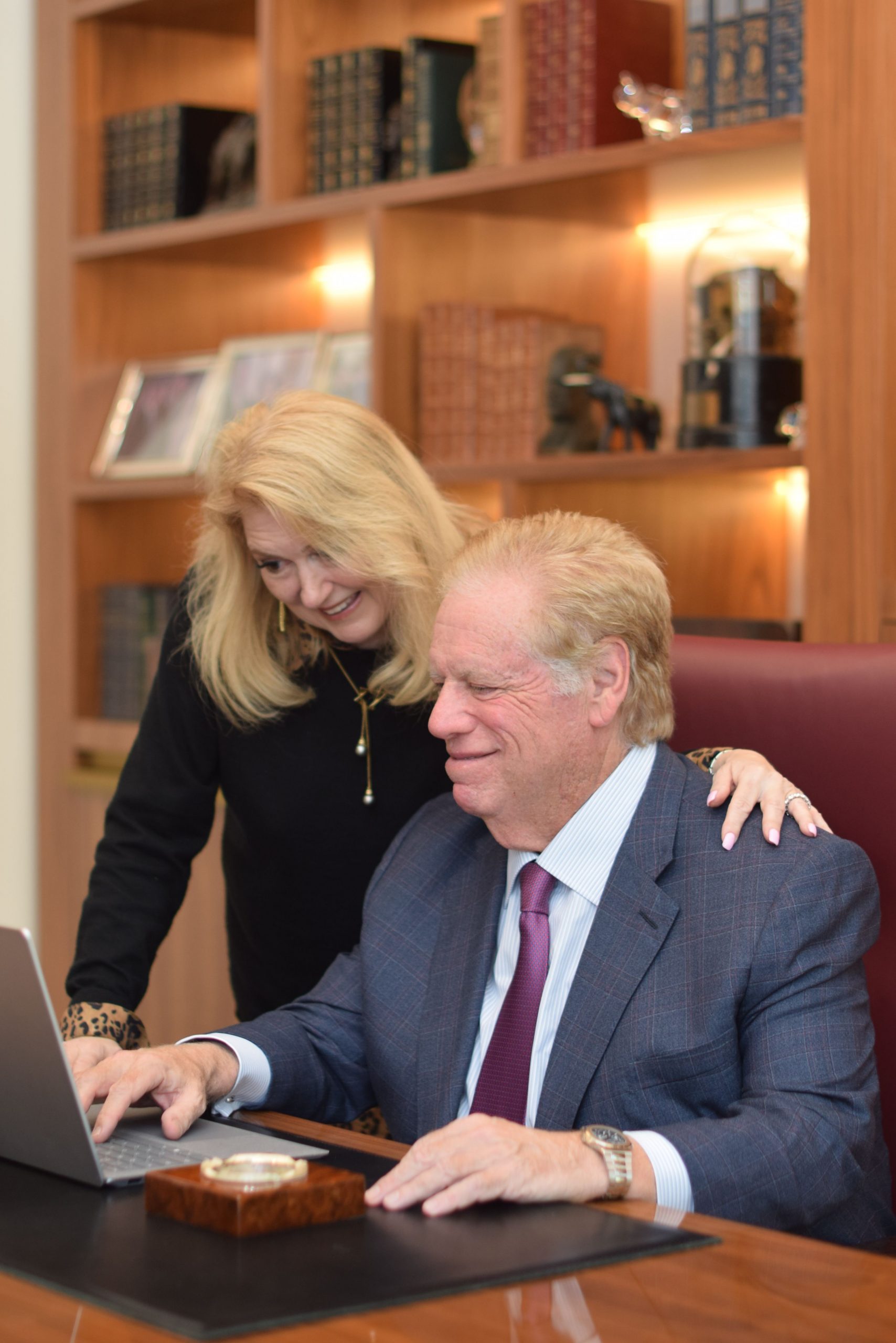
I’m especially grateful for Robin. She has always been my sounding board, my partner in every sense, and a steady source of wisdom. Early in my career, when I faced tough decisions, she reminded me to trust my instincts and keep going. Her strength and insight have been invaluable, not only in business but in all aspects of my life. I can’t thank her enough.
Robin’s background in law and her experience as a senior executive at 20th Century Fox has given her a unique perspective that complements my own. She brings analytical rigor and creative thinking to our discussions, helping me see challenges from different angles. More importantly, she’s been unwavering in her support through both successes and setbacks, providing the emotional foundation that makes risk-taking possible.
What I admire most about Robin is her ability to balance pragmatism with compassion. She understands the realities of business while never losing sight of the human impact of decisions. This perspective has influenced how I approach both my businesses and philanthropy, reminding me that success isn’t just measured in financial terms but in the difference we make in people’s lives.
I’m extremely proud of my children. They are incredibly kind and caring and go after their goals with gusto. My eldest daughter lives in Israel with her husband, a rabbi, and their three beautiful children while also writing novels and helping her community. My second daughter graduated from a terrific law school and is now working as an associate at a major law firm. My son is a junior in college, double majoring in Economics and Communications and Leadership and was just invited into Phi Beta Kappa. What I love most about them is that each of them deeply loves and appreciates our immediate and extended family. The times I spend together with them are the best moments of my life.
About Elliott Broidy
Elliott Broidy is an entrepreneur who has used his extensive experience and talent to found, invest in, and in some cases, manage as CEO, more than 160 companies over his four-decade career. Since 2014, he has focused on technology businesses (including, more recently, AI) in the defense intelligence, homeland security, public safety, and law enforcement sectors.
Your team is your greatest asset. Surround yourself with people who are smarter than you in areas you need. You can’t do it all; trying is a recipe for burnout and makes failure more likely.
Elliott Broidy is an entrepreneur who has used his extensive experience and talent to found, invest in, and in some cases, manage as CEO, more than 160 companies over his four-decade career. Since 2014, he has focused on technology businesses (including, more recently, AI) in the defense intelligence, homeland security, public safety, and law enforcement sectors. He is the Chairman and CEO of Broidy Capital Holdings, LLC, founded in 2022 in Boca Raton, FL, and its predecessor, Broidy Capital Management, headquartered in Los Angeles from 1991 to 2022.
Thank you so much for joining us in this interview series! Can you tell us a story about what brought you to this specific career path?
I’ve always had a deep passion for buildings things, whether that be businesses, relationships, or solutions to real-world problems. The entrepreneurial mindset comes naturally to me. My entrepreneurial journey began in Los Angeles with a small investment business, which was a good start. But on 9/11 everything changed: my priorities, my interests, and where I felt I had to direct my businesses and attention. I felt a calling to dedicate all my skills, resources, and energy toward the public safety, defense, and security industries. I found myself profoundly motivated in those dark days to protect not only the United States, but our allies. Since that time, that has been my professional focus.
Can you tell us a story about the hard times that you faced when you first started your journey?
In 2003, I founded a fund whose core mission was to invest in non-high-tech companies in Israel. I faced tremendous skepticism from potential investors. At the time, Israel was in the middle of the Second Intifada, a continuous terrorist assault by Arabs in the West Bank and Gaza that ultimately cost thousands of lives. There were horrible suicide bombings throughout the country, including at a Passover seder, restaurants, nightclubs, buses, and so on. In that context, many people couldn’t understand why I would want to invest resources there. But I knew the Israeli people. I believed in Israel’s economy and its resilience, which has been on display recently as well. So, I decided to stay the course, working closely with potential investors to build trust and achieve tangible results. Looking back, that challenging period increased the value I place on diligence and perseverance. In my opinion, those are the key attributes of the successful entrepreneur. There will always be challenges of some sort or another. The question is: how do you deal with them? How do you not quit? How do you think and work through it? Those are the crucial elements.
Where did you get the drive to continue even though things were so hard?
In my life, I’ve been blessed with opportunities, and I have always felt a keen sense of purpose and responsibility. When you’re in that position, it’s important to make the most of it to help other people. I really can’t stress that enough. Whether I am investing in businesses that create jobs, or supporting causes that combat antisemitism, or contributing to public safety initiatives, I am proud of the important work that I am doing — but I know that there is a lot of important work to be done. That’s a key driver for me.
My lovely wife Robin and my three children are invaluable motivating factors. Every single day I wake up, and I think about them, and it inspires me to bear down, get to work, and create opportunities. I also think about my personal hero, Winston Churchill, and the adversity that he faced while leading Britain during World War II. Churchill once said, “The price of greatness is responsibility.” I think about that quote often. Churchill said this in the context of fighting against Nazi Germany, which represented an existential threat not only to his country, but to Western civilization. The audience for that speech was Harvard students, who would go on to be our country’s leaders and prominent businessmen, lawyers, doctors, etc. He wanted to instill that conviction in them, because it is so profoundly true. So, I want to emphasize it to readers of Authority Magazine.
So, how are things going today? How did grit and resilience lead to your eventual success?
Things are going very well. I moved from Los Angeles to Boca Raton, Florida in 2022 and started Broidy Capital Holdings, LLC, which focuses on technology, investments in defense, public safety, and AI. I am also the founder and Managing Partner of Threat Deterrence Capital Holdings, LLC and LEO Technologies Holdings, LLC.
Without an ample amount of grit and resilience, none of my success would have been remotely possible, I can tell you that. They’re the key ingredient to success. Success doesn’t come without setbacks, for anybody, in any field. Michael Jordan got cut from his high school team. Tom Brady was the 199th pick in the sixth round of the 2000 NFL Draft. J.K. Rowling’s manuscript for the first Harry Potter book was rejected a dozen times while she was living on welfare as a single mother. It’s about how you handle those setbacks and follow through.
Throughout my career there have been investments that didn’t pan out, a partnership that dissolved, and a lot of sleepless nights and headaches along the way. That’s how it goes. But it’s about the mindset with which you confront it. Do you let the setbacks define you, or do you perceive them as opportunities to grow and to thrive? I see them as opportunities. It is also important to be tactically flexible and adaptable while keeping a clear focus on the mission — this helps to turn obstacles into momentum.
Can you share a story about the funniest mistake you made when you were first starting? Can you tell us what lesson you learned from that?
Early on in my career, I recommended an investment in a company based in Hawaii that was pioneering deep-sea fishing for large shrimp. Unfortunately, the captain of the fishing vessel was drunk a lot — he had a bedspread in his captain’s quarters made from purple Chivas Royal bags that had been tied together. That should have been my first clue. I tried to work with him for almost two years to make the company successful. One day he went out to sea thousands of miles away from Hawaii without approval. When he came back, I was so mad that I fired him on the spot. Of course, his crew went with him. What I forgot was that there were thousands of pounds of deep-sea shrimp on the boat that needed to be unloaded. I enlisted my CFO and a few other employees to help me unload the ship. Someone lifted a crate out of the hold and threw it to the next guy. Each crate was heavy, and you had to do a deep knee bend to catch it properly. There were over 100 crates. At the end of the day, we were all in pain but mine was really severe. It turned out that I had a double hernia and needed surgery! Moral of the story: Think about the ramifications of firing someone before you fire them!
What do you think makes your company stand out? Can you share a story?
Broidy Capital Holdings is uniquely focused on improving public safety and homeland security and leveraging emerging technologies such as AI in doing so. We are a powerfully motivated company. Nothing is more important than public safety and homeland security. Without them, nothing else is possible.
By investing in innovative technologies that assist law enforcement and defense agencies, we are making the world safer. For example, Circinus, LLC is a defense contractor that specializes in providing open source intelligence services to the U.S. government and in creating open source intelligence centers for U.S. allies in the Middle East. LEO Technologies, LLC is a software developer that creates state-of-the-art transcription and AI-based analysis software for law enforcement. I am deeply proud of the important work that these companies do for the betterment of our communities, the United States, and the world.
Which tips would you recommend to your colleagues in your industry to help them to thrive and not “burn out”?
The most important thing, which a lot of people overlook, is to prioritize your health. Without your health, you can’t have anything else. I have recently focused on fitness, walking daily and staying active. It is also important to dedicate time to disconnect from work and spend time with your family and friends, which gives you the fuel you need to be an effective leader. And without a support network, burnout and failure become that much more of a probability.
Another thing is learning to delegate effectively. Highly ambitious and highly driven people often have difficulty doing this. They want to do it all. But you can’t, it’s simply not possible, and you will burn out if you try. Assembling a team that you can trust, and then delegating to that team, gives you the time to recharge and allows and motivates your teammates to grow alongside you. It gives you the space you need to think strategically and to make important decisions.
Lastly, always remember why you started the business. Transport back in time to what motivated you in the first place. It is important to lean into that mindset. Purpose is what keeps you going day after day, week after week, month after month when the challenges seem truly insurmountable.
None of us can achieve success without some help along the way. Is there a particular person who you are grateful towards who helped get you to where you are? Can you share a story?
I’m especially grateful for my wife, Robin. She has always been my sounding board, my partner in every sense, and a steady source of wisdom. Early in my career, when I faced tough decisions, she encouraged me to make the choice that would be a win-win for both parties, trust my instincts and keep going. Her strength and insight have been invaluable, not only in business but in all aspects of my life. I can’t thank her enough.
How have you used your success to bring goodness to the world?
Philanthropy is very important to me, and it is central to my life. As I said previously, success comes with the responsibility to give back. That was the ethos of the great philanthropist Andrew Carnegie, and I very much subscribe to that view.
In that vein, my family donates considerably to Boca Regional Hospital, the Cleveland Clinic in Weston, Florida, the Boca West Children’s Foundation, and the Adolph and Rose Levis Jewish Community Center. In the aftermath of the October 7 attacks, we have made it even more of a priority to contribute to organizations dedicated to fighting antisemitism and saving lives in Israel. As such, we are proud to support organizations like Friends of the IDF, Magen David Adom, The Counter Extremism Project (which is now more focused on combating antisemitism), the Jewish Agency, and many law firms and organizations fighting the good fight against antisemitism on U.S. college campuses and elsewhere.
These causes are near and dear to my heart. I am proud to support them and to contribute in any way to their positive impacts.
What are your “5 things I wish someone told me before I started leading my company” and why?
Trust your instincts but back them up with data and think through the ramifications. Gut feelings are powerful and very important, but decisions are best made with as much accurate information as possible. Think through the possible consequences — remember my example of the deep-sea fishing boat above!
Mistakes are not failures; they’re lessons. Every setback will teach you something valuable if you let it. Each one is a learning opportunity and a chance to improve. This mindset is nonnegotiable to be a successful entrepreneur.
Your team is your greatest asset. Surround yourself with people who are smarter than you in areas you need. You can’t do it all; trying is a recipe for burnout and makes failure more likely.
Balance matters. Success in business should never come at the expense of your health or relationships with your loved ones. Take a long walk. Make sure to connect with family and friends.
Stay grounded in your purpose. Remember why you started, whether it’s your family, your mission, or the difference you want to make in the world. This will keep you focused and allow for clear strategic thinking.
Can you share a few ideas or stories from your experience about how to successfully ride the emotional highs & lows of being a founder”?
The emotional highs and lows are inevitable, but I’ve learned that staying grounded is key. When things are going well, I remind myself to stay humble. When times are tough, I lean on my family and my values to keep perspective. I’ve also learned the importance of taking breaks when needed — you can’t lead effectively if you’re running on empty. These are important ways to try to avoid those emotional highs and lows, which can be exhausting and, for some people, enough of a reason to get off the roller coaster ride entirely.
You are a person of great influence. If you could start a movement that would bring the most amount of good to the most amount of people, what would that be? You never know what your idea can trigger. 🙂
If I could start a movement, it would be one that focuses on empowering the next generation. Whether it’s through education, mentorship, or access to opportunities, giving young people the tools they need to succeed is the key to building stronger communities and a better future. When I am not working, I mentor young people trying to figure out their next step in life, whether it be which university or graduate school to attend, which industry to start in, or how to get ahead in their professions. I can’t emphasize enough how important this is to me. I believe in supporting programs that help underprivileged youth, foster children, and students with big dreams, because they’re the leaders of tomorrow.
How can our readers further follow your work online?
Vice President JD Vance recently visited the Dachau concentration camp, and it’s clear he got the right message.
After touring the camp with 97-year-old survivor Abba Naor, Vance said: “I’ve read a lot about the Holocaust in books, but being here and seeing it up close in person really drives home what unspeakable evil was committed … It’s very important that those of us who are lucky enough to be alive can walk around, can know what happened here, and commit ourselves to prevent it from happening again.”
In line with Vance’s goal of preventing hate from spreading and devolving into extraordinary evil, the Counter Extremism Project (CEP) — a nonprofit aimed at combating extremist groups — recently purchased House 88, home of the infamous Auschwitz commandant Rudolf Höss and his family, which sits just beyond the walls of the Auschwitz extermination camp in Poland. The number 88 was code for Heil Hitler — the letter “H” is the 8th letter of the alphabet.
CEP plans to turn the house and its grounds into the Auschwitz Research Center on Hate, Extremism and Radicalization — “ARCHER at House 88.”
All post-war elements have been removed, leaving the house as the Höss family knew it between 1941 and 1944, with views of the horrific barracks, the gas chamber and the crematorium, but with one notable exception: In honor of Auschwitz’s Jewish victims and to reclaim the house from its evil past and put it on the path of doing good, a mezuzah has been added to the front door. Renowned architect Daniel Libeskind has designed a new building for the grounds outside of House 88 that will house and inspire the organization’s activities.
But ARCHER at House 88’s mission is not to just remember what hate can accomplish but to find ways to prevent hate from starting and spreading. As ARCHER board member Kenneth B. Mehlman said, “Never Again must be more than a slogan. It requires active engagement, education, and vigilance.” In service of that mission, the center will host a fellowship program for leading scholars focused on extremism research, develop educational programs for policymakers, educators and the public and devise, advocate for and implement strategies to combat hate.
This will be done first by recognizing that hate is taught by charismatic and well-funded leaders through propaganda — extremely negative, one-sided representations of a group in words and pictures, stated over and over by leaders, academics and influencers and spread by a forced, willfully blind or sympathetic and willing media.
To stop hateful ideologies from spreading, social media companies cannot let extremism flow freely under the guise of free speech. Teaching people via social media accounts or YouTube videos how to create bombs or how to ram cars into as many people as possible is not protected free speech. Posting messages on X, Instagram or TikTok encouraging students to harass, attack or exclude others is not protected free speech. Putting those of like-minded hate together in chatrooms or groups on their platforms so they can rev each other up further to commit more violent actions is not something decent companies that care about civil society do.
ARCHER at House 88 will use AI technology to expose those videos and chat groups, putting public pressure on platforms to remove dangerous content. ARCHER at House 88 will push for enforcement of anti-discrimination laws and new laws making clear that inciting hate or violence is illegal and will not be tolerated. Archer at House 88 will also work to disrupt the funding of all terrorist organizations, organizations that pose as nonprofits but fund terrorist groups, as well as all corporations that violate U.S. sanctions and all those who knowingly send donations to organizations that support extremist agendas.
Ultimately, ARCHER at House 88 isn’t about looking evil in the face — it’s about recognizing hate and evil when you hear or see it and doing something to end it. After all, as chairman of the Institute of Social Safety Jacek Purski once said, “A house is a house, but it is in uninteresting, regular houses like this where extremism is happening today.”
It is our collective responsibility to not turn away if we see another Höss in our own neighborhoods or an extremist philosophy spread into our feeds. Only once we confront hate can we be sure that the powerfully destructive results of hate never happen again.
Elliott Broidy is an entrepreneur, investor, philanthropist and co-chair of the Fund to End Antisemitism, Extremism and Hate, which supports the ARCHER at House 88 initiative.
He reveals struggle to stop ‘The Champ’s’ lavish giving
When Mohammed Ali needed an accountant, he turned to Arthur Andersen, one of the world’s largest accounting firms, which put a 23-year-old, Elliott Broidy in charge of Ali’s dollars and cents. Broidy came to see a surprising side of the world’s most iconic boxer.
“I was just lucky I got assigned an account like that,” Broidy said. “I was a big boxing fan and obviously a huge fan of Muhammad Ali’s.”
He met Ali in 1979 and this is first time Broidy has talked about his time with the boxing legend.
While it was the twilight of Ali’s boxing career, it was just the start of Broidy’s. He had just graduated from USC School of Accounting. He had reporting to Arthur Andersen’s steel gray tower in Los Angeles for barely six months.
At the time, Ali was a brand-new client of the accounting firm.
At their first meeting, Ali stuck out his hand and Broidy put out his. “When he shook my hand, it disappeared into his,” Broidy said. “It was an adult shaking a six-year-old’s hand.”
During Ali’s visit to Arthur Andersen’s Los Angeles office, Broidy wanted to known how the champion wanted to me addressed. Mr. Ali? Mr. Clay?
Ali sounded almost offhand. Either “Ali” or “Champ” would be fine.
Ali was a hit with every person in the office no matter their position, from the partners to the secretaries. “He was incredibly warm and nice,” Broidy said.
Ali had spent some of his most formative years in Chicago’s South Side — where Ali spent his “exile period” after he famously refused to enlist during the Vietnam War—and had been referred to Arthur Andersen by Ali’s Chicago-based law firm, Hopkins and Sutter.
Ali handed Broidy a big pile of work. “The purpose of Ali’s engagement of Arthur Andersen was to address multiple years of IRS audits and future financial planning,” he said. “His record keeping was less than optimal, which was particularly challenging for our team.” Broidy has a talent for understatement.
Over the course of their three years working together, from 1979 to 1982, Broidy, on his own initiative, would meet monthly with Ali at the boxing icon’s Los Angeles mansion in Fremont Place, a gated community adjacent to Hancock Park and Windsor Square. This was near the end of Ali’s boxing career, coinciding with his 1980 bout with Larry Holmes—for which Ali was reportedly paid $8 million—as well as his 1981 match against the mediocre Trevor Berbick—which, billed as the “Drama in Bahama,” would be the then-39-year-old Ali’s final adventure in the ring after he lost in a unanimous 10-round decision.
“I was optimistic about Ali’s chances,” Broidy, who attended the Holmes fight, said, “But Larry was too strong, too young.”
But Broidy’s focus was Ali’s challenges outside the ring. Reviewing Ali’s finances, Broidy tried reining in some of The Champ’s reckless spending. While’s Ali’s gross income for 1972 to 1981 was north of $80 million, including endorsements and appearance fees, which in today’s dollars would be almost $250 million, his kindness manifested itself in the piles of money he provided to the people in his life, including his spiritual leader and business partner Herbert Mohammad, his manager, Angelo Dundee, his photographer and friend, Howard Bingham and many other people in his entourage. Herbert Mohammed ran the Nation of Islam, a religious sect.
One day, Ali’s close friend and personal bodyguard, James Anderson, came to Ali while Broidy was sitting with him and told him he needed money to help his ailing mother in Atlanta. Ali asked his assistant Marge Thomas to write James a check for $10,000 on the spot. After Marge and James had left the room, Broidy told Ali he too had a sick mother and asked Ali to write him a check for $10,000.
“Get outta here!” Ali said to Broidy, laughing.
Broidy began to genuinely worry if Ali’s money would last. After taxes, large percentages allocated to Herbert Mohammad and his manager, salaries and bonuses to his employees, and money given freely to his friends, along with taking care of his nine children from three wives and two other women—including Ali’s then-wife Veronica Porché Ali—it did not leave him with that much. So, Broidy took it upon himself to do a projection of how long it would be until The Champ ran out of money given his excessive spending.
“It wasn’t long,” Broidy said. “Ali said he didn’t care. He had to take care of his family and friends. Ali even took fights in his later years, including the Holmes and Berbick fights, just to get more millions into his coffers “so he could continue helping his friends and family.”
While those in Ali’s inner circle expressed concern about Ali getting injured during those late-career fights, Broidy concentrated on Ali’s spending. For the Berbick fight, Ali was being paid more than $1 million, and Broidy was worried that the Champ would squander it.
“I would talk to his attorney at the Chicago law firm and ask him, ‘How do we stop him from giving all his money away?’” Broidy recalled. “His attorney said, ‘We’ve been trying for years to stop him. He’s his own person and will always do whatever he wants.’”
Somehow, Ali’s money lasted for years. Decades later, Broidy was happy to learn that Ali had sold his likeness in 2005 and made tens of millions of dollars.
When Broidy was in Ali’s company, Ali often entertained him by cracking jokes or even doing magic tricks. “One time,” Broidy said, “He told me he could magically take my shirt off. He was so strong he whipped the shirt right over my head in one fell swoop only breaking a few buttons in the process!”
“What a great guy he was,” Broidy said. “He had an amazing sense of humor.”
That wasn’t to say Ali couldn’t be serious. When he was training for a fight, the legendary boxer’s work ethic was unparalleled, which explained why he was such a successful fighter.
Ali was equally passionate about his Islamic faith. While many, in the late-1960s, expressed skepticism about Ali’s reasons for evading the U.S. military draft, Broidy believed Ali was sincere in citing his religious beliefs as to why he refused to enlist. During his time working with Ali, in fact, Broidy observed firsthand Ali’s commitment to Islam.
“He would sit with me in his dining room reading the Koran out loud and explaining it to me,” Broidy said.
Eventually, Broidy left Ali’s side and resigned from Arthur Andersen, to manage the family office of Glen Bell, founder of Taco Bell, before pursuing other professional opportunities.
But all these years later, even after working with high-profile clients including real estate developer Maguire Thomas and MGM/UA Home Entertainment, Broidy’s time working with Ali stays with him. Most of all, he remembers the joy, optimism and lack of cynicism that Ali exhibited despite the challenges he faced, including his eventual struggle with Parkinson’s. As someone whose father battled Parkinson’s for 15 years, Broidy knew how hard that must’ve been for Ali.
In Broidy’s Boca Raton, Florida home is a LeRoy Neiman painting of Ali, hanging in Broidy’s office, as well as a signed Ali boxing glove that he purchased years ago. Whenever Broidy looks at the two items, he’s reminded of Ali’s kindness, generosity, determination and resilience—attributes that continue to inspire him.
No matter what kind of place or situation I find myself in, the shared love of Scotch whiskey inevitably becomes a topic of conversation and enables a smooth transition from business to friendship and back to business
Simplicity, Leonardo da Vinci said, is the ultimate sophistication. I am reminded of those words often when I sit with friends and enjoy a dram or two of single malt. For a spirit that’s as noble, historic, prized, and celebrated as Scotch whiskey—or any whiskey, for that matter—it never ceases to astonish me just how simple and straightforward it is to make whiskey. All you need is grain, water, yeast, and, of course, time.
I’m a collector and a businessman, which is to say that I am, by nature, drawn to practicality and logic. And yet whenever I start talking to people about Scotch whiskey, it’s hard to avoid thinking in poetic, romantic terms. After all, at the most fundamental level, Scotch is a product made from the four classical elements—earth, water, fire, air—coming together under the command of a master distiller who has devoted his life to an age-old craft: mashing, fermenting, distilling, aging. It seems so straightforward, but even a small modification to time, temperature, alcohol percentages, equipment size, or cask type can have an outsized impact on the flavor of the final product.
The art lies in knowing how to modulate those details and how they play into the final flavor outcome. Even if two whiskies are produced exactly the same way—same mash bill, same yeast, same fermentation time, same distillation equipment, same warehouse conditions—if you age one in an ex-bourbon barrel and one in an ex-sherry, you could end up thinking you’re sipping two different brands entirely.
Just as an athlete spends a lifetime honing a particular physical skill, distillers and blenders devote their lives to conditioning and strengthening their palate and nose. Once they’ve developed a Major League–level ability to smell, taste, and analyze, they can start taking other, tricker factors into account, like the whims of nature.
A bottle of Macallan single malt whiskey is at the bar by the window. Outside the window, the lights of the evening city.
It’s my instinct for business that keeps me in Scotch whiskey’s grip. At the heart of all business is relationships, and the drink has come into the picture in countless scenarios in my professional life.
No matter what kind of place or situation I find myself in, the shared love of Scotch whiskey inevitably becomes a topic of conversation and enables a smooth transition from business to friendship and back to business. I can recall the time when I was trying to close a deal and met with some top military officials and members of the British government at White’s, an exclusive social club. Opened in 1693, it’s the oldest club in London. James Bond novels were written here. King Charles, Prince William, and various other nobles throughout history have been members. We met in a room with crystal chandeliers and elegant Georgian furnishings.
But it’s not the grandeur of the building or the sublime décor that come to mind first. It’s the shimmering amber, fragrant single malt that was in our glasses, made at a distillery whose history is as rich as the building’s.
It was a dram of the Macallan, a brand that I’ve been enamored with for many years—long before I started collecting it. I’ve been asked why this one distillery has become such an important and treasured part of my journey as a collector.
I wish I had a simple answer.
In part, it’s the fact that, historically, Macallan was a trailblazer. It was one of the first legally licensed distilleries in Scotland. It’s also the exciting collaborations: the exclusive crystal decanters that Lalique designed for a few limited-edition Macallan releases, or the expressions the distillers developed with renowned culinary figures like the Roca brothers of Spain’s Michelin-starred El Celler de Can Roca.
I enjoy following the new ways Macallan pushes boundaries. Over my years in business, I’ve learned that others do as well. I often recall a business dinner where I waxed poetic about one of Macallan’s recent innovations, only to learn that the colleague was also a Scotch lover. We quickly bonded over our mutual love for the brand and single malt Scotch in general. That evening, I closed one of the biggest deals of my career.
Drinking Scotch whiskey also plays a part in my social life, whether I am with friends involved in real estate, private equity, sports, or entertainment. We laugh and learn new things about our favorite whiskeys. One thing that stays with me is the moment in a gorgeous Los Angeles steakhouse that I learned the importance of adding water to a dram. There was a time when I would have reacted in horror to such a prospect. To water down a single malt seemed criminal. But that is no longer the case.
At a dinner hosted by Macallan, a brand ambassador used a small clear water dropper to add a few raindrop-size dribbles to our glasses. I watched as the liquid turned slightly oily in appearance. That reaction, the ambassador explained, was the esters bursting open. Esters are the flavor and aroma compounds that whiskey picks up from its contact with wood as it ages. They’re partially water soluble, so those few drops caused them to open up and release flavors and aromas. It was immediately apparent: The whiskey in my glass was more floral and raisin-y in smell than it had been minutes earlier. Scotch distillers have a name for the effect. They call it “releasing the serpent.” I have my own name for it: a revelation.
The Macallan whiskey bottle and glass with ice cubes on wooden table in bar. The Macallan is a bright representative of elite Scottish whiskey in category single malt
I’m struck by something else I’ve learned over the years: Appreciating whiskey reveals something about a person’s personality.
Whiskey drinkers are adventurous. I’ve found that they like to take risks and try new things.
This also applies to their choices at a drinking establishment. Whether it’s peaty, smoky whiskies from the wind-battered island of Islay, lighter floral whiskies from the sunny Highlands, or fruity, rich red-berry-tasting whiskies that have been aged in sherry casks, I think whiskey drinkers understand that distilling is a skill developed over time. To ignore or dislike one style of whiskey is to ignore or dislike one distiller’s skills and craftsmanship or one distillery’s traditions in favor of another’s.
Whether you agree or disagree with others’ personal preferences, it adds to the conversation. Those differences, in other words, bring people together, fuel conversations, and help create lifelong friendships. As scientific studies are revealing, spending time with friends is an important element in the arsenal of tools necessary for staying healthy and happy. So, I encourage everyone I know to spend time together and drink their Scotch happily.
Mr. Elliott Broidy is a serial entrepreneur and philanthropist, and the Chairman and Chief Executive Officer at Broidy Capital Holdings. Broidy began his career at Arthur Andersen and Co and then served as a Managing Director at Bell Enterprises, where he was involved in a wide range of investments, including management of marketable securities, real estate, private equity, and other alternative investments. He is a recipient of “The Raoul Wallenberg Award.”
On January 27, 2025, the 80th Anniversary of the liberation of notorious death camp, Auschwitz-Birkenau, The Counter Extremism Project, a transnational, non-partisan, non-profit organization that has been successfully fighting extremism since its founding in 2014, announced the creation of The Auschwitz Research Center on Hate, Extremism and Radicalization: ARCHER) at House 88. House 88 is the site of the residence of Commandant of the Auschwitz from 1940-44, Rudolf Höss and his family.
It sits a few meters from the camp wall and across from Auschwitz’s original gas chamber and crematorium.
Through CEP’s ARCHER at House 88 initiative, House 88 will be transformed from one of the most notorious and heinous operational headquarters of the “Final Solution” into a unique global bulwark against antisemitism and other forms of hate. ARCHER at House 88 is the perfect symbol to reorient society around the forces of good–for tackling extremism as a universal challenge that requires a universal response.
“This historic initiative represents a crucial step in our fight against extremism,” said Ambassador Mark D. Wallace, CEO of the Counter Extremism Project. “ARCHER at House 88 will serve as a vital hub for research, education, and—crucially—action in countering hate, antisemitism, and extremism globally.”
“The transformation of House 88 into ARCHER at House 88 represents a critical step in combating extremism and hate in all forms,” said Elliott Broidy. “This center will serve as a hub for research, education, and practical solutions.
The initiative includes plans for a new building designed by renowned architect Daniel Libeskind to house research and educational programs. Operating in partnership with the Auschwitz-Birkenau Museum and under the patronage of UNESCO, ARCHER will host fellowship programs for scholars, develop legislative initiatives for policymakers, and implement state of the art AI driven strategies to determine the networks funding extremist groups and extremist social media content and to disrupt them through exposure and lawfare.
Leaders and philanthropists Elliott Broidy and Dr. Thomas Kaplan are co-chairing the Fund to End Antisemitism, Hate and Extremism, which will fund the ARCHER at House 88 initiative. fundraising campaign for this innovative center.
Robin Broidy, who works alongside her husband Elliott, has been active in various anti-extremism efforts for many years. She emphasized the connection between local and global impact. “As members of the South Florida community, Elliott and I see firsthand how critical it is to build bridges and take meaningful action against hate”. ARCHER’s mission resonates deeply with our community’s values and commitment to ensuring ‘Never Again’ means exactly that.”
A former Nazi commandant’s house adjacent to Auschwitz will be transformed into an educational center focused on combating extremism and antisemitism, with support from Boca Raton residents participating in the international initiative.
The Counter Extremism Project (CEP) announced last week that the building known as “House 88,” which once served as the residence of Auschwitz commandant Rudolf Höss and which literally overlooked the Auschwitz extermination camp, will become the Auschwitz Research Center on Hate, Extremism, and Radicalization (ARCHER). The initiative launches as antisemitism surges globally, with recent Anti-Defamation League data showing a dramatic rise in antisemitic attitudes worldwide over the past decade.
Elliott Broidy
Boca Raton, Florida residents Robin and Elliott Broidy are among several high-profile philanthropists supporting the project through their role with The Fund to End Antisemitism, Extremism, and Hate.
Their involvement is motivated by a deep personal commitment to combating antisemitism by developing effective narratives that focus on the dangers of extremism to all of society, eliminating virulently antisemitic social media text and video accounts, lobbying to change and enforce laws against discrimination and hate speech, and disrupting the network that funds the dissemination of extremist ideologies, including antisemitism.
The center, developed in partnership with the Auschwitz-Birkenau Museum and under UNESCO patronage, will focus on understanding how extremist ideologies take root in society and how to disrupt and undo the damage. Through its educational programs, the initiative will examine how misinformation spreads, how propaganda shapes perception, and how communities can actively work to prevent the normalization of extremist views.
Teaching the Next Generation to Recognize Antisemitism
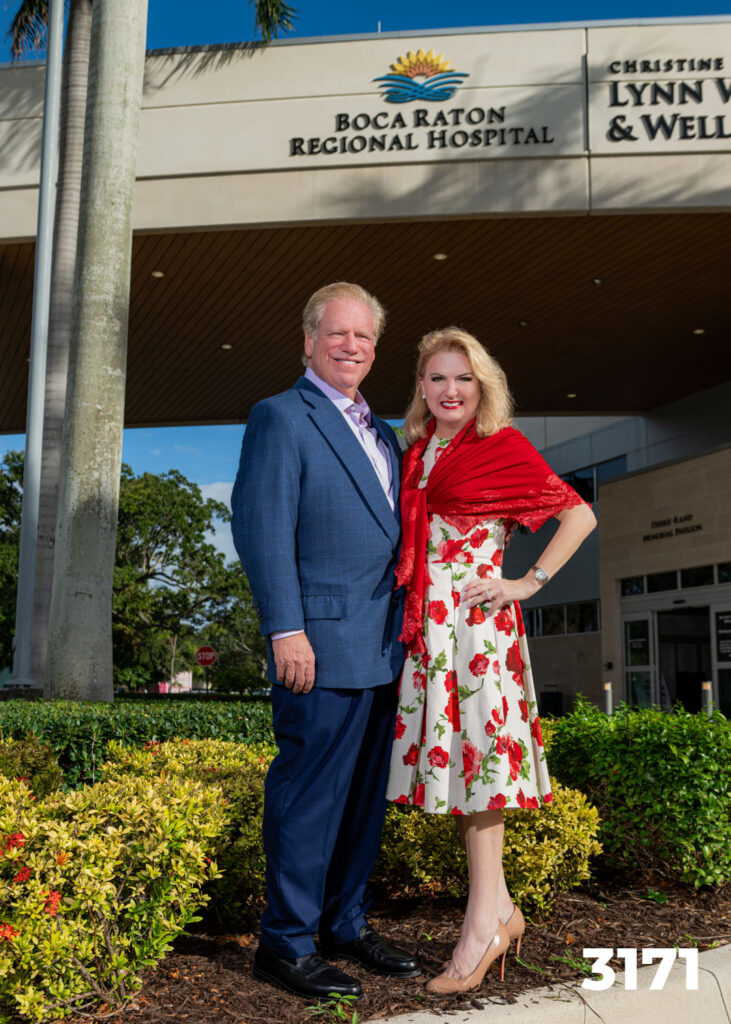
Robin and Elliott Broidy
“ARCHER at House 88 is about more than remembrance—it’s about action,” said Elliott Broidy. “We are at a critical moment where the next generation is being bombarded with propaganda that distorts history and dehumanizes entire communities. Young people have an innate desire to belong, and many are drawn into movements without understanding their true nature. We must ensure they have the tools to recognize antisemitism and extremism, no matter how it is disguised.”
Broidy emphasized the dangers of antisemitic narratives taking hold in mainstream discourse, comparing modern-day misinformation to past propaganda that led to devastating consequences.
“We have seen throughout history how individuals, thinking they are on the right side of history, become complicit in atrocities,” he said. “Those who today support terrorist organizations like Hamas, thinking they are fighting for justice, will one day be horrified by their actions—just as many Germans, Poles, and others were after the Holocaust. ARCHER will work to educate people before they fall prey to such dangerous ideologies.”
A Center Rooted in Elie Wiesel’s Call to Action
ARCHER’s comprehensive research program will establish a global network of scholars and practitioners. The center will host a prestigious research fellowship program annually that includes both PhD students and prominent academics. The fellows will conduct on-site research and contribute to the center’s educational and advocacy initiatives. Additionally, non-resident fellows will collaborate remotely, ensuring a diverse range of international perspectives in the study of extremism.
The research facility will feature state-of-the-art AI software and technology that will enable the discovery of extremist networks, emerging trends, and how extremists are using social media to spread their hateful and damaging rhetoric. Regular academic conferences, workshops, and training sessions will bring together experts from around the world to develop effective strategies for combating extremism and hatred.
“Elie Wiesel once urged us to ‘Never Forget,’ believing that remembering the Holocaust would prevent history from repeating itself,” said Robin Broidy. “But in 1986, he acknowledged that remembrance alone was not enough. ‘Sometimes we must interfere,’ Mr. Wiesel said. That moment of realization—that combating hate requires active engagement—is what drives ARCHER at House 88.”
She continued: “We can no longer afford to be neutral in the face of rising antisemitism. As Wiesel himself warned, ‘Neutrality helps the oppressor, never the victim.’ This center is not just a memorial; it is a place of action. We are equipping the next generation with the knowledge and strategies to fight back against propaganda, challenge misinformation, and ensure that antisemitic ideologies do not take root in or become acceptable to society again.”
Global Support for the Initiative
Co-chairs of The Fund to End Antisemitism, Hate and Extremism, Elliott Broidy and Thomas Kaplan
UNESCO Director-General Audrey Azoulay has noted that with fewer Holocaust survivors remaining to share their firsthand accounts, investing in education for younger generations becomes increasingly vital. ARCHER will work to address this need through comprehensive educational programs and training materials developed for expert communities and the wider public.
The architectural transformation of House 88 will be led by renowned architect Daniel Libeskind, who previously designed the Jewish Museum in Berlin and the World Trade Center site master plan. Libeskind’s design will carefully preserve House 88’s historical significance while an additional building will be built on the site for the fellows to work in and for meetings and conferences.
A unique aspect of the center will be its partnership with Italian musician Francesco Lotoro, who has spent decades collecting music composed in concentration camps. These compositions will play in perpetuity in the Francesco Lotoro Sound Hall, serving as a testament to resilience in the face of extremism. The sound hall will be acoustically designed to showcase these historically significant works while honoring their creators.
The project opened to the public on January 27, coinciding with International Holocaust Remembrance Day and the 80th anniversary of Auschwitz’s liberation. A mezuzah was placed on the doorpost and the house was symbolically transformed from a house of hate to a house against hate.
Delegations from many countries including the US, Canada, Germany and Poland visited and toured House 88. ARCHER at House 88 will work with governments, multilateral organizations, and educational institutions to develop effective strategies for combating extremism and antisemitism. Those interested in supporting the ARCHER at House 88 initiative can visit counterextremism.com/donate
For Elliott Broidy, the morning of September 11, 2001, began like any other. But by the end of that fateful day, the course of his life had shifted irrevocably.
“I remember watching the towers fall and feeling this overwhelming sense of helplessness,” Broidy recalls. “That feeling of vulnerability was profoundly frightening. I knew I had to do something – something meaningful that could help protect people.”
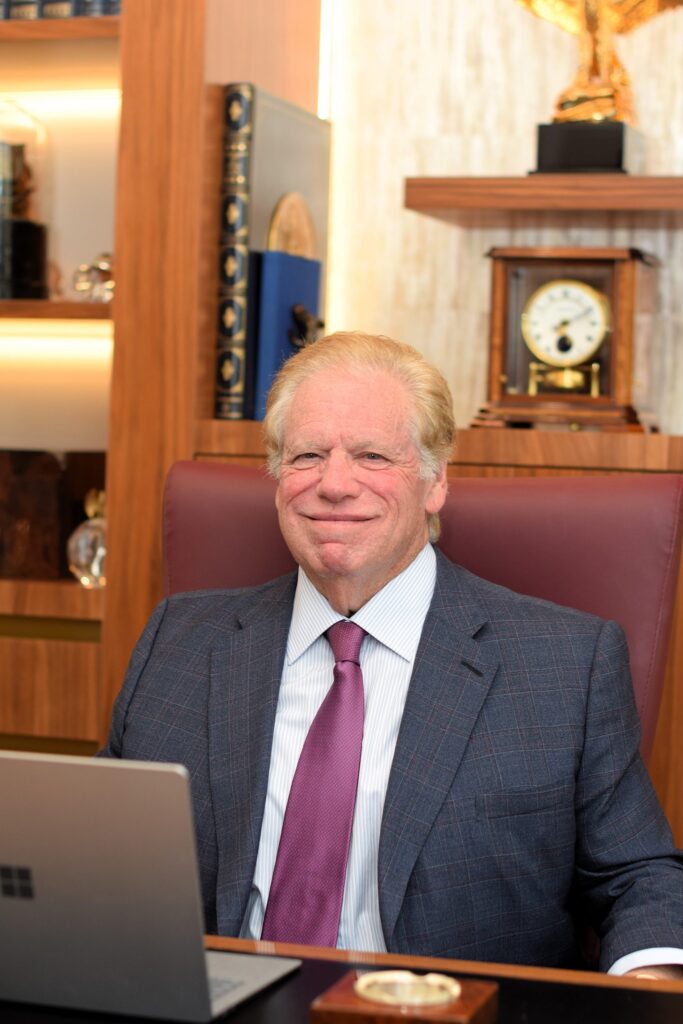
Photo Caption: Elliott Broidy
Broidy is a serial entrepreneur who has founded, invested in, and, in some cases, managed as CEO, more than 160 companies, mostly focused on defense, national security, or law enforcement.
Those weren’t Broidy’s original interests. But 9/11 was the catalyst for a new sense of urgency and purpose.
“I started researching, reading everything I could about counterterrorism, defense strategies, and technological gaps,” Broidy explains. “I wanted to be part of the solution.”
Broidy’s commitment to national security extended beyond the borders of the United States. At the time of the 9/11 attacks, another country was at the forefront of his thoughts – Israel, which was enduring the Second Intifada, a brutal wave of terrorist attacks that claimed thousands of lives. During the Second Intifada, buses, cafes, nightclubs, and even a Passover Seder became targets of suicide bombings and mass violence.
“Israel has always faced an existential threat,” Broidy says. “It has not known one day of peace in its entire existence. I saw the parallels between what happened in the United States on 9/11 and what Israel – our close ally – was dealing with on a near-daily basis. The idea of developing technology that could help save lives in both countries – that resonated deeply with me.”
In 2003, Broidy realized that, because of the violence and instability brought about the Second Intifada, Israel was facing a substantial reduction in foreign direct investment. In response, he founded Markstone Capital Partners, LLC, an $800 million fund invested almost exclusively in non-high-tech companies in Israel. Broidy wanted to demonstrate his commitment to the Israeli people and show that mass murderers should not be allowed to dictate the lives and futures of the country.
He vividly remembers a trip to Tel Aviv in 2005, where he met with victims of terrorist attacks and their families. “Hearing their stories made it even more personal. It’s one thing to read about these tragedies, but to sit across from someone who lost their loved one in a suicide bombing – it’s something you don’t forget,” he reflects.
For Broidy, the drive to innovate is fueled by these human connections. “Technology is important, but at the end of the day, it’s about protecting lives and preserving freedom. That’s the real mission.”
In the years that followed, Broidy founded and scaled several companies specializing in defense and law enforcement technology, from advanced surveillance systems to AI-driven threat detection platforms.
Broidy’s support for Israel, especially in the aftermath of the Hamas attacks of October 7th, also has inspired his dedication to combating antisemitism and to donating to more than 100 Jewish organizations and think tanks that focus on counterterrorism.
Today, his companies continue to push the envelope, developing solutions that enhance the safety and security of allied nations. “I’m proud of what we’ve built, but there’s always more to do. As long as threats evolve, so must our technology and our commitment to staying ahead.”
When asked what advice he would give to aspiring entrepreneurs looking to enter the defense space, Broidy’s answer is simple: “Find your ‘why’ and let it guide you. For me, it was 9/11. For others, it might be something else. But if you’re driven by a genuine purpose, the work will always matter.”
Recently, we had the pleasure of sitting down with Elliott Broidy, a notable entrepreneur, philanthropist, and passionate watch enthusiast. Known for his investments in companies focused on national security and public safety, Broidy’s interest in timepieces, particularly those from Patek Philippe, adds another dimension to his fascinating life. In this interview, he shares his journey with watches, his admiration for the Patek Philippe brand, and reveals one of the most prized pieces in his collection, the rare and intricate Patek Philippe 5016P-018 Minute Repeater Tourbillon Retrograde Perpetual Calendar.
NYW:Elliott, thank you for joining us today. Let’s start with your love for watches—where did it all begin?
Broidy: Thank you. it’s a pleasure to be here. My fascination with watches started in my teens. For me, watches represent more than just tools for telling time—they’re an art form, a marvel of craftsmanship and engineering that you can wear. Over the years, this appreciation has deepened, especially as I began marking life’s most significant moments with specific pieces. Each watch in my collection tells a story. For example, I bought certain watches to celebrate the birth of my children; others I bought after major business milestones; and some I’ve acquired as anniversary gifts for my wife. These aren’t just watches; they’re tangible reminders of the blessings in my life.
NYW:You’re particularly drawn to Patek Philippe. What is it about the brand that resonates with you?
Broidy: Patek Philippe, to me, embodies the pinnacle of watchmaking. Their motto, “You never actually own a Patek Philippe; you merely look after it for the next generation,” perfectly encapsulates their philosophy. These watches are heirlooms, crafted with such precision and care that they transcend trends and time. When I look at a Patek, I don’t just see a watch—I see a legacy. That aligns deeply with my values, both in my personal life and in my philanthropic work.
NYW:Your collection includes some highly coveted pieces, but one stands out in particular: the Patek Philippe 5016P-018. Can you tell us about what makes this watch so special?
Broidy: Ah, the 5016P-018. It’s certainly a standout in my collection. It combines a minute repeater, a tourbillon, and a retrograde perpetual calendar—all in a subtle platinum case. What I love most is its quiet elegance. It doesn’t shout for attention, but those who recognize it understand its significance. Every time I wear it, I’m reminded of the incredible craftsmanship and dedication that went into creating it.
NYW:What do you feel when you look down at your wrist and see a piece like the 5016P?
Broidy: Every glance is a reminder. The chime of the minute repeater is like a tiny symphony, and the hidden tourbillon is a constant symbol of complexity and movement. But more than that, it makes me think about the passage of time—how fleeting it is. It’s humbling. It reminds me to focus on what truly matters: my family, my community, and society at large. That’s why I dedicate time and resources to contribute to causes that are important to me, like supporting community hospitals, organizations helping foster children, and groups fighting antisemitism.
NYW:That’s a beautiful way to look at it. Do your watches inspire conversations with your family?
Broidy: Absolutely. When I discuss my watches with my children, it’s not just about how extraordinary the watches are —it’s about the values they represent. Dedication to craftsmanship, precision, determination, resilience, family, and using time wisely and compassionately. I want my children to understand that it’s not just about collecting things; it’s about creating meaning and making a positive impact on the world.
NYW:For those who might be considering their first serious timepiece, what advice would you offer?
Broidy: Start with what speaks to you personally. Watches are deeply intimate objects—they should resonate with your journey. Don’t worry about trends or investments; focus on the level of detail you want and how the piece fits into your lifestyle. When you find the right piece, it will feel like it was always meant to be yours.
NYW:Elliott, thank you for sharing your watch story with us. It’s clear that watches are more than a passion for you—they’re part of your life’s journey.
Broidy: Thank you. I’m grateful for the opportunity to share my love for watches with others who appreciate their artistry and meaning.
About Elliott Broidy
Elliott Broidy is an entrepreneur who has used his extensive experience and talent to found, invest in, and in some cases, manage as CEO, more than 160 companies over his four-decade career. Since 2014, he has focused on technology businesses (including, more recently, AI) in the defense intelligence, homeland security, public safety, and law enforcement sectors.