In business, growth is often equated with expansion. Companies introduce new product features, pursue additional markets, hire aggressively, and layer on new initiatives, assuming that more activity will translate into higher revenue and stronger performance.
However, over decades of building and investing in companies, I have found the opposite to be true. In fact, sustainable business growth frequently comes from disciplined subtraction rather than constant addition.
As organizations scale, complexity compounds – often in ways that are not immediately obvious. Product lines broaden beyond what customers truly value. Internal processes multiply in the name of optimization. Management structures become more elaborate as teams grow. Over time, this accumulation of well-intentioned additions can dilute strategic focus, compress profit margins, and slow execution. Complexity rarely announces itself as a threat, yet it quietly undermines operational efficiency and long-term profitability.
Growth by subtraction begins with a clear assessment of what drives enterprise value. Every company has a core set of products, services, and capabilities that generate the majority of its revenue and competitive advantage. Leaders who are committed to scalable growth should examine their business through the lens of that core engine. They must evaluate which offerings deliver strong margins, which markets align with long-term strategy, and which initiatives meaningfully contribute to customer loyalty and brand strength. Anything that falls outside those parameters deserves careful scrutiny.
In many cases, narrowing the scope of operations actually strengthens financial performance. Streamlining product portfolios allows teams to concentrate resources on high-demand, high-margin offerings. Exiting peripheral markets can reduce overhead and sharpen brand positioning. Simplifying pricing and service structures often improves the customer experience while enhancing predictability in revenue. By removing distractions, companies create the conditions for more disciplined capital allocation and clearer accountability.
Operational simplicity is equally important. As companies grow, reporting lines, approval processes, and technology systems often expand without sufficient coordination. The result can be overlapping responsibilities, slower decision cycles, and unnecessary expense. Leaders who prioritize subtraction regularly review their organizational design and internal systems to ensure they support agility rather than hinder it. When teams understand their roles, decision rights are clearly defined, and tools are aligned with strategy, execution becomes more efficient and more profitable.
Strategic restraint in accepting new opportunities is another dimension of growth by subtraction. Not every acquisition strengthens a company’s core competencies. Not every partnership enhances long-term competitive advantage. Effective CEOs recognize that focus is a growth strategy. By declining initiatives that distract from primary objectives, they preserve energy and capital for the opportunities that truly matter.
Investors and markets reward companies that demonstrate such operational discipline and margin expansion. A business that knows what it is – and what it is not – commands greater confidence than one that chases every available opportunity. Growth by subtraction reflects clarity of purpose, disciplined leadership, and a commitment to sustainable profitability.
In my experience, enduring success comes from refining rather than accumulating. When leaders eliminate efforts that do not advance their mission, they can amplify those that do. Simplicity, applied with rigor and intention, becomes a powerful driver of scalable business growth and long-term value creation.
Entrepreneurs are rewarded for movement. The instinct feels natural: respond quickly, pursue openings, fix problems immediately, and keep momentum visible. Early in a career, activity often becomes a proxy for leadership because motion reassures teams, investors, and customers that progress is happening. Yet movement does not equate to judgement.
After building and investing in companies across different cycles, I’ve found that many defining outcomes in business come from decisions to wait, not decisions to press forward. Early in a career, urgency feels like opportunity. With experience, it becomes easier to see how often urgency is simply noise.
What once appeared fleeting begins to repeat in familiar patterns. Meanwhile, resources like attention, credibility, and capital prove far less renewable than opportunity itself.
Businesses rarely suffer because a leader paused to understand a situation more fully. They struggle when action substitutes for prudence. Expansion begins before demand stabilizes, hiring fills anxiety rather than a defined need, strategy pivots after a single rough quarter, and competitors dictate priorities simply by being loud. Each choice feels justified in isolation, yet over time, they compound and an organization drifts from its advantage.
Restraint protects optionality, and optionality creates leverage. When a company commits prematurely, it exchanges flexibility for the comfort of certainty. The relief is temporary, but the consequences persist.
Waiting enables reality to reveal itself — how customers actually behave, which trends endure, which costs prove fixed, and which competitors fade once attention moves elsewhere. Decisions made with fuller context require fewer corrections later, and those corrections are costly in both morale and money.
Timing therefore becomes a core operating skill. There are moments that demand immediate action, especially when integrity, safety, or continuity is at risk. Those situations are rarer than they feel. Most pressure in business is generated by noise, not signal. Leaders who react to every disturbance gradually complicate their own operations until complexity outpaces growth.
Over time, missed opportunities stop feeling like losses and start looking like preserved focus. The question shifts from “Can we do this?” to “Does this improve our long-term position?” When waiting strengthens that position, restraint is a strategic choice rather than a passive one.
Companies are built by what leaders pursue, but they endure through what they have the discipline to decline.
Anthropic has launched Claude Code Security, an AI-powered vulnerability scanner built into Claude Code on the web, now available in a limited research preview for Enterprise and Team customers.
The tool is designed to flag subtle logic flaws that are difficult to detect through manual inspection. Its launch triggered an immediate and sharp sell-off across the cybersecurity sector.
The announcement marks a turning point in how security teams find and fix software flaws. Until now, identifying hidden vulnerabilities meant relying on experienced researchers to comb through thousands of lines of code. That method is no longer the only option and, in many cases, it is no longer the most efficient one. Security tools like Claude Code Security are beginning to upend these traditional systems.
Elliott Broidy, who leads Broidy Capital Holdings and invests in AI-driven capabilities for public safety and defense, believes that Claude Code Security represents a fundamental shift in how we achieve accurate vulnerability detection. “Instead of waiting for a breach to expose a weakness, security teams can now get ahead of threats before they are ever exploited,” he said.
Anthropic’s February 20 blog post, “Making frontier cybersecurity capabilities available to defenders,” highlighted this evolution: “Security teams face a common challenge: too many software vulnerabilities and not enough people to address them. Existing analysis tools help, but only to a point, as they usually look for known patterns. Finding the subtle, context-dependent vulnerabilities that attackers often exploit requires skilled human researchers, who are dealing with ever-expanding backlogs. AI is beginning to change that calculus.”
Broidy also sees both sides of the equation clearly. “AI gives human researchers a force multiplier they’ve never had before, which is a game-changer for national security and the private sector alike,” Broidy said. “However, the same capabilities that can find a vulnerability in seconds can be weaponised to exploit one just as fast. Tools like Claude Code Security enable defenders to move at the speed of the threat for the first time.”
Unlike conventional scanners that flag known patterns, Claude Code Security uses reasoning to understand how software components interact with one another. Any vulnerability it identifies undergoes a multi-stage verification and reexamination process before reaching a human reviewer. Validated findings are then assigned a confidence rating to help security teams inspect and approve necessary fixes.
“Claude Code Security is meant to simulate the real process a human security researcher would follow when evaluating code,” said Broidy. “It can read the company’s software, flag potential issues and draft fixes. Ultimately, though, humans should make the final decisions.”
Markets responded swiftly following the announcement. According to Bloomberg, Crowdstrike Holdings fell 8%, while Cloudflare Inc. dropped 8.1%. Zscaler declined 5.5%, SailPoint tumbled 9.4% and Okta Inc. fell 9.2%. The broader selloff dragged down the Global X Cybersecurity ETF by 4.9%, leaving it at its lowest close since November 2023.
The selloff reflects a broader investor concern: that AI platforms capable of detecting and remediating vulnerabilities at machine speed could compress demand for legacy suites.
“The message from markets was hard to miss,” Broidy said. “Investors are now asking an important question. As AI companies like Anthropic and OpenAI continue rolling out tools that can write and scan software code, the pressure on traditional security vendors will only grow.”
Investor concerns have been brewing. The tool builds on over a year of internal research and testing. Claude Opus 4.6, released earlier this month, helped the team find hundreds of previously undetected vulnerabilities. It also stirred up panic and triggered broad selloff across enterprise software stocks as investors fear the sustainability of traditional enterprise software companies.
As an AI code vulnerability scanner, Claude Code Security is a signal of where the industry is heading. The models are only becoming more advanced as the race to give defenders the edge in an increasingly sophisticated threat landscape accelerates.
“There’s no question that AI is becoming the backbone of how we protect critical infrastructure,” Broidy said. “We should be excited to integrate these capabilities while remaining hyperaware of the continued risks it poses.”
How the Auschwitz Research Center on Hate, Extremism and Radicalization (ARCHER) is combining artificial intelligence, digital forensics, and philanthropy to identify, expose, and disrupt extremist networks before they spread.
In recent years, the fight against extremism and hate has become more urgent than ever. With rising antisemitism, violent extremism, and radical ideologies, the old methods of combating hate are insufficient in today’s hyper-connected world. As an entrepreneur I focus on investing in businesses that advance public safety and national security. I’ve come to realize that to effectively fight the forces of hate and irrationalism, we must innovate and combine cutting-edge technology with philanthropy.
The Changing Face of Extremism
Historically, extremism was something seen in isolated pockets of society: radical groups operating underground, often in the shadows. Today, however, the rise of social media, encrypted messaging apps, and global connectivity have brought extremist ideologies to the forefront. Radical, violent extremism, including virulent antisemitism which incites the susceptible and misinformed to violence, are no longer confined to hidden extremist groups; they thrive online, in the dark corners of the internet, and increasingly in public view.
ARCHER at House 88: A New Approach to Fighting Extremism
That is precisely why I decided to support the creation of the Auschwitz Research Center on Hate, Extremism and Radicalization (ARCHER) at House 88, an initiative of the Counter Extremism Project (CEP), a non-profit, non-partisan organization that was founded in 2014 by Ambassador Mark Wallace, Senator Joseph Lieberman, and former Homeland Security Advisor Frances Townsend.
With my help, alongside philanthropist Dr. Thomas Kaplan, CEP purchased the former home of Auschwitz commandant Rudolf Höss at 88 Legionów Street (“88” was code for Heil Hitler because H is the eighth letter of the alphabet) in Oswięcim, Poland. The house, adjacent to the concentration camp, has been transformed into ARCHER, which represents a paradigm shift in how we combat antisemitism.
What sets ARCHER apart from other organizations fighting antisemitism is its relentless focus on action. ARCHER doesn’t just create programs that describe the horrors of the past or organize remembrance events, as important as those are, or research how many violent extremist or antisemitic incidents occur around the world. ARCHER develops AI-driven software tools to track violent extremist content on the internet, expose extremist networks, and disrupt the funding of terrorist and extremist organizations. The leadership and staff consist of former government intelligence officials, subject matter experts, and researchers who write important reports about existing an developing threats, and advise governments, multi-government commissions, and tech companies about how to counter these threats.
CEP and ARCHER use real-time data to identify hate before it spreads and strategically mobilize resources to stop it. In the fight against extremism, technology has proven to be both a weapon for hate and a tool for combating it. We expose extremist networks in reports, webinars, podcasts, social media, and traditional media to ensure that hate speech is no longer tolerated and allowed to proliferate under the guise of free expression. We are expert at finding all extremist content on the internet thanks to our partnership with the father of digital forensics, Dr. Hany Farid of the University of California at Berkeley. In 2016, Dr. Farid adapted his PhotoDNA software—designed to find missing and exploited children content on the internet—to create “eGlyph technology,” which enables social media platforms and governments to track where a particular piece of violent, inciting, extremist video, audio, or image has been uploaded and by whom. ARCHER is currently updating this software to enable platforms and governments to use general natural language queries to find all newly uploaded or downloaded extremist content, rather than searching for each identified piece individually.
Getting harmful and inciting extremist content off the internet, tracking terrorism finance globally, and teaching governments how to find and eliminate such material are all part of the arsenal ARCHER will use to counter the proliferation of extremist ideologies. Social media platforms like X, Instagram, and TikTok play an enormous role in the radicalization process, so it’s imperative that we hold tech companies accountable for the content being spread through their platforms. To help achieve that mission, CEP helped craft the language for the United Kingdom’s Online Safety Act 2023, which requires platforms to take down violent extremist content or face severe fines. The law also requires platforms to use the type of technology that CEP developed to find such content.
Philanthropy in the Fight Against Hate
Philanthropy has always played a critical role in shaping our societies. As someone who has been privileged to support initiatives that promote public safety, security, and education, I’ve come to believe that fighting extremism requires not just government or military intervention, but active philanthropic engagement.
That belief is reflected in my work with The Fund to End Antisemitism, Extremism and Hate, which I co-chair with Dr. Kaplan. The Fund was created to support ARCHER at House 88 and ensure that the initiative has the resources necessary to develop its research, technology, and global partnerships over the long term. Initiatives of ARCHER’s scale require sustained investment, and philanthropy can play a unique role in helping ensure that organizations working to counter extremism have the independence and resources they need to act decisively.
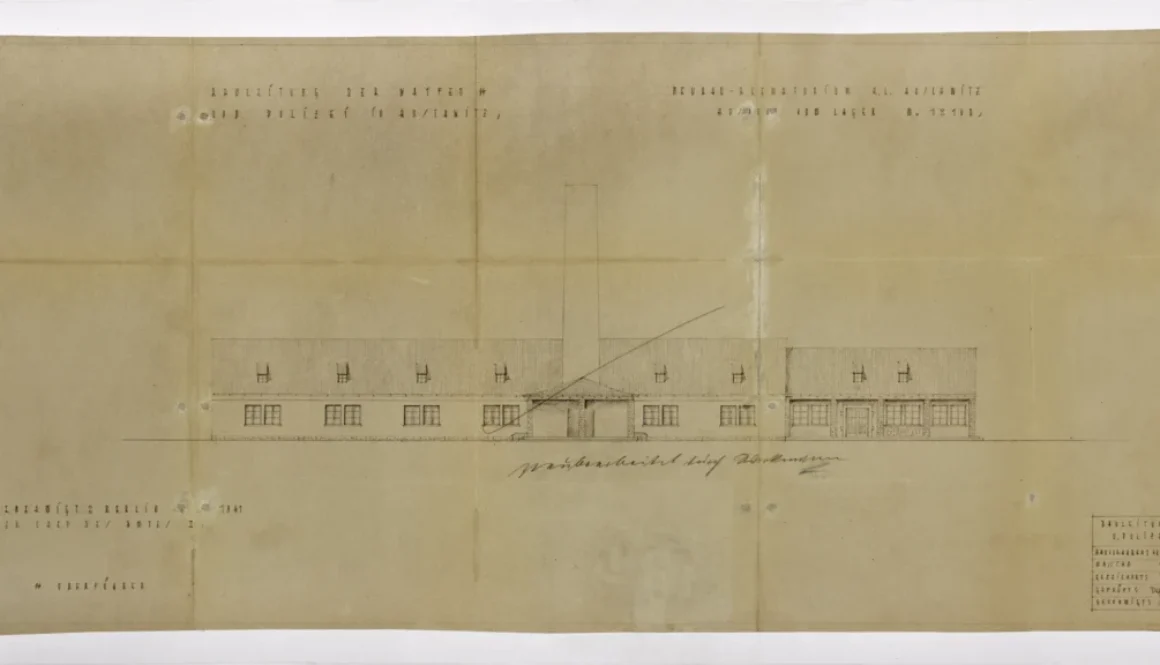
That same sense of responsibility also guided my decision to acquire the original architectural whiteprint for the crematoria at Auschwitz-Birkenau. The document is a chilling reminder of how bureaucratic systems and meticulous technical expertise were mobilized in service of genocide. I acquired the document for $1.5 million to honor the memory of the 1.5 million Jewish children who were murdered during the Holocaust, many of them in crematoria like the one depicted in the whiteprint. That money will support the creation of a global early-childhood curriculum that teaches altruism and empathy—precisely the traits necessary to inoculate young children against extremism and hate.
I want the document to be studied and used as a powerful educational tool. It is irrefutable evidence of the Nazis’ genocidal intent and the thought and purposefulness that went into their attempt to wipe Jews from the face of the earth. My plan is to exhibit it at institutions dedicated to Holocaust commemoration and combating antisemitism before donating it permanently to such an institution.
Through education, action, and thoughtful philanthropy, we can make a profound difference in the world.
A Call to Action
We cannot do this work alone. These are global, whole-of-society problems and they require global, whole-of-society solutions. Each of us must take responsibility. As business leaders, philanthropists, and citizens, we have a duty to combat hate wherever it resides—whether it’s in our own communities, on the internet, or in the policies of other nations.
As we move forward in this battle, I’m reminded of a cry that has been seared into my consciousness from a young age: “Never Again.” The phrase was popularized by Elie Wiesel, the author of so many important works that described the horrors of the Holocaust and the genesis of the hate that led to it. But in his 1986 Nobel Peace Prize acceptance speech he added, “Sometimes we must interfere.” Hate doesn’t disappear of its own accord. We must fight to ensure that it cannot find fertile ground in which to grow.
In Conclusion
The future of global security and peace depends on our ability to work together—to harness the power of technology, philanthropy, and international cooperation to fight against the forces that threaten our shared values of tolerance, freedom, and human dignity. Only by working together can we arrive at a safer, more just world, one free from hate and the horrors that flow from it.
Elliott Broidy is an entrepreneur who has used his extensive experience and talent to found, invest, and in some cases, manage as CEO, more than 160 companies over his four-decade career. Since 2014, he has focused on technology businesses (including, more recently, AI) in the defense intelligence, homeland security, public safety, and law enforcement sectors.
Motivation is often celebrated as the engine behind success. We are told to find it, nurture it, and rely on it to carry us through difficult work. But motivation is a feeling, and feelings are fleeting. Some mornings bring energy and focus, while others arrive with fatigue or distraction. When progress depends on motivation, productivity rises and falls with the emotional rhythm of the day and week.
Discipline provides a more reliable foundation.
Discipline reflects a decision about how one approaches responsibility. It means committing to the work that must be done regardless of whether the moment feels particularly inspiring. In practice, it is the willingness to begin the task in front of you without waiting for the perfect mood or ideal conditions.
Over time, this approach produces something more valuable than occasional bursts of energy: consistency.
Most meaningful achievements are the result of steady effort repeated over long periods of time. Businesses are built through thousands of ordinary decisions made well. Athletes improve through training sessions that look remarkably similar from one day to the next. Successful professionals across every field rely on routines that allow them to move forward even when enthusiasm fluctuates.
Routine plays an essential role in strengthening discipline. When a structure exists for how the day unfolds, many of the small internal debates disappear. Instead of deciding whether to begin, the individual simply follows the schedule that has already been established. This reduces friction and distraction and conserves energy for the work.
With repetition, these habits become part of a broader rhythm. What once required deliberate effort gradually becomes standard practice.
There is also an interesting side effect to this process. Consistent action often produces the very motivation people believe they need to start. Progress creates momentum, and momentum reinforces the desire to continue. The satisfaction of completing meaningful work often restores the sense of energy that seemed absent at the beginning of the day.
For many leaders and entrepreneurs, this lesson becomes clear over time. Success rarely depends on extraordinary moments of inspiration. It more often reflects the quiet discipline of returning to the work each day with patience and focus.
Feelings will always shift. Discipline offers stability and direction in the face of that change.
At the end of 2025, an eye-catching headline appeared in several major news outlets: Robin and Elliott Broidy had paid $ 1.5 million for an original architectural drawing of the Auschwitz-Birkenau crematoria.
The fact behind the news was both significant and unusual. Private individuals rarely spend such a substantial amount on a single artifact, particularly one of such grave nature. In my 35 years working in this field, I can recall very few comparable acts. I wanted to understand the decision behind it in more detail.
It is known that only two original versions of this document exist: the one recently acquired by Robin and Elliott Broidy for philanthropic and Holocaust-education purposes, and another that was seized by the Soviet Army when it liberated Auschwitz in January 1945. The latter has been sealed in a Russian state military archive ever since, aside from a brief de-classification period in the mid-1990s when researchers were allowed limited access. It has not been available for review since.
Importantly, the amount the Broidys paid for the whiteprint was chosen to honor the one and a half million Jewish children murdered during the Holocaust. This dedication tells you everything about the significance of their acquisition.
The above photograph of murdered Jewish children hangs in the centre of my husband, artist Michael Rogatchi’s studio, and always will. The children are at his side as he works, and he spends most of his time there. They are always with him.
So we understand the power of Elliott and Robin Broidy’s gesture completely.
White-print of mass murder
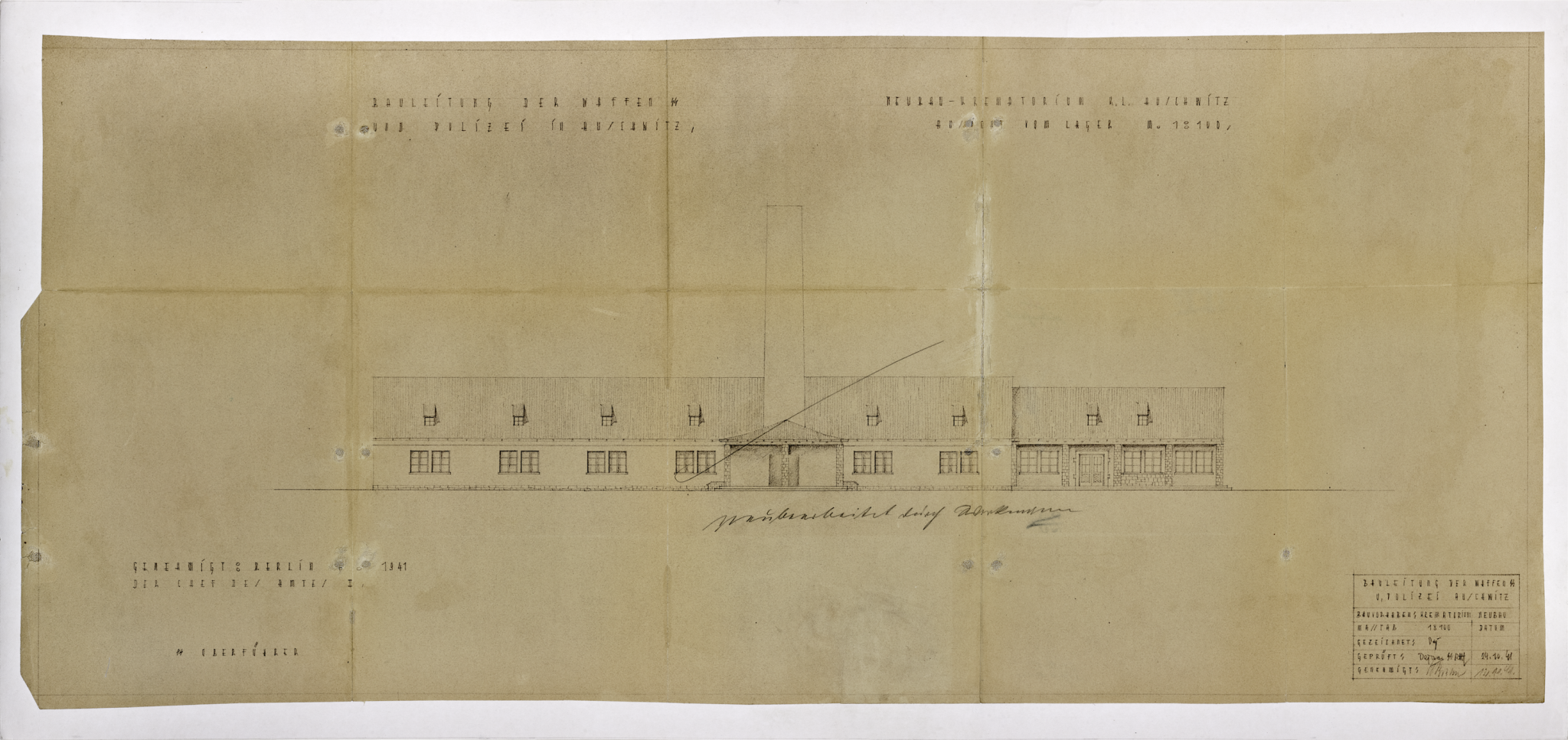
Before me lies a typical product of a European architectural bureau or engineering office from the 1940s: clean, sophisticated, precise, confidently drawn lines, all executed by hand, lending the document an unsettling authenticity.
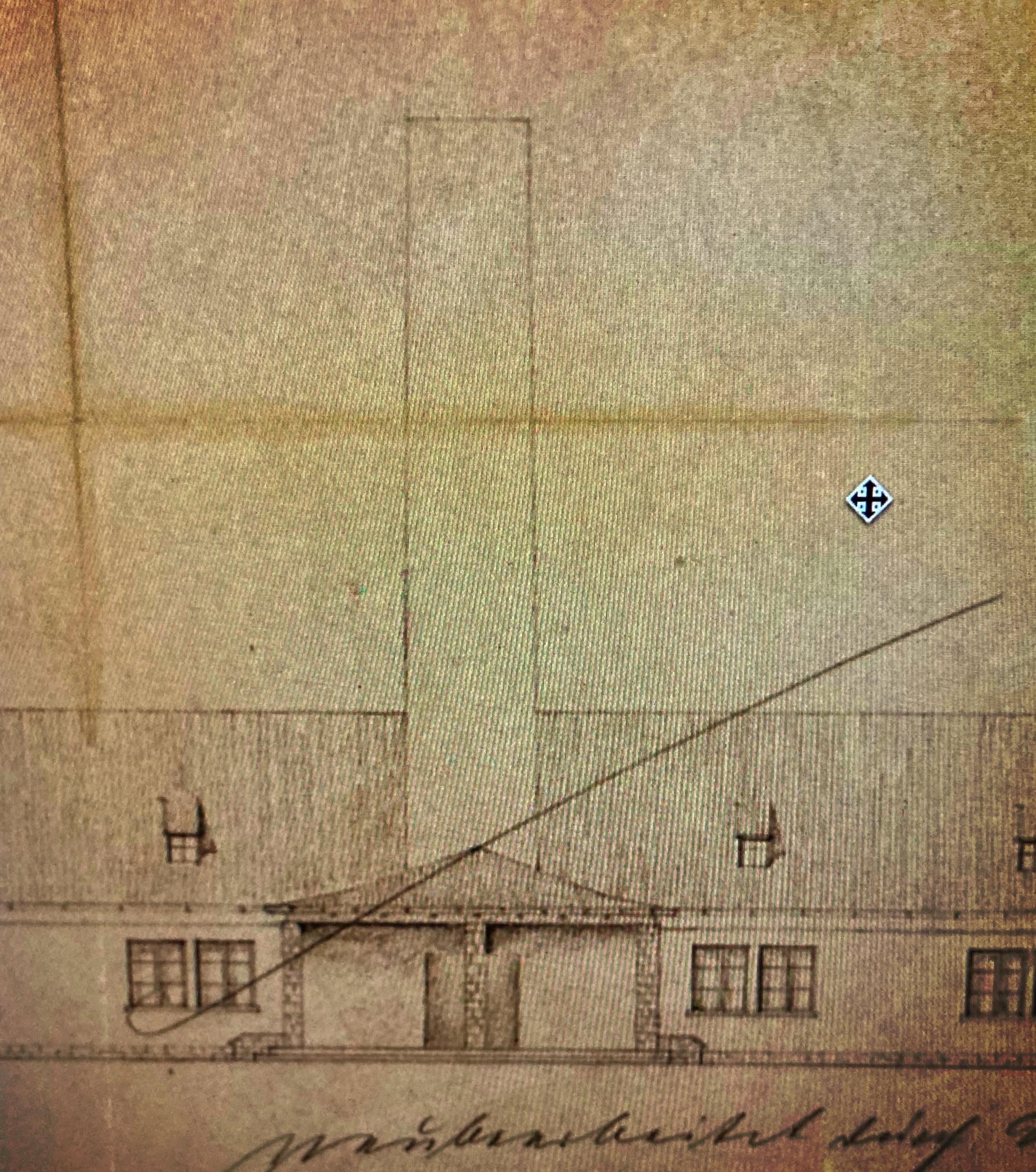
You look casually at the document, yellowed with age. It appears to be a precise drawing of an ordinary house. Then your eyes reach the two vertical lines at its centre, and your heart stops: a chimney, disproportionally large.
No wonder the Nazis tried to destroy all material evidence of their unspeakable crimes. Yet according to first-hand accounts I studied in the Simon Wiesenthal Archive, Soviet troops approaching Auschwitz in January 1945 were guided by the stench of burning bodies. The crematoria were operating until the very end.
Once you recover your breath, you notice the German bureaucratic stamps surrounding the carefully drawn structure with its heartrending vertical lines. The images become much more than an architectural plan.
As it is known, the first large-scale Zyklon B gassing experiment occurred on September 3, 1941, when 600 Soviet prisoners of war and 250 sick Polish prisoners were murdered in the basement of Block 11 at Auschwitz. Following the gassing, it became evident that the existing crematorium at the Auschwitz site could not adequately dispose of the bodies. Within seven weeks, SS architects from Berlin arrived in Auschwitz to address this ‘problem’.
Architect Walter Dejaco and others spent two days – October 22 and 23 – with Auschwitz commandant Rudolf Höss and others to determine the necessary scale of the new crematoria. The white-print in question is dated October 24, 1941. It is also known that the plans were later amended and expanded and presented at the Wannsee Conference on January 20th, 1942, as proof that their plan to eliminate all the Jews of Europe – the “Final Solution” – was feasible.
The aged white-print produced 85 years ago is clear evidence of the careful planning that made the worst crimes in human history possible.
Today, sadly and alarmingly, the historic evidence of the crimes against humanity is seen with an additional gravity in a new context of the unleashed hatred that intensified after October 7th, 2023.
We are now living in a time when irrational hatred of Jews is being normalized and spreading rapidly. Within days of the October 7, 2023 massacre – the worst mass-murder of Jews since the Holocaust – virulent antisemitic lies were spread across traditional and social media by the antisemitic zealots and those who are orchestrating the new “normality”.
Within one year of the attacks, antisemitic incidents reached their highest level since the end of the Second World War.
One recent disturbing example: at the 2026 Winter Olympics, the International Olympic Committee ordered, produced, and sold merchandise featuring imagery from the 1936 Berlin Olympics, which were a triumph of Nazi propaganda. This is a profound insult to the victims of Nazism and their families. Yet today it is a new normal, or rather an old one returning, because we have seen it before.
Personal dimension
I have been to Auschwitz many times, to work, observe, film, and think. It is a difficult place to be, as is any Nazi camp. Without being there, one cannot grasp the meaning of Nazism. The horrors of what happened there are beyond rationality. They can only be understood through raw feeling after having seen such a place firsthand.
It is for that reason that I worked with colleagues at the European Parliament to propose mandatory school visits to Auschwitz and the other extermination Nazi camps. The proposal failed, officially due to parental objections, although perhaps some countries were simply unwilling or uninterested.
I work in Auschwitz, I think about the camp orchestras. Three large ensembles: two male orchestras and one female orchestra. The latter was led for a time by my great-aunt Alma Rosé. So, Auschwitz is personal to me.
Prisoners recalled that the orchestras were forced to play, among the other grim compulsions, during selections, when SS men decided at a moment’s notice who would live and who would die. Who could forget such a thing?
Professionals such as doctors and architects planned and implemented the extermination of millions of people. Many architects were never held accountable for their crimes, or were acquitted at their trials, despite knowingly designing facilities whose purpose was mass murder.
An Acquitted Holocaust perpetrator
The white-print’s author was Walter Dejaco, an Austrian architect with no notable career before the Second World War. An enthusiastic Nazi, he joined the SS in 1933, when it was still illegal in Austria, five years before the Anschluss.
This unremarkable man – so many of them were unremarkable, including Rudolf Höss – thrived for the first time in his life during Nazi rule, and he proceeded with his tasks happily. He even joked on his architectural plans, writing ‘Auschwitz’ as ‘Au / Schwitz’ , a pun suggesting sweat. Such ‘humor’ tells you a great deal about the atmosphere in which the Auschwitz-Birkenau crematoria were planned.
My dear friend Simon Wiesenthal told me about Dejaco many years ago. Together with Auschwitz prisoner and writer Hermann Langbein, Wiesenthal tracked Dejaco for years. Dejaco had been held by the Red Army as a prisoner of war from 1945 in the camp in the USSR until 1949 or 1950, when he was inexplicably released.
So, one of just four architects who had planned and constructed the Auschwitz-Birkenau crematoria returned home and resumed his profession. He built parish buildings and was thanked and rewarded by local clergy.
After persistent efforts by Wiesenthal and Langbein, the investigation started in 1962. It took ten years before it reached the courtroom. Dejaco and two of his assistants were finally brought to trial in 1972.
It was a fiasco. One assistant’s case was dropped, and Dejaco and Fritz Ertl were acquitted on the grounds that they had acted under “duress”.
Dejaco died peacefully in his bed in 1978.
One detail from the trial still haunts me. The trial was public, but nobody attended it.
“The hall was empty”, Simon Wiesenthal told me. “ Just empty. You understand?”
I did. And I did not. I still do not.
“We did it for ourselves” – a couple ensures remembrance
But the acquisition of the crematoria whiteprints was a personal decision for the Broidys.
“We wanted to find a way to use the money spent on this terrible, but historically important, document for something good”, Elliott Broidy told me. “In conversations with Rabbi David Baron of the Temple of Arts in Beverly Hills, we decided to dedicate the sum, honoring the one and a half million Jewish children murdered by the Nazis, to fund the Temple’s creation of a global curriculum that would teach empathy and altruism to children under five, inoculating them against the scourge of extremism”.
Michael Rogatchi (C). Faces of the Holocaust. 1991-1992.
I hope this new curriculum, teaching altruism, understanding, tolerance and humanity, will flourish. This is one of those rare stories showing that even the darkest history can, through human will, be transformed into something constructive.
Evil can, and must, be answered and overcome by good, even generations later. It can prompt us to rethink, revisit, and reckon with the most painful lessons of history and to draw from them, against all odds, understanding and moral clarity.
It is never too late, so long as the memory of every soul lost in the Holocaust remains alive.
This is a tribute to Judea Pearl, the father of Daniel Pearl, a reporter with the Wall Street Journal who was murdered in January 2002 by Islamist terrorists in Pakistan. Judea is also a world-renowned professor of computing at UCLA, where a lecture in honor of Daniel — to have been delivered today, Feb. 27 — has been canceled as a consequence of anti-Israel protests.
I’ve never had the honor of meeting Judea, but I’ve admired him from afar for more than two decades. He is among the bravest of men, and the finest of Jews.
Judea’s son Daniel was murdered because he was American, but most particularly because he was Jewish. His was the ritual execution of a Jew by evil men to whom all Jewish life was an affront. His murderers filmed Daniel’s killing, releasing a video titled “The Slaughter of the Spy-Journalist, the Jew Daniel Pearl.”
Imagine the lifelong anguish of his father, Judea, now 89. But imagine also his strength, his untiring resilience, and his refusal to lay down his weapons in the battle against antisemitism — or “Zionophobia,” the word wants us all to use instead.
In “Coexistence and Other Fighting Words,” an anthology of his writings published in December, Judea asserts that racist “anti-Zionism, not antisemitism, is the issue plaguing Jews today.” And he says that anti-Zionism, or Zionophobia, “earns its racist character from denying Jewish people what it grants to other collectives, namely the right to nationhood and self-determination.”
Zionophobia is particularly acute on American campuses, including his own at UCLA, where he has taught with distinction for 55 years. Judea had a bitter personal taste of it with the cancellation of today’s annual Daniel Pearl Memorial Lecture at UCLA after vociferous threats by students to disrupt the event. These promises of disruption were accompanied by threats by political science Prof. Margaret Peters to resign if the lecture went ahead.
The lecturer in question, Bari Weiss — editor in chief of CBS News — drew the ire of hostile UCLA students for her support of Israel. Agitators warned they wouldn’t let the lecture, on “The Future of Journalism,” occur.
UCLA has disgraced itself in the last two years, being among the universities that have let anti-Jewish campus protests spiral out of control after Oct. 7, 2023 and it was sued this week by the Department of Justice for allowing antisemitism on campus. In July, it agreed to pay $6 million to settle discrimination complaints brought by Jewish faculty and students. One centered on UCLA’s allowing the creation by activists of a “Jew Exclusion Zone” on campus.
Perhaps chastened by these legal consequences, university authorities said that they would “implement a comprehensive security plan” for the Pearl event.
But Weiss’ security team wasn’t reassured. She canceled out of an abundance of caution. And who can blame her? In the climate of unhinged hysteria in anti-Israel circles, who can be sure she wouldn’t be attacked?
In all of this, our hearts break for Judea Pearl. His son was killed for being a Jew in 2002. Yet 24 years later, at the very university to which Judea has dedicated a lifetime of teaching and toil, a lecture in honor of his slain son can’t proceed because the speaker wasn’t hostile to Jews.
Shame on UCLA for treating Judea Pearl in this way.
If anything was to be gleaned from last week’s Super Bowl ads, it’s that the AI war has officially become mainstream. Only days after launching new products (on the very same day, no less), both Anthropic and OpenAI aired primetime spots during the most important advertising moment of the year — a reminder that this race is now measured in hours, not quarters.
As artificial intelligence continues to reach and reshape global markets, the gap between rapid innovation and investor unease is becoming increasingly apparent. That tension was on full display last week as Anthropic unveiled Claude Opus 4.6, its most advanced AI model to date, even as concerns over AI disruption, valuation risk, regulation, and economic volatility ripple through public markets.
Anthropic describes Opus 4.6 as its “most capable” model for business and knowledge work, emphasizing improvements in reasoning, reliability, and the ability to handle complex, multi-step tasks. The launch draws attention to a broader trend, as AI development continues to gain momentum even amid market volatility and investor uncertainty
Still, the market backdrop has become harder to ignore. Investors have increasingly questioned whether escalating AI infrastructure spending will translate into near-term earnings, especially as companies guide to higher capital expenditures for data centers and AI workloads. At the same time, regulatory compliance costs and liability questions are coming into sharper focus, particularly in the EU, where the AI Act introduces tiered obligations and significant potential fines for certain violations, adding another layer of uncertainty to how quickly and broadly frontier models will be deployed in high-stakes settings.
For Elliott Broidy, who leads Broidy Capital Holdings and invests in AI-driven capabilities tied to public safety and defense, the moment is indicative of a larger trend of rapid technological progress moving ahead, even as markets reassess the risks.
“Every major technological shift brings uncertainty to markets,” Broidy explains. “But uncertainty has not led to retreat. The technology continues to reshape fundamental work processes.”
According to Broidy, models like Claude Opus 4.6 represent a maturation of AI from experimental tools into enterprise-grade infrastructure.
“Businesses have moved beyond seeking novelty,” he says. “They demand dependable systems that can reason, synthesize information, and support real decision-making at scale.” Anthropic’s positioning of Opus 4.6 squarely toward business and knowledge work reflects the industry’s move from demos to deployment. The company has increasingly prioritized enterprise customers over consumer-facing applications to enterprises that rely on large volumes of data, complex analysis, and high-stakes judgment. These include industries such as finance, law, logistics, government, and national security.
“When an AI model can assist analysts, operators, and leaders in making faster, better-informed decisions, it becomes a strategic asset,” Broidy noted.
The launch also spotlights a growing divide between short-term market reactions and long-term technological developments. While investors worry about overvaluation, job displacement, and regulatory risk, companies and governments are steadily embedding AI deeper into their core operations.
“In national security and public safety, hesitation is not an option,” Broidy says. “Adversaries continue to adopt AI aggressively regardless of market sentiment, compelling the United States and its allies to maintain pace.”
Broidy points out that many of the most impactful AI deployments occur far from public view. Advanced language models are already being used to assist intelligence analysis, process vast streams of open-source information, generate operational reports, and support training simulations. In defense contexts, reliability and controllability are central concerns because official guidance stresses responsible and secure deployment.
“Instilling confidence is essential,” Broidy explains. “Whether it’s a defense analyst or a corporate executive, the user needs to be certain that the system is accurate, explainable, and aligned with human intent.”
The broader lesson of Anthropic’s launch is that AI fears and AI adoption can coexist, and often do. Market volatility may dominate headlines, but behind the scenes, organizations are making long-term bets on platforms that can deliver durable advantages.
“We are witnessing the industrialization of artificial intelligence,” Broidy says. “Models like Claude Opus 4.6 represent a shift toward embedding intelligence into the fabric of institutions.”
Looking ahead, Broidy believes the companies that succeed will be those that balance innovation with discipline. “Success will come to those building systems that businesses, governments, and societies can rely on when the stakes are high,” he says.
The launch of Claude Opus 4.6 signals this transition. AI’s role as foundational infrastructure is no longer theoretical. It is here, evolving rapidly, and reshaping how decisions are made, regardless of how rattled markets may feel at the moment.
This piece was originally published on JNS on February 18, 2026.
When I first saw the faded whiteprint, an architectural drawing of the earliest design concept for what became Crematoria II and III at Auschwitz-Birkenau, I felt the crushing weight of evil. This piece of paper with its neat geometric lines—so professional, so precise—was proof of the intent to incinerate the corpses of hundreds of thousands of Jewish men, women and children who would be murdered on an industrial scale.
I have dedicated much of my philanthropic work to support Jewish organizations and to combat antisemitism. I knew immediately that this artifact had to be brought to light, especially in our era of surging Holocaust denial and resurgent antisemitism.
That’s why I acquired the whiteprint for $1.5 million, a sum chosen to honor the 1.5 million Jewish children murdered by the Nazis during the Holocaust.
The document, drawn by SS architect Walter Dejaco in October 1941, has been authenticated by Robert Jan van Pelt, one of the world’s leading experts on Auschwitz. Van Pelt has called it “quite literally irreplaceable.”
The whiteprint represents crucial architectural evidence of Nazi extermination infrastructure. It is a tangible link to the systematic planning behind the Holocaust and an irrefutable record of genocidal intent. Physical artifacts such as this provide enduring evidence of the Nazi pursuit of the “Final Solution.”
Yet preservation by itself isn’t enough. The whiteprint must be seen, studied and understood.
For that reason, I intend to exhibit it at various Holocaust museums and institutions dedicated to fighting antisemitism before permanently donating it to one such institution. Each viewing will be an opportunity to educate, to remember and to inoculate future generations against denial and distortion.
The proceeds from the acquisition will support an early-childhood curriculum designed to combat extremism and hate before they take root. By emphasizing altruism and empathy in young children, we can build immunity against the dehumanization that makes hatred and ultimately violence possible.
‘A particular responsibility’
The whiteprint acquisition is part of a broader commitment.
Working with the Counter Extremism Project, a nonprofit, nonpartisan organization, I helped fund the purchase of the former home of Auschwitz commandant Rudolf Höss. At 88 Legionów Street in Oświęcim, Poland, the house sits directly adjacent to the camp where he oversaw mass murder on a scale that will forever be incomprehensible.
CEP has transformed the house into the Auschwitz Research Center on Hate, Extremism and Radicalization (ARCHER) at House 88, which uses the very latest technology to disrupt the shadowy financial networks that extremists use to foment antisemitism, extremism and terrorism. What was once the home of a principal architect of genocide now houses scholars, researchers and activists working to fight against the mainstreaming of the evil Höss embodied. I serve as co-chair of the Fund to End Antisemitism, Extremism and Hate, which helps enable ARCHER’s vital work.
We are living in a time of acute danger. Antisemitic incidents have reached levels not seen in generations. Holocaust denial proliferates online, often cloaked in the dishonest guise of “just asking questions,” as it edges ever closer to the mainstream—a harrowing development. The survivors who bore witness to history’s greatest crime will not be alive much longer. And when they are gone, artifacts like the whiteprint, Holocaust museums and organizations like ARCHER will become our primary vehicles for transmitting memory and combating lies.
The Jewish philanthropic community carries a particular responsibility. We cannot shirk it. We must support education that cultivates moral responsibility and seriousness; fund research that exposes and disrupts contemporary forms of antisemitism; preserve and display evidence of the Holocaust (in addition to the Hamas-led terrorist attacks in Israel on Oct. 7, 2023, the most devastating massacre since the Holocaust); and build communal institutions that will outlast our lifetimes.
We must confront the most dangerous form of contemporary antisemitism: the systematic delegitimization of the State of Israel.
We must push back against those who accuse Israel of committing genocide, a modern-day blood libel that was once confined to the fringes of radical academia, but has escaped containment into the broader discourse around the Israeli-Palestinian conflict.
We must proudly support Israel and champion a strong U.S.-Israel relationship. We can differ in our views of particular Israeli policies, but we must never lose sight of what is at stake: the survival and security of the world’s only Jewish state, home to nearly half the Jews on the planet.
For a small people—there are only about 16 million Jews in the world today, fewer than on the eve of World War II—this work is not optional.
Elie Wiesel moved beyond vowing “Never Again” in his 1986 Nobel Peace Prize acceptance speech, insisting instead: “Sometimes, we must interfere.”
Fighting antisemitism must be a sustained commitment expressed through action, scholarship and memory.
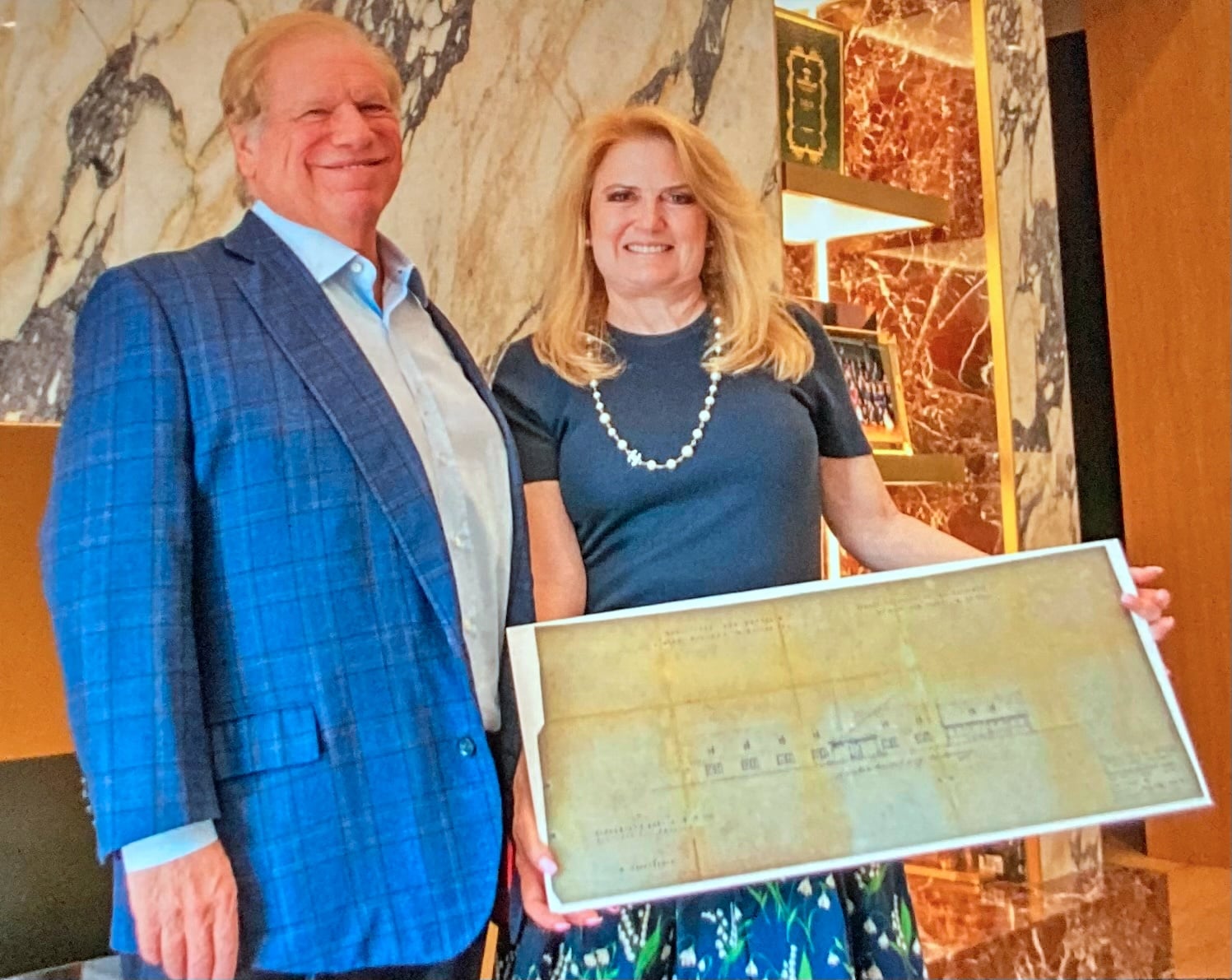
Florida-based philanthropist and businessman Elliott Broidy, joined by his wife, Robin, speaks with The Baltimore Sun about acquiring for $1.5 million an original 1941 whiteprint of the Auschwitz-Birkenau crematoria, a document that embodies the calculated architecture of genocide during the Holocaust.
The preservation of this whiteprint is more than historical stewardship. It is an act of resistance against denial, distortion and forgetfulness. Primary evidence anchors collective memory, and a healthy democracy depends on shared facts. The interview has been edited for length and clarity
What is the historical significance of this original whiteprint?
Elliott Broidy: This document is the front elevation of the crematoria building at Auschwitz-Birkenau, dated Oct. 24, 1941. It was created by SS architect Walter Dejaco under the direction of commandant Rudolf Höss. It shows the size, scale and smokestack of the structure — the physical infrastructure that would become central to industrialized murder.
This was not spontaneous evil. It was engineered: deliberate, technical, bureaucratic. It reflects the earliest architectural conception of how a prison complex evolved into a mechanized killing site. That precision is what makes it so chilling.
Why did you feel compelled to secure it?
EB: Only two such documents are known to exist. One was last documented in Russia in 1991. When this surfaced, I believed it needed to be preserved, not hidden or lost to private hands.
It demonstrates the intentionality behind genocide, how ideology became design and design became machinery. It exposes the cold, administrative nature of what occurred. It is proof not only of horror, but of planning.
How did it survive from 1945 until now?
EB: A rabbi in California received it years ago. It had reportedly been purchased at a neo-Nazi gathering in Germany, without full awareness of its historical weight.
We believe someone originally removed it from an architectural office at Auschwitz and concealed it. Decades later, it resurfaced. When it was examined by a former director of the U.S. Holocaust Memorial Museum, the October 1941 date immediately signaled its importance; it placed the design at a critical early phase of the camp’s transformation.