Why Preserving History Is an Investment in the Future
History doesn’t preserve itself.
Every generation inherits documents, artifacts, photographs, buildings, and places that tell the story of those who came before us. Whether those stories survive depends on the choices we make today. Preservation is often viewed as an act of remembrance or nostalgia, but its purpose is far more practical. It is about ensuring that future generations have access to the evidence they need to understand the past for themselves.
Original artifacts have a unique power. They connect us directly to history in a way that reproductions or summaries cannot. Standing before an original document, walking through a historic site, or examining an object that was part of significant events reminds us that history is not abstract. It was lived by real people who faced difficult choices, experienced triumph and tragedy, and left behind lessons that remain relevant today.
This is one reason museums, archives, and historic preservation organizations perform such important work. They are safeguarding the historical record. Every preserved artifact strengthens our ability to study the past honestly and to resist the temptation to simplify, romanticize, or distort it.
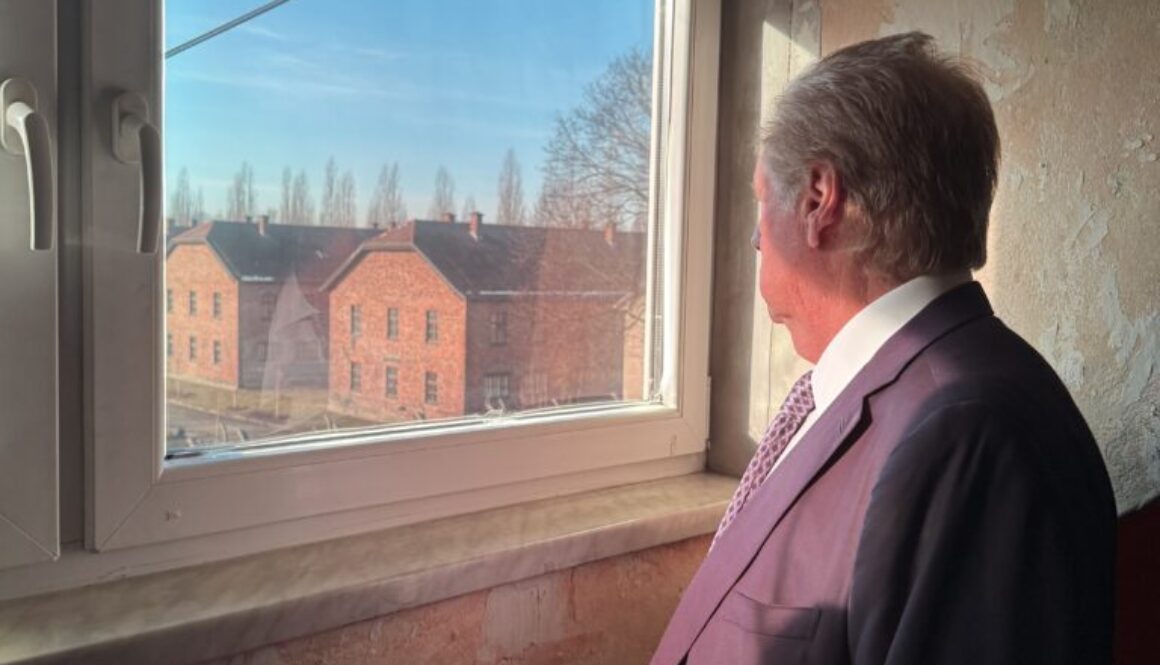
The Holocaust is now beyond living memory for most people, making physical evidence more important with each passing year. Documents, photographs, architectural plans, and the sites themselves help ensure that future generations encounter this history through facts rather than abstraction.
That conviction was one reason I chose to acquire an original whiteprint for the crematoria at Auschwitz-Birkenau. This is a chilling historical document that provides tangible evidence of the Nazis’ abominable crimes. Preserving artifacts ensures that they are protected, studied, and available to educate future generations.
That belief also inspired me to help The Counter Extremism Project acquire the former home of Rudolf Höss, the commandant of Auschwitz, which sits right next door to the death camp. After being in private hands for the past 80 years, the house has been turned into The Auschwitz Center on Hate, Extremism, and Radicalization (ARCHER at House 88). The home where Hoss and other leaders of the Nazi Party planned the elimination of over 1,000,000 people, mostly Jews, has been transformed into an international center dedicated to confronting antisemitism, extremism, and hate through education, research, advocacy, and cultural events. Exhibitions such as the story of Lore Sternfeld, a master lens maker at Astro Berlin who was murdered at Auschwitz shortly after delivering 150 lenses to the Nazis, help restore the humanity of those whose lives were stolen and ensure that the victims — not the perpetrators — remain at the center of remembrance.
Every nation, community, institution, and family possesses pieces of history worth preserving. Letters, journals, photographs, official records, works of art, and historic buildings all contribute to our collective understanding of who we are and how we arrived here. Once they disappear, they cannot be recreated.
We often speak about leaving a legacy for future generations. Preservation is one of the most meaningful ways to do so. It reflects confidence that the past still has something to teach us and humility to recognize that future generations deserve the opportunity to examine that past through authentic evidence rather than incomplete memories.
History belongs to all of us. Preserving it is an investment in the future — a commitment to ensuring that those who come after us inherit not only our achievements but also an honest record of the lessons, sacrifices, and experiences that shaped them.
Elliott Broidy is Chairman and CEO of Broidy Capital Holdings, a family office specializing in AI-driven public safety software. He is also the Co-Chair of the Fund to End Antisemitism, Extremism and Hate which supports the Auschwitz Research Center on Hate, Extremism and Radicalization – ARCHER at House 88, an initiative of The Counter Extremism Project.