Elliott Broidy, chairman and CEO of Broidy Capital Holdings, contributed to a Fast Company Executive Board article offering icebreakers designed to help colleagues connect and collaborate at company retreats:
“One of the most effective icebreakers I’ve seen is also one of the simplest. At the beginning of a retreat or leadership meeting, ask each attendee to share one professional insight, lesson, or goal they have been thinking about recently—something they are actively working on, trying to improve, or reflecting on in their career. Instead of people reciting titles or CVs, you’ll learn how they think, what challenges they are navigating, and what motivates them professionally. It creates a more thoughtful and collaborative atmosphere because people start engaging around ideas and shared experiences rather than hierarchy,” Broidy said.
Leadership is often associated with decisiveness, vision, and communication. We celebrate leaders who can command a room, inspire a team, or make difficult decisions under pressure. But one of the most important leadership skills is also one of the least discussed: the ability to listen.
In business and in life, many people listen only long enough to respond. They approach conversations focused on what they want to say next, rather than truly understanding what the other person is trying to communicate. Over time, this creates blind spots. It limits learning, weakens relationships, and causes leaders to miss important signals from employees, customers, partners, and even competitors.
The best leaders I have known are often the best listeners.
Listening is not passive. It requires discipline, patience, and intellectual humility. It means being willing to hear perspectives that challenge your assumptions. It means asking thoughtful questions instead of rushing to conclusions. And it means recognizing that good ideas can come from anywhere inside an organization, not just from the top.
In fast-moving industries, leaders who fail to listen often become disconnected from reality. They surround themselves with people who tell them what they want to hear. They lose touch with customers. They miss changes in the market. By the time they recognize the problem, competitors have already moved ahead.
Strong listening skills also build trust. Employees want to feel heard. Customers want to know their concerns matter. Partners want confidence that their viewpoints are taken seriously. People are far more likely to support a leader when they believe that leader genuinely values their input, even when disagreements exist.
Listening is especially important during periods of uncertainty or crisis. In those moments, leaders are often under pressure to project confidence and move quickly. But some of the worst decisions are made when leaders stop listening altogether. The ability to gather information, absorb competing viewpoints, and remain open to new facts is critical to navigating complexity effectively.
There is another benefit to listening that is often overlooked: it improves judgment. The more perspectives you understand, the more informed your decisions become. Listening broadens your understanding of people, markets, and institutions in ways that no spreadsheet or presentation can fully capture.
Leadership is not about having all the answers. No one does. The most effective leaders continue learning throughout their careers, and learning begins with listening.
In a world full of noise, people who truly listen stand out. And in many cases, that quiet skill is what separates good leaders from great ones.
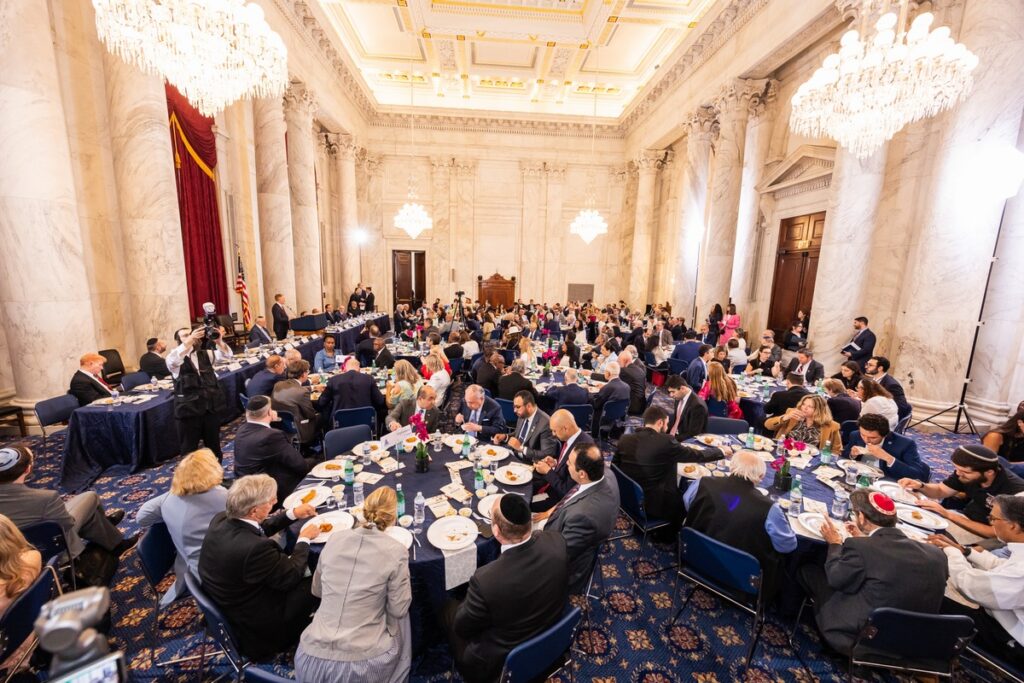
WASHINGTON, D.C. — The annual Jewish American Heritage Month (JAHM) luncheon was held May 19 on Capitol Hill, bringing together bipartisan members of Congress, foreign ambassadors, and civic, business, and religious leaders in the historic Kennedy Caucus Room of the Russell Senate Office Building to honor the enduring contributions of Jewish Americans to the United States.
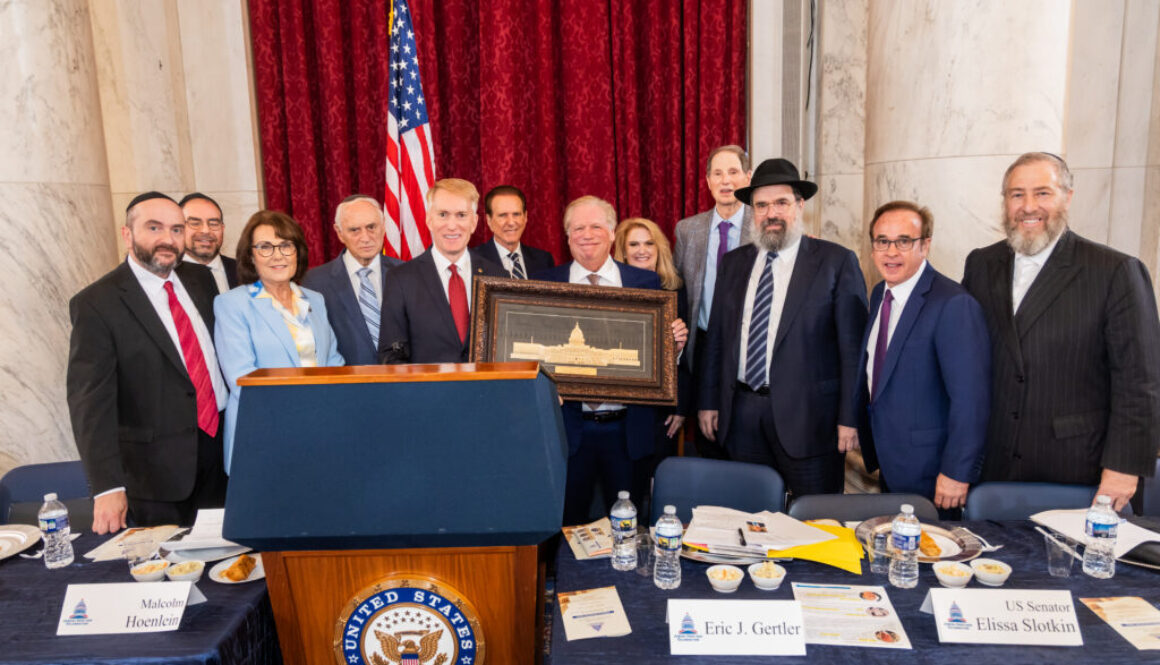
The event was co-chaired by Malcolm Hoenlein, CEO Emeritus of the Conference of Presidents of Major American Jewish Organizations and Eric J. Gertler, Executive Chairman of U.S. News and World Report. It honored entrepreneur and philanthropist Elliott Broidy with the Visionary Award, Nobel Prize winning physician Dr. Harvey J. Alter with the Dr. David Nassy Award, and Rabbi David Baron of Temple of the Arts in Beverly Hills with the Creativity in the Jewish Community Award.
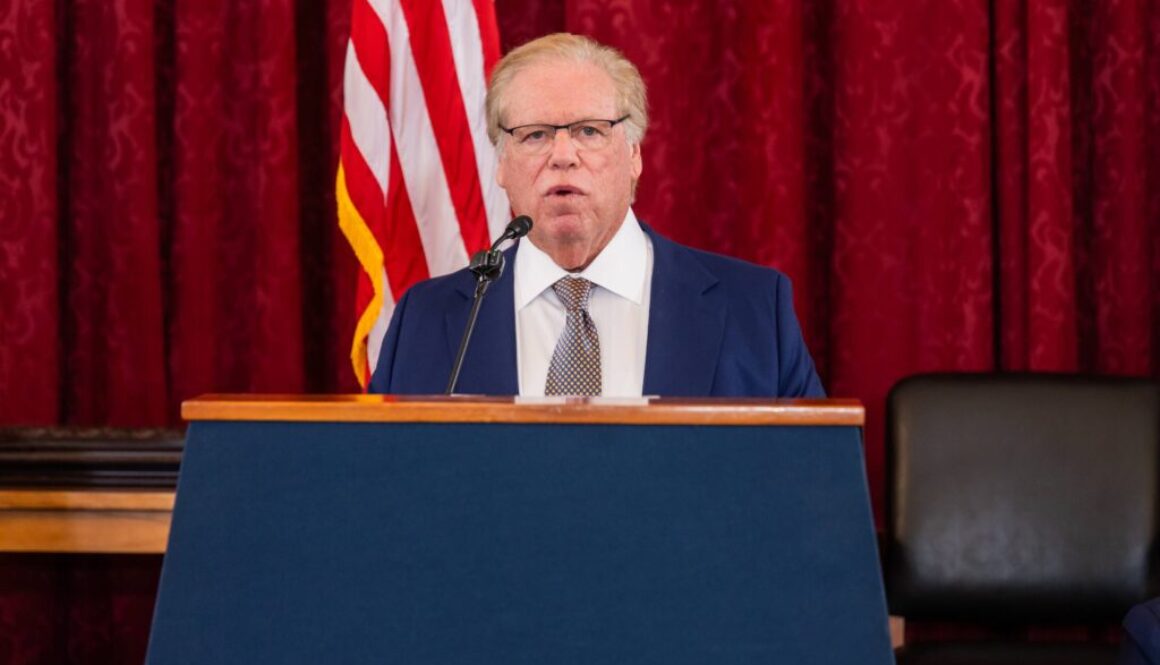
In accepting the Visionary Award, Broidy reflected on the values his parents instilled in him — his father a decorated World War II veteran, turned schoolteacher, his mother a nurse — and the lesson they passed down: that success carries with it a responsibility to give back to family, community, and country. He praised Dr. Alter as an embodiment of tikkun olam for identifying a virus that was silently claiming millions of lives, and recognized Rabbi Baron’s work building curricula around altruism and empathy in young people as among the most consequential being done in America today.
Broidy described the luncheon as more than a celebration of JAHM, calling it a reaffirmation of the shared responsibility to confront hatred and protect the values of tolerance, democracy, and human dignity at a moment when antisemitism has risen sharply both in the United States and around the world.
Various U.S. Senators participated in the program, including Richard Blumenthal, John Fetterman, John Hickenlooper , Elissa Slotkin, Ron Wyden, James Lankford, Jacky Rosen, Pete Ricketts, Jeff Merkley, and Tim Sheehy. U.S. Representatives Randi Fine and Ken Calvert also delivered speeches.
Rabbi Pini Dunner of Young Israel of Beverly Hills delivered remarks on the honorees, as did Rabbi Mordechai Suchard of The Gateways Organization and Rabbi Levi Shemtov, Executive Vice President of American Friends of Lubavitch.
The celebration traces its roots to the early 1980s, when Jewish Heritage Week was launched following discussions between Malcolm Hoenlein, President Ronald Reagan, and author and humanitarian Elie Wiesel, later evolving into the month-long observance recognized today.
The event was organized by Project Legacy under the leadership of Ezra Friedlander, whose work has made the Capitol Hill JAHM luncheon one of the most visible annual expressions of Jewish American civic life in Washington. Through Project Legacy, Friedlander has built a platform that brings elected officials, faith leaders, and community figures together each year to recognize Jewish Americans whose lives reflect the breadth of that community’s contributions to the nation. “This year’s honorees reflect a deep commitment to public service, innovation, philanthropy, and the fight against hatred and intolerance,” Friedlander said.
This article was originally published on Grit Daily.
On the morning of February 10, 2026, Jesse Van Rootselaar opened fire in Tumbler Ridge, a northeastern district in British Columbia, Canada. Eight people were killed before Van Rootselaar turned the gun on herself. Almost immediately after, a question surfaced that cuts to the center of how AI systems operate behind the scenes: what, if anything, had OpenAI seen before the attack?
The company had surely seen something. Records show OpenAI identified concerning behavior in Van Rootselaar’s ChatGPT account, suspended it months before the shooting, and reviewed the content. It ultimately decided the material did not meet its threshold for referral to law enforcement, a judgment that is now drawing scrutiny.
British Columbia Premier David Eby said OpenAI may have had the opportunity to prevent the shooting, a statement that shifts attention away from the user and toward the system that flagged her behavior, yet decided against intervening. His comments have added urgency to a question policymakers have only recently begun to confront: what are companies expected to do when their own tools surface signs of potential violence?
That concern is not limited to policymakers. Elliott Broidy, who has worked at the intersection of national security, technology, and public safety, describes the issue as a breakdown in system design.
“Thirty-eight flags and no action isn’t an oversight,” he said. “It shows the system was never built to respond. If your AI can detect danger but there’s no protocol to act on it, that’s a structural failure.”
He argues that many companies have built systems that can identify risk without building the processes required to respond to it. Human oversight, often cited as a safeguard, is not consistently integrated into decision-making once a signal is generated.
This question has surfaced before, under very different circumstances. In 1969, a graduate student at UC Berkeley told his therapist he intended to kill a woman named Tatiana Tarasoff. The therapist notified campus police, who briefly detained and released him. No one warned Tarasoff. Two months later, she was killed.
The California Supreme Court’s 1976 ruling in Tarasoff v. Regents of the University of California established a standard that still governs parts of mental health law. When a professional determines, or should determine, that a patient poses a serious danger, there is a duty to act. Over time, that obligation spread across most U.S. states, embedding the idea that foreknowledge of violence can trigger legal responsibility.
AI platforms were, of course, not yet part of that framework. They are not licensed professionals, but they now process volumes of personal interaction that no therapist or institution could match. Their systems are built to detect patterns, including shifts in language and behavior that signal escalation. The question is what happens after those signals appear.
In Tumbler Ridge, the signals did appear. OpenAI’s systems flagged the account and took the step its policies required, suspending access. What did not follow was any escalation beyond the platform. There was no external referral, no independent review, and no clear standard governing whether further action was required.
Broidy sees that gap as symptomatic of an industry-wide failure to learn from sectors where the stakes are equally high.
“Every sector where lives are at stake has learned the same lesson: detection without escalation is theater,” he said. “The aviation industry didn’t stop at warning lights and nuclear facilities didn’t stop at alarms. Both built chains of accountability that force a human decision at every critical juncture. AI companies have the detection capability. What they are missing, and what the law has not yet demanded, is the chain.”
In industries where failure carries immediate consequences, that gap is not tolerated. Aviation systems route alerts to trained operators under defined procedures. Nuclear facilities tie automated warnings to escalation protocols that cannot be ignored. Emergency medicine relies on triage systems that trigger immediate human review. In each case, detection is only the first step in a chain that leads to action.
Consumer AI platforms operate at comparable scale, but without comparable requirements. Internal thresholds determine whether behavior is escalated, but those thresholds are set by the companies themselves and are not subject to external standards. Decisions not to act can remain internal, undocumented outside the platform, and shielded from scrutiny.
Existing law offers limited guidance. Section 230 has long protected platforms from liability tied to user-generated content. Traditional products liability frameworks do not map easily onto systems that continuously learn and adapt. And duty-to-warn doctrines were developed for licensed professionals, not systems that mediate millions of interactions at once.
Legal scholars have begun to outline possible paths forward, including extending a duty of care to platforms that possess documented evidence of credible threats and requiring defined escalation procedures when certain thresholds are met. Those proposals remain largely theoretical, even as the underlying technology is already in widespread use.
The response to the Tarasoff case took years to develop, eventually reshaping expectations around professional responsibility. AI systems have advanced on a much faster timeline. They are already embedded in daily life and already capable of identifying patterns that resemble foreknowledge of harm.
The gap between what these systems can see and what companies are required to do about it is no longer hypothetical. It is already visible in the record. The question now is whether the law will move quickly enough to close it.
This article was originally published on JBizNews.
A rare convergence of Jewish American religious leaders, civic organizations, business executives, and foreign diplomats gathered on Capitol Hill on May 19 during Jewish American Heritage Month to recognize Nobel laureate Dr. Harvey J. Alter — whose discovery of the hepatitis C virus and the screening protocols it spawned have saved millions of lives — underscoring the urgency of scientific preparation at a moment when the Bundibugyo strain of Ebola is spreading rapidly across the Democratic Republic of the Congo and Uganda, prompting major airlines to suspend or reduce service to affected regions.
The event, the annual Jewish American Heritage Month celebration organized by Ezra Friedlander’s Project Legacy, drew nine U.S. Senators, three U.S. Representatives, and ambassadors and trade ministers from Canada, Bahrain, Morocco, Egypt, Germany, and South Korea. The gathering was co-chaired by Malcolm Hoenlein, CEO Emeritus of the Conference of Presidents of Major American Jewish Organizations, and Eric J. Gertler, Executive Chairman of U.S. News & World Report. Held in the historic Kennedy Caucus Room of the Russell Senate Office Building, the event demonstrated the depth of Jewish American institutional reach across government, finance, philanthropy, religious life, and international commerce.
The timing is acute. As of May 24, the World Health Organization had recorded more than 1,000 suspected and confirmed Ebola cases and at least 231 deaths in the outbreak. Airlines including American Airlines, United Airlines, and Air France have suspended or sharply reduced flights to Kinshasa and other Central African hubs, citing operational and safety concerns. The flight suspensions are already disrupting trade and threatening to isolate the region from international commerce and medical supply chains.
The honorees — Dr. Alter, entrepreneur Elliott Broidy, and Rabbi David Baron — represented the breadth of Jewish American institutional contribution. Dr. Alter, the 2020 Nobel laureate in Physiology or Medicine for identifying the hepatitis C virus, embodied the Jewish American role in science and public health. His decades of work at the National Institutes of Health in the 1970s and 1980s proved that an unknown virus was driving post-transfusion hepatitis. The screening systems his research enabled have driven transfusion-transmitted hepatitis in the United States to near zero. His discovery spawned pharmaceutical franchises at Gilead Sciences, Merck, AbbVie, and Bristol Myers Squibb. Broidy, recipient of the Visionary Award, reflected the Jewish American entrepreneurial and philanthropic tradition. Rabbi David Baron of the Temple of the Arts in Beverly Hills, honored with the Creativity in the Jewish Community Award, represented the religious and cultural institutions anchoring the community’s identity.
The religious leadership present was notably diverse and unified. Rabbi Pini Dunner of Young Israel of Beverly Hills, Chairman of the Orthodox Jewish Chamber of Commerce West Coast, delivered remarks alongside Rabbi Mordechai Suchard of The Gateways Organization and Rabbi Levi Shemtov, Executive Vice President of American Friends of Lubavitch. This constellation — Orthodox, Modern Orthodox, and Lubavitch leadership appearing together on a Capitol Hill stage — demonstrated institutional cohesion across religious movements.
U.S. Senators Richard Blumenthal, John Fetterman, Tim Sheehy, John Hickenlooper, Elissa Slotkin, Ron Wyden, James Lankford, Jacky Rosen, and Pete Ricketts addressed the gathering, alongside Representatives Randi Fine, Ken Calvert, and Jeff Merkley. Senator Blumenthal emphasized that Dr. Alter could have monetized his hepatitis C discovery for enormous personal gain but instead released findings to the public-health system. Senator Fetterman delivered what attendees described as an unusually passionate bipartisan statement of support for the Jewish American community. Senator Sheehy framed scientific generosity as a uniquely American strength. The bipartisan presence — nine senators from both parties — signaled political consensus around the value of Jewish American institutional power.
Jewish American Heritage Month, observed each May since 2006, traces to 1980 when Congress designated April 21-28 as Jewish Heritage Week through conversations between Malcolm Hoenlein, President Ronald Reagan, and Nobel laureate Elie Wiesel. President George W. Bush expanded it to a full month of May in 2006, recognizing over 370 years of Jewish American contribution to science, business, law, and public service since 1654. The Weitzman National Museum of American Jewish History now stewards the observance with more than 200 organizations.
Ezra Friedlander, organizer of the event through Project Legacy, said: “This year’s honorees reflect a deep commitment to public service, innovation, philanthropy, and the fight against hatred and intolerance.”
The commercial dimension was substantial. Duvi Honig, Founder & CEO of the Orthodox Jewish Chamber of Commerce and co-founder and secretary of the Multicultural Business Coalition, who chaired World Trade Week NYC on Wednesday, spoke to the gathering’s purpose. “Building bridges through unity is what speaks to me most,” Honig said. “Each attendee walked away with new or reinforced relationships to help build a better tomorrow.” The ambassadors and trade ministers represented nations with which the United States maintains multi-billion-dollar trade flows in life sciences, defense, semiconductors, energy, agriculture, and finance.
Elliott Broidy, in accepting the Visionary Award, reflected on lessons from his parents about the responsibility that accompanies success. He praised Dr. Alter as an embodiment of tikkun olam — the Jewish concept of repairing the world — for identifying hepatitis C. Broidy framed the luncheon as a reaffirmation of shared responsibility to confront hatred and protect the values of tolerance, democracy, and human dignity at a moment when antisemitism has risen sharply.
The Capitol Hill gathering serves a dual purpose: honoring specific achievements, but also functioning as a high-level networking forum where ambassadors, senators, business leaders, and religious figures reinforce relationships that undergird international commerce, diplomatic coordination, and policy alignment. For the Jewish American community, the event demonstrates that institutional unity across Orthodox and non-Orthodox Judaism, business and nonprofit sectors, and civic and religious leadership remains a competitive advantage.
The recognition of Dr. Alter arrives as the global health system confronts the Ebola outbreak, making his innovation as a Jewish American leader who helped save millions of lives through epidemic-related medical breakthroughs even more meaningful amid the growing health and commercial disruption now unfolding. His career — patient, federally funded basic research conducted over decades for public good — produced breakthroughs that created entire pharmaceutical industries and prevention systems now viewed as essential global infrastructure. It also reflects the very purpose of Jewish American Heritage Month: recognizing the extraordinary contributions Jewish Americans have made to science, medicine, public service, innovation, and humanity as a whole.
A dozen members of Congress participated in an annual Jewish American Heritage Month lunch in the Russell Senate Office Building, held this year on May 19.
Sens. Richard Blumenthal (D-Conn.), John Fetterman (D-Pa.), John Hickenlooper (D-Colo.), Elissa Slotkin (D-Mich.), Ron Wyden (D-Ore.), James Lankford (R-Okla.), Jacky Rosen (D-Nev.), Pete Ricketts (R-Neb.), Jeff Merkley (D-Ore.) and Tim Sheehy (R-Mont.), and Reps. Randi Fine (R-Fla.) and Ken Calvert (R-Calif.) took part.
“I am proud to be here as a Jewish American woman,” Slotkin said. “It’s just never been a harder time in my lifetime to be a Jew in America.”
“As a Democrat, it’s my responsibility to call out antisemitism in my own party, just as I hope that Sen. Lankford calls out antisemitism in his party,” the senator said.
Elliott Broidy, a businessman and philanthropist who was presented with a visionary award, told the audience that he is motivated to give back to his country because his parents taught him that success comes with responsibility.
Dr. Harvey Alter, a Nobel-winning physician, and Rabbi David Baron, of Temple of the Arts in Beverly Hills, Calif., also received awards.
“After years of intensive research, I’ve understood now why there’s such a preponderance of Jewish scientists. It’s because they all had Jewish mothers,” Alter said.
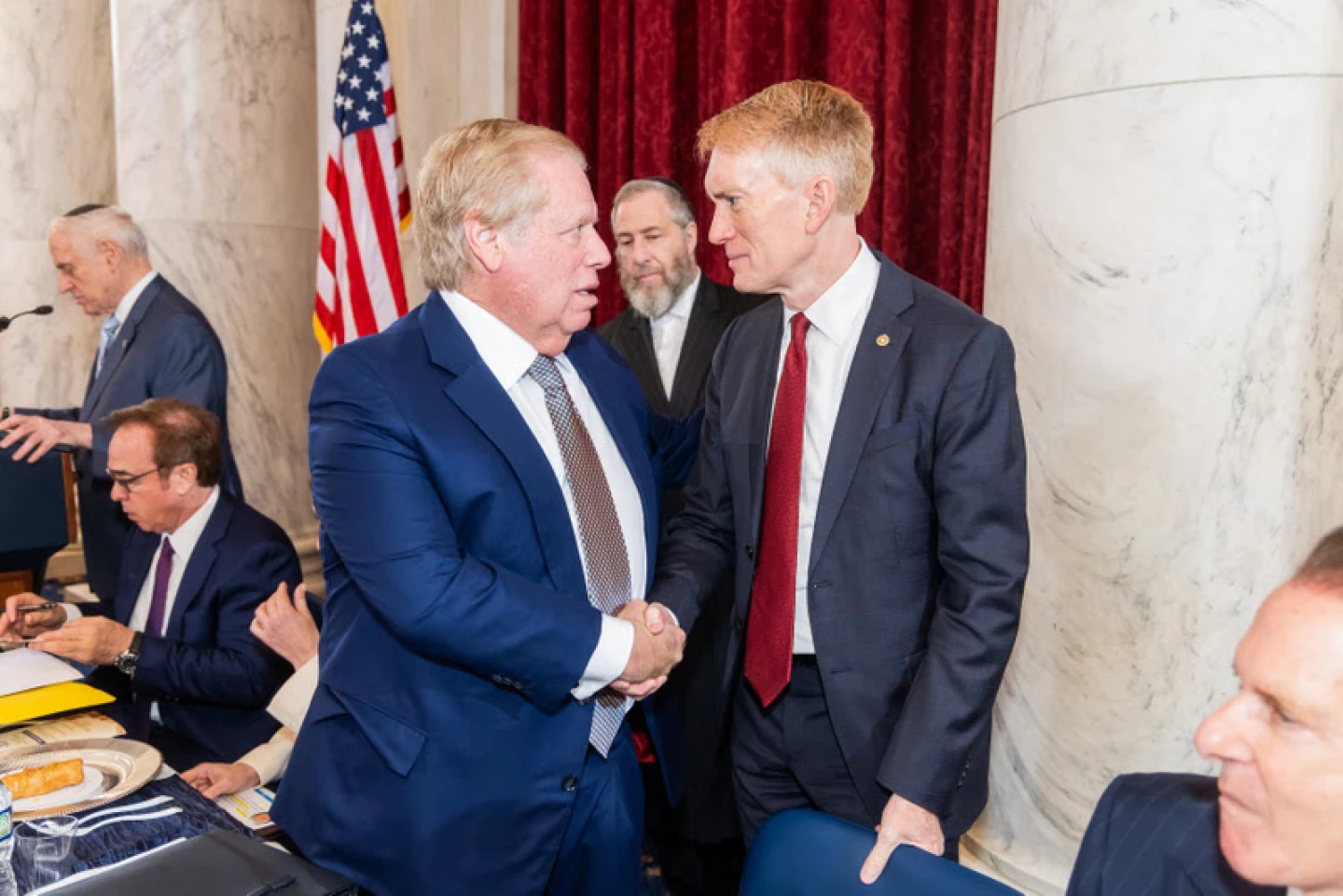
Elliott Broidy and Sen. James Lankford (R-Okla.) at a Jewish American Heritage Month celebration on Capitol Hill, May 20, 2026. Credit: Lenchevsky Images. Picasa
Malcolm Hoenlein, CEO Emeritus of the Conference of Presidents of Major American Jewish Organizations, and Eric Gertler, executive chairman of U.S. News and World Report, co-chaired the event. “Jewish Heritage Week gives us an opportunity to celebrate the 250th anniversary of this great country,” Hoenlein told attendees.
“This year’s honorees reflect a deep commitment to public service, innovation, philanthropy and the fight against hatred and intolerance,” stated Ezra Friedlander, who organized the event.
By Jewish Heritage Celebration Committee, May 19, 2026
The annual Jewish American Heritage Month celebration on Capitol Hill will be held in the month of May on 19, bringing together members of Congress, foreign ambassadors and leaders from across the civic, business and religious communities. The Congressional Honorary Host Committee includes US Senator Tim Scott, US Senator Jeff Merkley, US Senator Pete Rickett, US Representative Grace Meng.
During Jewish American Heritage Month, we honor the countless contributions of Jewish Americans throughout the United States 250 years of independence, and we celebrate their unwavering commitment to the values that make our country great.
President Trump, in his proclamation for May 2026 as Jewish American Heritage Month, calls upon Americans to celebrate the heritage and contributions of Jewish Americans and to observe this month with appropriate programs, activities, and ceremonies. “I further call on all Americans to celebrate their faith and freedom throughout this year, during this month, and especially on Shabbat to celebrate our 250th year.”
The Capitol Hill event will honor Elliott Broidy, entrepreneur, public safety expert, and philanthropist, who will receive the Visionary Award during Jewish American Heritage Month on Capitol Hill for his leadership in national security, education, cultural philanthropy, and efforts to combat antisemitism, extremism, and intolerance.
Rabbi David Baron, spiritual leader of Temple of the Arts, will be receiving the Creativity in the Jewish Community Award for his contributions to Jewish cultural and religious life, Holocaust education, and public service through media, philanthropy, and international remembrance initiatives.
Dr. Harvey J. Alter will be presented the Dr. David Nassy Award in Medicine for his Nobel Prize-winning research leading to the discovery of hepatitis B and C viruses, breakthroughs that revolutionized blood safety and transformed the treatment of chronic liver disease.
“I am deeply moved to be recognized at the Capitol during Jewish American Heritage Month,” said Broidy. “Jewish Americans have helped build this country, and today, as antisemitism rises at an alarming rate, it is up to all of us to stand up to hate and advance the Judeo-Christian values on which America was founded.”
The event, organized by Project Legacy under the leadership of Ezra Friedlander, honors leaders whose lives and work reflect the enduring contributions of Jewish Americans to the fabric of this nation. Celebrating Jewish Heritage began in the early 1980s when Malcom Hoenlein, Executive Vice Chairman Emeritus of the Conference of Presidents of Major American Jewish Organizations, a prominent figure in American and world Jewry, accompanied by author Elie Wiesel, met with President Ronald Reagan in the White House to launch the National Jewish Heritage Week, which has since evolved into a month-long celebration accords the country.
Representative Debbie Wasserman Schultz was the primary legislative leader behind the establishment of Jewish American Heritage Month. In 2006, she led a bipartisan congressional effort resulting in George W. Bush’s first presidential proclamation of May as Jewish American Heritage Month.
Once again, this year U.S. Reps. Debbie Wasserman Schultz (FL-25), Brian Fitzpatrick (PA-01), Troy A. Carter, Sr. (LA-02) and Mariannette Miller-Meeks (IA-01) introduced a bipartisan Jewish American Heritage Month Resolution to recognize the significant contributions of Jewish Americans to the society and culture of the United States.
Malcolm Hoenlein, along with Eric J. Gertler, Executive Chairman of U.S. News and World Report will chair this year’s event.
“Jewish American Heritage Month is a moment to reflect on where we’ve come from, to celebrate what we’ve built and to recommit ourselves to protecting our most meaningful values,” added honoree Mr. Elliott Broidy. “I’m proud to stand alongside my fellow honorees and to carry that message into the halls of Congress.”
The Los Angeles-raised philanthropist is being honored for decades of work in public safety, Jewish communal life, and the fight against antisemitism.
Elliott Broidy will be among three Jewish Americans honored at this year’s Jewish American Heritage Month luncheon on Capitol Hill, receiving the Visionary Award at a ceremony on Capitol Hill on May 19th.
The annual event, organized by Project Legacy under the leadership of Ezra Friedlander, has honored Jewish American leaders since the early 1980s, when Jewish Heritage Week was established following discussions between Malcolm Hoenlein, President Ronald Reagan, and Elie Wiesel. Broidy will be recognized alongside Nobel Prize-winning physician Dr. Harvey J. Alter and Rabbi David Baron of Beverly Hills’ Temple of the Arts.
Broidy, 68, grew up in Los Angeles, the son of a World War II veteran who was awarded a Purple Heart and later became a schoolteacher, and a mother who worked as a nurse. He started working at age eleven – paper routes, Fuller Brush sales, plumbing jobs, salmon fishing in Alaska – and at 18 used his savings to buy a coin-operated laundromat to help put himself through the University of Southern California, where he earned a degree in accounting.
After becoming a CPA and working at Arthur Andersen, he spent nine years running the family office of Glen Bell, founder of Taco Bell, advising on investments in more than 120 companies. He later founded Broidy Capital Management. By his mid-thirties, he had begun making significant charitable contributions to hospitals, synagogues, social services organizations, and educational institutions across the United States and Israel.
The September 11 attacks drew him deeper into public life. He served three years on the Homeland Security Advisory Council, six years as a commissioner of the Los Angeles Fire and Police Pension Fund, and six years on the board of the Simon Wiesenthal Center-Museum of Tolerance.
The October 7, 2023 Hamas attacks on Israel prompted a further expansion of his giving. He has since directed significant support toward Holocaust remembrance, countering extremism through organizations including the Counter Extremism Project, and strengthening Jewish communal infrastructure in the United States and Israel.
“This celebration is an opportunity not only to honor the contributions of Jewish Americans throughout our nation’s history, but also to reaffirm our shared responsibility to confront hatred and protect the values of tolerance, democracy and human dignity.”
This year’s event is chaired by Malcolm Hoenlein and Eric J. Gertler, Executive Chairman of U.S. News and World Report.
In early April, Anthropic announced the release of Claude Mythos Preview, its most advanced AI model to date.
Though trained as a general-purpose large language model, Mythos quickly distinguished itself through a notable capacity for complex, multi-step cybersecurity work – autonomously parsing massive codebases, detecting critical-severity software defects and identifying vulnerabilities that have eluded human researchers for decades. Anthropic describes its cybersecurity capabilities as “substantially beyond those of any model we have previously trained,” including its prior flagship, Claude Opus.
The numbers back up that claim. When Anthropic ran the model against CyBench, a benchmark measuring autonomous vulnerability discovery and exploitation across sandboxed challenges, Mythos achieved a perfect 100% pass rate, a score Anthropic says no other AI model has achieved. On CyberGym, a separate cybersecurity evaluation site, Mythos scores 83.1% compared to 66.6% for Claude Opus 4.6. Across 17 of 18 total benchmark measures, Mythos led the field.
In practice, the model has already produced results that underscore its potential. During a preview period, Mythos found thousands of major bugs across every major operating system and browser, flaws that even the most skilled researchers had missed for years. Among the most striking findings was a vulnerability in OpenBSD that went undetected for 27 years.
“We are looking at an AI system that does not merely assist human researchers but autonomously outperforms them at scale,” said Elliott Broidy, Chairman and CEO of Broidy Capital Holdings, LLC, a seasoned entrepreneur and investor with extensive experience in national security technology and defense tech. “What Anthropic has built with Mythos is a tool that, in the right hands, could protect millions of people from attacks that would otherwise go undetected for years. The question is now whether our institutions are moving fast enough to deploy it responsibly before our adversaries find a way to use it against us.”
Given both the power and the risks that such a model entails, Anthropic decided to roll it out to a limited group of tech companies rather than the general public through a controlled defense initiative called Project Glasswing. Among the major tech companies forming the coalition are Amazon Web Services, Microsoft, Nvidia and Cisco, along with 40 other organisations that build or maintain critical infrastructure software. To support the effort, Anthropic committed $100 million in usage credits and $4 million in direct donations to open-source security organisations, enabling these partners to use Mythos exclusively for defensive security work, finding and fixing vulnerabilities before adversaries can.
Anthropic was direct about the stakes in its announcement, writing that “no one organisation can solve these cybersecurity problems alone: frontier AI developers, other software companies, security researchers, open-source maintainers, and governments across the world all have essential roles to play.”
However, the model’s very strengths are what make experts uneasy. Cybersecurity professionals have warned that if Mythos can identify and exploit vulnerabilities faster than companies can patch them, the consequences of misuse could be severe. A single AI agent scanning for flaws at this speed and scale, well beyond normal human capacity, represents what many describe as a sea change in the threat landscape.
The model has also become a flashpoint in the relationship between Anthropic and the U.S. government. The Pentagon designated Anthropic a “supply chain risk,” ordering companies working with the military to remove its software from their workflows.
The situation is evolving rapidly. White House Chief of Staff Susie Wiles and Treasury Secretary Scott Bessent met with Anthropic CEO Dario Amodei last month to discuss Mythos and pathways for renewed government collaboration. The White House is now reportedly developing an executive action that would allow federal agencies to work around the supply chain risk designation and onboard Anthropic’s models, including Mythos.
This push and pull reflects a deeper shift, raising broader questions about how emerging technologies are regulated as AI systems like Mythos begin to occupy a space between commercial tools and strategic infrastructure.
“Concerns related to government use of AI technology are reasonable,” said Broidy. “But it’s imperative to consider how technologies that today seem too dangerous or non-feasible may be life-saving tomorrow.”
Broidy added that while the safe deployment of these advanced capabilities must remain a top priority, heavy-handed regulations may prevent important technologies from developing as quickly as they may be needed.
“Solving such complex cybersecurity issues is a joint effort,” said Broidy. “Economic industries, government agencies and technology companies must work together to balance AI innovation and safety.”
Jewish American Heritage Month Celebration on Capitol Hill to Honor Nobel Laureate Dr. Harvey J. Alter, Philanthropist Elliott Broidy and Rabbi David Baron
WASHINGTON, D.C. — The annual Jewish American Heritage Month (JAHM) celebration will be held on Capitol Hill on May 19 to celebrate the enduring contributions of Jewish Americans to the United States. The event brings together members of Congress, foreign ambassadors and leaders from across the civic, business and religious communities.
This year’s luncheon will honor Nobel Prize-winning physician and researcher Dr. Harvey J. Alter with the Dr. David Nassy Award, entrepreneur and philanthropist Elliott Broidy with the Visionary Award, and Rabbi David Baron of Temple of the Arts in Beverly Hills with the Creativity in the Jewish Community Award.
Dr. Alter, who spent decades at the National Institutes of Health, received the Nobel Prize in Physiology or Medicine for work that eventually led to the discovery of the Hepatitis C virus, transforming blood screening and saving millions of lives worldwide. The award he will receive is named after David Nassy, the first Jewish doctor in Philadelphia who challenged prevailing medical practices during the 1793 Yellow Fever outbreak by advocating for more humane and effective treatment methods.
“At a time when antisemitism again rears its ugly head, I am proud to represent Jewish scientists in their quest to find answers to medical, technologic, and societal issues that confront and confound humanity,” said Dr. Alter.
Mr. Broidy is being recognized for his leadership in public safety, philanthropy and efforts to combat antisemitism and extremism. Following the October 7, 2023 Hamas terrorist attacks on Israel and the subsequent rise in antisemitic incidents globally, Mr. Broidy expanded his support for organizations dedicated to Holocaust remembrance, countering extremism and strengthening Jewish communal life. His philanthropic work has also included support for educational institutions, healthcare organizations and cultural initiatives in the United States and Israel.
“I am deeply moved to be recognized during Jewish American Heritage Month alongside Dr. Alter and Rabbi Baron, whose work represents the very best of Jewish American achievement and public service,” said Mr. Broidy. “This celebration is an opportunity not only to honor the contributions of Jewish Americans throughout our nation’s history, but also to reaffirm our shared responsibility to confront hatred and protect the values of tolerance, democracy and human dignity.”
Rabbi David Baron, spiritual leader of Temple of the Arts, will be receiving the Creativity in the Jewish Community Award for his contributions to Jewish cultural and religious life, Holocaust education, and public service through media, philanthropy, and international remembrance initiatives. “I am deeply honored to receive this award that celebrates the contributions of American Jews, to the spiritual, cultural and artistic growth of our nation,” said Rabbi Baron. “Our great country was founded on the biblical principles that have kept the Jewish people for millennia and form the foundation of western civilization.”
The event, organized by Project Legacy under the leadership of Ezra Friedlander, honors leaders whose lives and work reflect the enduring contributions of Jewish Americans to the fabric of this nation. The initiative traces its roots to the early 1980s, when Jewish Heritage Week was launched following discussions between Malcolm Hoenlein, Executive Vice Chairman Emeritus of the Conference of Presidents of Major American Jewish Organizations, President Ronald Reagan and author and humanitarian Elie Wiesel. It later evolved into Jewish American Heritage Month, a month-long celebration.
“Jewish American Heritage Month is an opportunity to celebrate the extraordinary impact Jewish Americans have had on every aspect of American life,” said Friedlander. “This year’s honorees reflect a deep commitment to public service, innovation, philanthropy and the fight against hatred and intolerance.”
Malcolm Hoenlein, along with Eric J. Gertler, Executive Chairman of U.S. News and World Report will chair this year’s event.
Additional speakers and program participants will be announced in connection with the event.